Mythos Atlas

Side by sideParallel across traditions

Bari Gongju vs Inanna

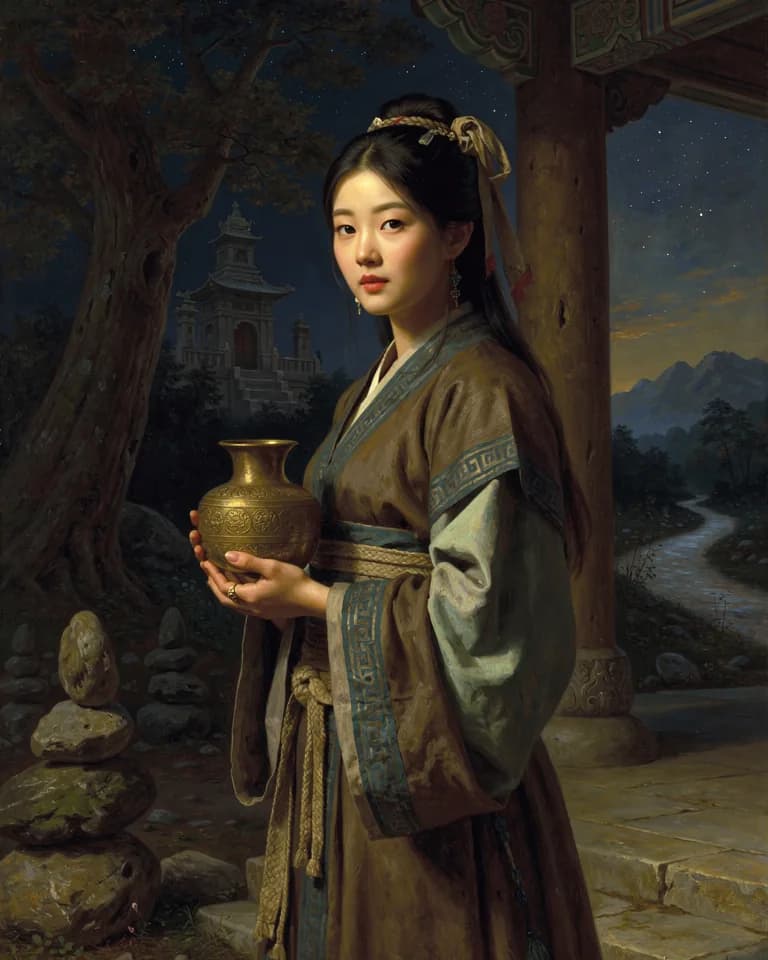
Bari Gongju
Bari GongjuKorean
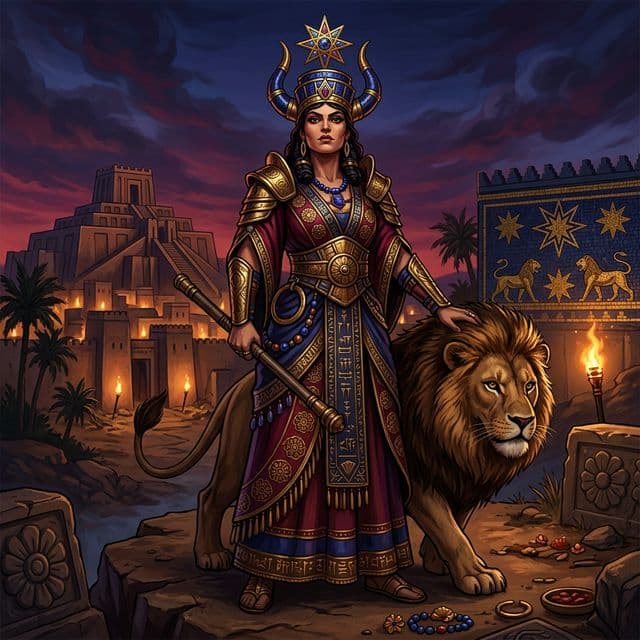
Inanna
InannaMesopotamian

Both descend through the realm of the dead and return, with the power of life at stake; Bari goes willingly to fetch the water of life for her parents, while Inanna descends to claim the underworld and must be rescued. The comparison is typological.

At a glance

Bari Gongju and Inanna compared
Bari GongjuInanna
TraditionKorean TraditionMesopotamian Pantheon
Domainsthe dead and their passage, healing, the patron of shamanslove, war, fertility, sexuality, political power
Symbolsthe water of life, the flowers of revival, the jade boxeight-pointed star, lion, rosette, ring and rod
Also calledPrincess Bari, Baridegi, Bari-degiIshtar, Astarte

Where they meet

The atlas records no domain or symbol that Bari Gongju and Inanna share.

They are compared for the part each plays in their own tradition rather than for any attribute in common.

Where they part

Only Bari Gongju

Associated with the dead and their passage, healing, and the patron of shamans.

Only Inanna

Associated with love, war, fertility, sexuality, and political power.

How each was worshipped

Bari Gongju

Her song is performed by shamans in rites for the dead (jinogwi-gut in Seoul, ogu-gut on the east coast), in which the shaman, in Bari's role, leads the soul of the deceased to the other world.

Inanna

Cult sites
Eanna precinct at Uruk; Temples of Ishtar at Nineveh, Arbela, and Babylon
Festivals
Akitu in some cities; Sacred marriage rites in royal ideology; Mourning of Tammuz/Dumuzi

Love, war, and the descent. Uruk's Eanna is her house. Morning and evening star. The royal sacred marriage is ideology as much as ritual; the lament for Dumuzi is popular and old. She is not a gentle Venus.

The two figures

Korean Tradition

Bari Gongju

The seventh daughter of a king, thrown away at birth, who alone agrees to journey to the Western Heaven for the water of life when her parents are dying; she returns in time to revive them and becomes the goddess who guides the dead to the other world.

The seventh daughter of King Ogu and Queen Gildae, abandoned at birth (versions differ in names and details).

The story of Princess Bari is a *muga*, a shamanic narrative song, sung by Korean shamans in rites for the dead such as the Seoul *jinogwi-gut* and the east-coast *ogu-gut*, where the shaman guides the soul of the dead to the other world as Bari did. It exists in many dozens of recorded versions; one of the first to be written down was recorded from a Seoul shaman and published by Akiba Takashi and Akamatsu Chijō in 1937, and the folklorist Kim Tae-gon later recorded many more.

Read the full Bari Gongju entry

Mesopotamian Pantheon

Inanna

Queen of Heaven and goddess of love and war. Inanna is the most complex and dynamic deity of the Mesopotamian pantheon, embodying both desire and destruction.

Inanna was born to the moon god Nanna/Sin and his wife Ningal. Unlike goddesses who received their powers passively, Inanna actively gathered the me (divine powers) from Enki, establishing herself as the goddess of civilization. She chose the shepherd Dumuzi as her consort in a sacred marriage that ensured the fertility of the land.

Inanna is the most celebrated and complex deity of ancient Mesopotamia. She embodies seemingly contradictory forces: passionate love and bloody war, fertility and destruction, order and chaos. As the personification of the planet Venus, she is both the morning and evening star, combining masculine and feminine energies in her divine nature.

Read the full Inanna entry
About this comparison

Comparisons pair figures that play a similar role across traditions, or that the myths connect within one. A shared role does not, by itself, establish a shared origin.