Mythos Atlas

Guide · Hades II

Who's Who in Hades II: The Mythology Behind the Game

Supergiant's sequel builds its cast from some of the most obscure figures in Greek religion. Here is what the ancient sources actually say about them, and where the game invents.

Hades II casts Melinoë, princess of the Underworld, against Chronos, the Titan of Time, with Hecate as her mentor and a crowd of gods, shades and personified powers around them. Some are major deities; others survive in a single line of ancient poetry. Each section below sets the game beside the sources and links to the full entry.

Descriptions of the game are brief and avoid plot details. This is an independent guide, not affiliated with Supergiant Games.

The game beside the myths

Left: the character's role in the game, in a sentence. Right: the ancient evidence, with the passages to read.

Melinoë

In Hades II

The playable protagonist: a daughter of Hades and Persephone, raised in secret and trained in witchcraft by Hecate to fight Chronos.

In the ancient sources

Known from one text, Orphic Hymn 71, of the Roman imperial period. It calls her saffron-veiled, born by the river Cocytus to Persephone, who lay with Zeus while he wore the form of Plouton (Hades); she sends airy phantoms and night terrors to mortals. No story about her survives. Her personality, her training and her war are the game's invention.

Sources: Orphic Hymn 71

In the atlasMelinoë · Persephone · Hades
Hecate

In Hades II

Melinoë's mentor and guardian, the witch who commands her training ground at the Crossroads.

In the ancient sources

Hesiod praises Hecate at length as a goddess Zeus honoured with a share of earth, sea and sky. In the Homeric Hymn to Demeter she hears Persephone's cry and joins the search with a torch. Later tradition narrows her into the goddess of crossroads, ghosts and witchcraft whom Medea serves in Apollonius of Rhodes; the game's Hecate is that later figure. Melinoë's hymn uses language close to Hecate's, which may be why the two are paired.

Sources: Hesiod, Theogony 411-452; Homeric Hymn to Demeter; Apollonius of Rhodes, Argonautica 3

In the atlasHecate

Chronos and Cronus

In Hades II

Chronos, the Titan of Time and father of Hades, has returned from Tartarus and seized the Underworld. He is the main enemy.

In the ancient sources

Two different figures share almost the same name. Cronus is the Titan who fathered Hades, Zeus and their siblings, swallowed his children, and was overthrown and sent below. Chronos is Time personified, a primordial power in Orphic and early philosophical accounts of creation. Ancient writers already punned on the names (Plutarch notes that the Greeks allegorized Cronus as time); the game fuses them into one Titan.

Sources: Hesiod, Theogony 453-506; Plutarch, On Isis and Osiris

In the atlasCronus · Zeus · Tartarus

Nyx and her children: Moros, Thanatos, Hypnos

In Hades II

Several of Night's children appear as characters, continuing the first game's family of the Underworld. Moros (Doom) comes to Melinoë's base at the Crossroads as an emissary of the Fates; Thanatos (Death) returns from the first game.

In the ancient sources

Hesiod lists the children Night bore without a partner, and the first three are Moros, black Ker and Thanatos, followed by Hypnos and the Dreams. Sleep and Death live in Night's house beside Tartarus; in the Iliad the twins carry the fallen Sarpedon home, and Sleep recalls how Night once saved him from Zeus. Moros has no myths of his own.

Sources: Hesiod, Theogony 211-225 and 758-766; Homer, Iliad 14 and 16

In the atlasNyx · Thanatos

Nemesis

In Hades II

A proud, combative daughter of Night, posted as a sentry at the Crossroads, who turns up during Melinoë's journeys to challenge her as a rival or to trade.

In the ancient sources

Another child of Night in Hesiod, ‘a pain to mortal men’: the indignation that answers excess. In Works and Days she and Shame abandon the earth at the end of the iron age. She had a temple at Rhamnous in Attica, and a lost epic made her the mother of Helen.

Sources: Hesiod, Theogony 223-224; Hesiod, Works and Days 197-201

In the atlasNemesis

Odysseus

In Hades II

A strategist at Melinoë's base who advises her on the fight against Chronos.

In the ancient sources

Homer's man of many ways is a living hero, not a shade, but he does visit the dead: in Odyssey 11 he calls up the ghosts at the edge of the world to consult the prophet Tiresias. His cunning, not his strength, is his defining trait in Homer, which the game keeps.

Sources: Homer, Odyssey 11

In the atlasOdysseus

Charon

In Hades II

The ferryman of the dead, who also keeps a shop for Melinoë.

In the ancient sources

Charon is absent from Homer and Hesiod. He appears in later archaic poetry and becomes familiar from Athenian funerary vase painting and drama, ferrying the dead across the marsh of Acheron for a coin. The shopkeeping is the game's joke.

In the atlasThe Underworld · River Styx

The Olympians and other powers

The Olympians who appear in the game are the standard family of Homer and Hesiod, and their entries describe them as the ancient sources do. Selene, the Moon, and Cerberus, the hound of Hades, are also part of the cast.
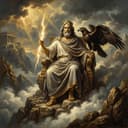
  • Zeus

    King of the gods and ruler of Mount Olympus. God of the sky, thunder, and justice. Zeus overthrew his father Cronus to become the supreme deity of the Greek pantheon.

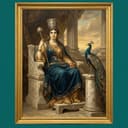
  • Hera

    Queen of the gods and goddess of marriage and family. Wife and sister of Zeus, known for her jealousy toward Zeus's lovers and illegitimate children.

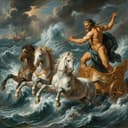
  • Poseidon

    God of the sea, earthquakes, and horses. Brother of Zeus and Hades, ruler of the oceans and all waters.

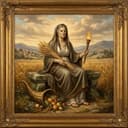
  • Demeter

    Goddess of agriculture, harvest, and fertility. Mother of Persephone, whose abduction by Hades explains the seasons.

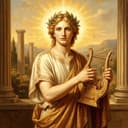
  • Apollo

    God of sun, music, poetry, prophecy, and healing. Twin brother of Artemis, patron of the Muses and leader of the nine sisters.

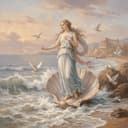
  • Aphrodite

    Goddess of love, beauty, and desire. Born from the sea foam after Cronus castrated Uranus and threw his genitals into the sea.

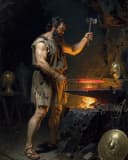
  • Hephaestus

    God of fire, metalworking, and crafts. Son of Hera (and possibly Zeus), cast from Olympus due to his lameness but later readmitted.

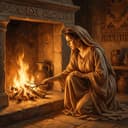
  • Hestia

    Goddess of the hearth, home, and family. The firstborn of Cronus and Rhea, she maintained eternal virginity and tended the sacred fire of Olympus.

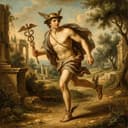
  • Hermes

    God of messengers, commerce, thieves, and travelers. Son of Zeus and the nymph Maia, known for his cunning and speed.

  • Artemis

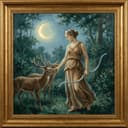
    Goddess of the hunt, wilderness, and the moon. Twin sister of Apollo, protector of young women and animals.

  • Ares

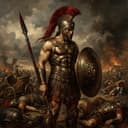
    God of war, violence, and bloodshed. Son of Zeus and Hera, representing the brutal and chaotic aspects of warfare.

  • Athena

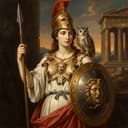
    Goddess of wisdom, warfare, and crafts. Born fully armed from Zeus's forehead after he swallowed her mother Metis.

  • Dionysus

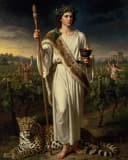
    God of wine, festivity, and theater. Son of Zeus and the mortal Semele, the only Olympian born to a mortal parent.

  • Selene

    The Titan-born goddess of the moon, daughter of Hyperion and Theia and sister of Helios and Eos. She drives her team across the night sky, and poets tell of her love for the sleeping shepherd Endymion.

  • Cerberus

    The three-headed hound of Hades who guards the gates of the Underworld to prevent the dead from leaving. His mane consists of writhing serpents.

Questions players ask

Is Melinoë a real Greek goddess?
Yes, but a very obscure one. She is known from a single ancient text, Orphic Hymn 71, which calls her a saffron-veiled daughter of Persephone who sends ghostly apparitions and night terrors to mortals. No myth about her survives, and she has no attested temple or festival.
Who are Melinoë's parents in Greek mythology?
Orphic Hymn 71 names Persephone as her mother and says Zeus fathered her while taking the form of Plouton, a name for Hades. That phrasing lets modern retellings, including Hades II, treat her as a daughter of Hades and Persephone.
Is Chronos in Hades II the same as Cronus?
The game merges two figures. Cronus (Kronos) is the Titan who fathered Zeus, Hades and their siblings and was overthrown by Zeus. Chronos is Time personified, a cosmic power in Orphic and early philosophical accounts of creation. Ancient writers already played on the similar names, and Hades II makes them one Titan of Time.
Who is Moros in Greek mythology?
Moros is Doom, the first child Hesiod lists among the offspring of Night, alongside Death and Sleep. He is a personification with no surviving myths of his own.

Keep exploring