Mythos Atlas

Side by sideParallel across traditions

Selene vs Tsukuyomi

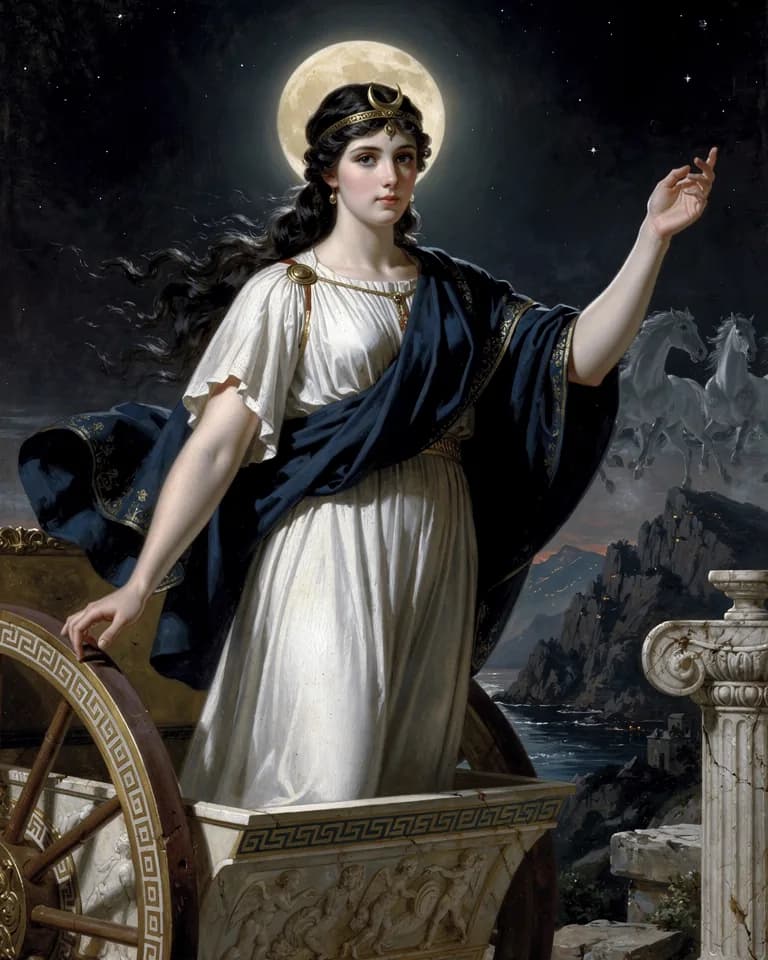
Selene
SeleneGreek
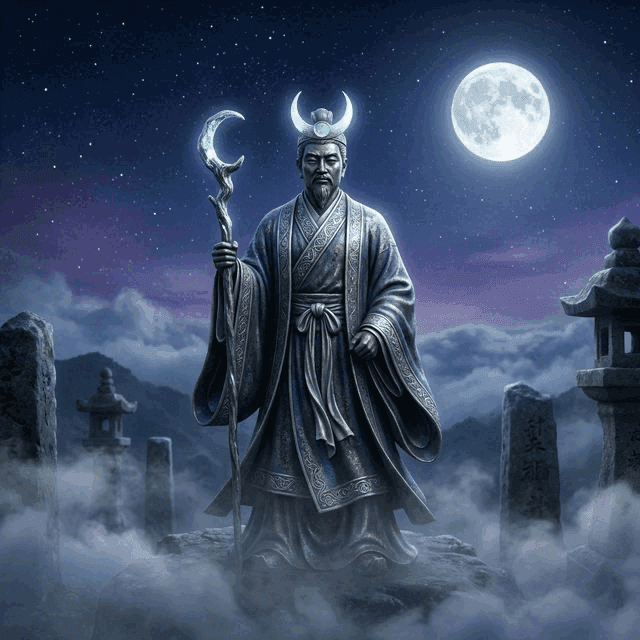
Tsukuyomi
TsukuyomiJapanese

Both are moon deities born as siblings of the sun.

At a glance

Selene and Tsukuyomi compared
SeleneTsukuyomi
TraditionGreek PantheonJapanese Pantheon
Domainsthe moon, night, the monthsmoon, night, time
Symbolscrescent, two-horse chariot, billowing veil, torchmoon, darkness
Also calledMene, Luna (Roman)Tsukuyomi-no-Mikoto

Where they meet

Both are associated with night.

Where they part

Only Selene

Associated with the moon and the months.

Only Tsukuyomi

Associated with moon and time.

How each was worshipped

Selene

No cult sites or festivals are recorded in the atlas.

Tsukuyomi

Cult sites
A subordinate shrine at Ise; Scattered tsuki shrines; no great independent parish

The moon brother in the Kojiki, rarely a head shrine. Offerings go through Amaterasu's house more often than his. Thin cult, thick story.

The two figures

Greek Pantheon

Selene

The Titan-born goddess of the moon, daughter of Hyperion and Theia and sister of Helios and Eos. She drives her team across the night sky, and poets tell of her love for the sleeping shepherd Endymion.

Selene was born to the Titans Hyperion and Theia, sister of Helios the sun and Eos the dawn. The Homeric Hymn to Selene adds that Zeus lay with her and that she bore a daughter, Pandia.

Selene is the moon itself, imagined as a goddess who bathes in Ocean and drives her horses across the sky at night. Hesiod places her with Helios and Eos among the children of Hyperion and Theia. The *Homeric Hymn to Selene* describes the radiance from her head filling the air and calls her full moon a sign and token to mortals, since the month was counted by her phases.

Read the full Selene entry

Japanese Pantheon

Tsukuyomi

God of the moon and night. Brother of Amaterasu and Susanoo. Represents night, time, and the lunar cycle. Ruler of the night realm.

Born from Izanagi's right eye during purification. Assigned to rule the night. His relationship with Amaterasu soured when he killed a goddess, causing sun and moon to separate.

**Tsukuyomi-no-Mikoto** rules over the night sky and the lunar realm, embodying the beauty and mystery of moonlight. Born alongside Amaterasu and Susanoo from their father Izanagi's purification ritual, Tsukuyomi emerged from the washing of Izanagi's right eye and was entrusted with dominion over the nocturnal world.

Read the full Tsukuyomi entry
About this comparison

Comparisons pair figures that play a similar role across traditions, or that the myths connect within one. A shared role does not, by itself, establish a shared origin.