Inca and Andean Tradition
Mama Qucha
Mama Qucha
Also known as Mamacocha, Mama Cocha
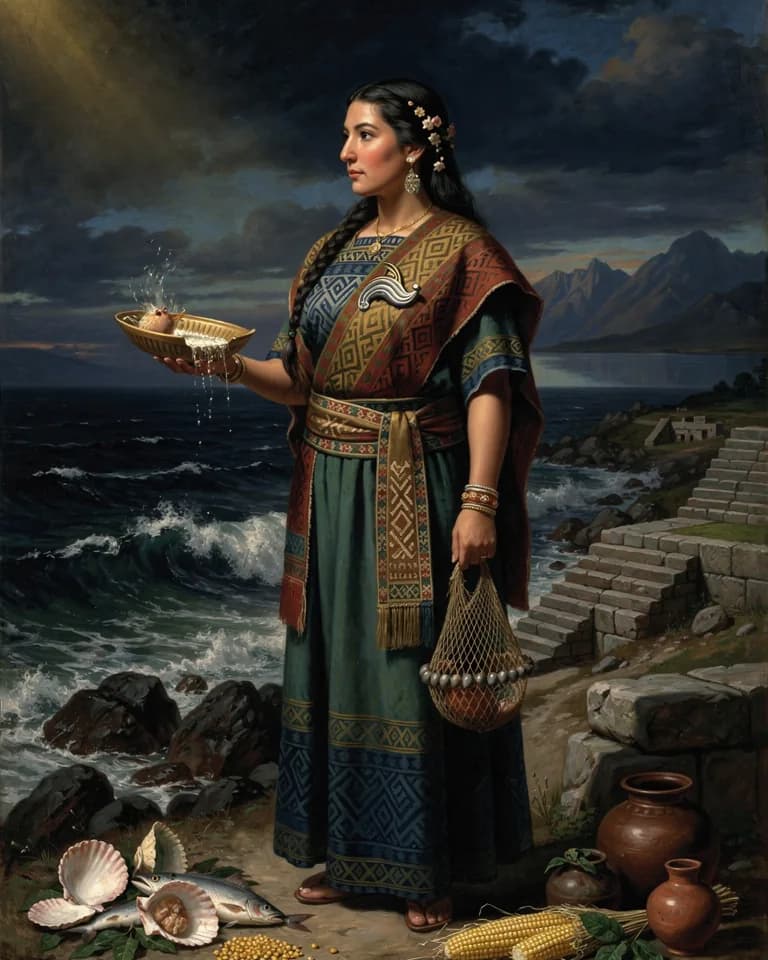
- the sea
- lakes and waters
- fishing
The Sea Mother, named by colonial writers alongside Pachamama as the mother of waters, especially important to coastal fishing peoples and connected in highland thought to the lakes and springs that fed the fields.
About Mama Qucha
Attestation
José de Acosta (1590), following Polo de Ondegardo, lists the sea, called Mamacocha, among the principal objects of Andean worship, and the seventeenth-century extirpators report coastal fishing communities making offerings to the sea. The word qucha means lake as well as sea, and highland people also addressed lakes, springs, and lagoons as sources of the water that became rain and irrigation.
Water in Andean thought
The Huarochirí Manuscript describes a cosmos in which water circulates: the celestial llama Yacana drinks from the sea at night so that the ocean does not flood the world, and the Milky Way is a river in the sky. Spondylus shell (mullu), traded up from the warm waters off Ecuador, was among the most valued offerings throughout the Andes, a material link between the sea and highland rites for water.
Limits of the record
No narrative myth about Mama Qucha herself survives in the major sources; she is known from lists of worshipped powers and from offering practices. This entry keeps to that evidence.
Origin story
No origin story survives; she is the sea itself, addressed as mother.
Worship and cult
Temples, festivals, and practices recorded for Mama Qucha
Offerings to the sea by coastal fishing communities, and offerings to lakes and springs as sources of irrigation water, reported by colonial extirpators; spondylus shell (mullu) was a prized offering throughout the Andes.
Sources and further reading
Source notes
These references are recorded in the catalog. Their passage wording and translation have not been checked, so quotations are not displayed here.
- José de Acosta, Historia natural y moral de las Indias, Book 5 (paraphrase)
About this entry
By Elizabeth Stein for Mythos Atlas. About the author. Editorial notes are grounded in the site's cited sources and can be challenged through the contact page.
Parallels are editorial comparisons across traditions: a shared role does not, by itself, establish a shared origin.