Mesoamerican Pantheon
Centeotl
Also known as Centéotl, Maize Lord
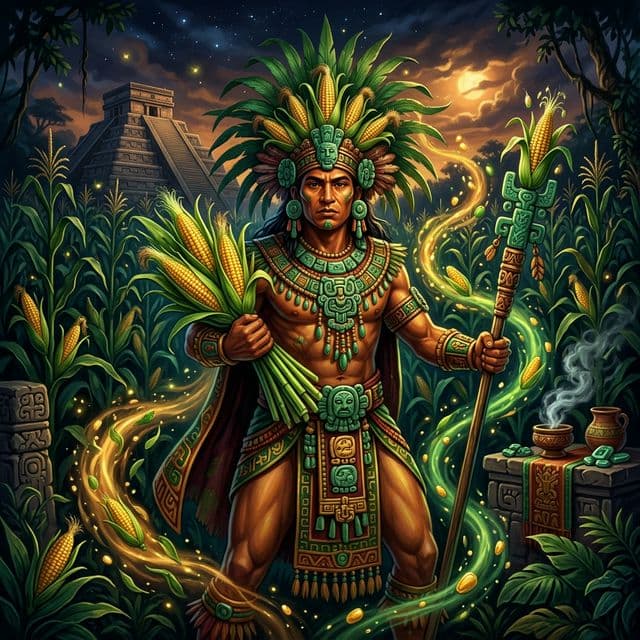
- maize
- agriculture
- sustenance
- fertility
The Aztec god of maize and sustenance. Centeotl represents the sacred maize plant that sustained Mesoamerican civilization.
About Centeotl
Lord of Maize
Centeotl ('Maize Deity') was among the most important Aztec gods, as maize was the foundation of all life. Without his blessing, the people would starve.
Child of Tlazolteotl
Centeotl was born to the earth goddess Tlazolteotl. After his birth, he descended into the earth and from his body grew the essential crops: maize from his hair, cotton from his ears, seeds from his nose.
Annual Renewal
The young maize god was celebrated in festivals marking planting and harvest. His death and rebirth paralleled the agricultural cycle.
Origin story
When Centeotl was born, the gods placed him in the earth. From his divine body grew all the plants that sustain humanity.
Across traditions
Parallel figures
Figures who play a role like Centeotl's in other traditions.
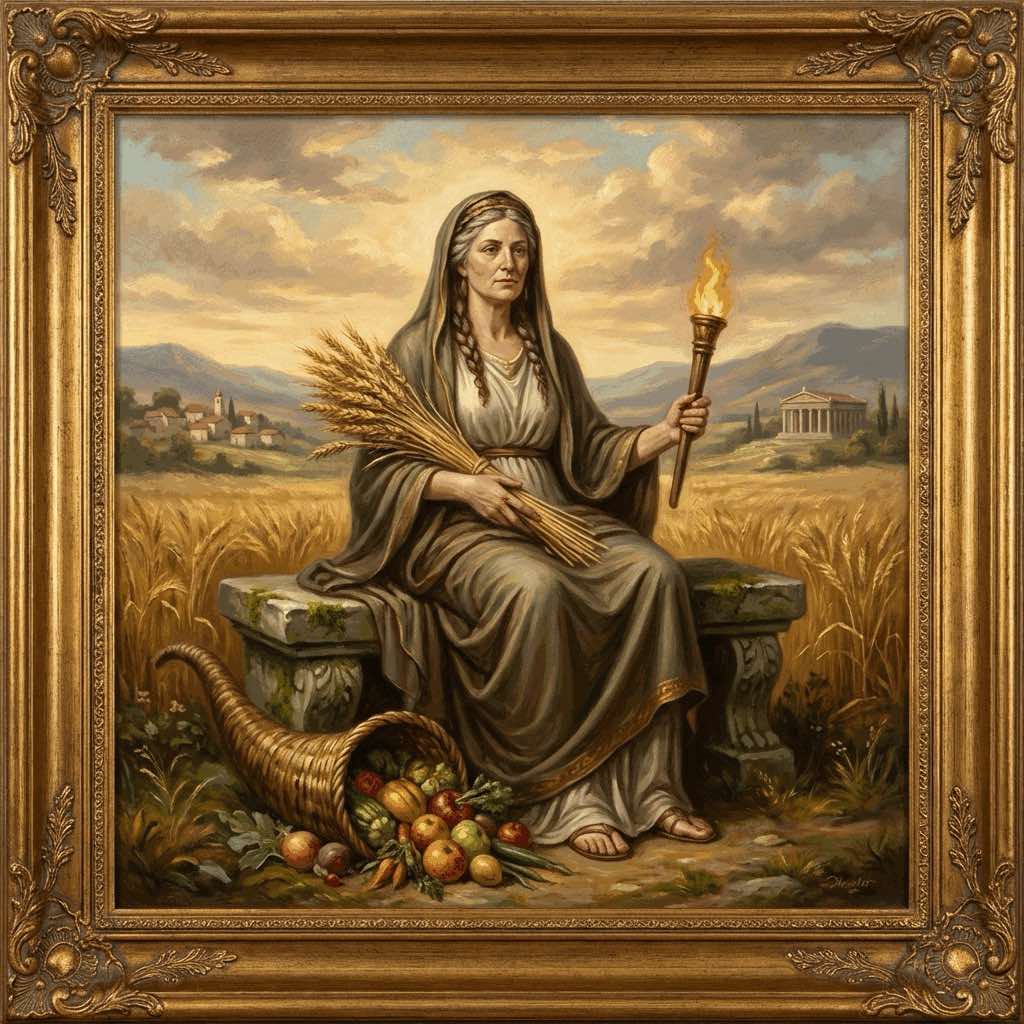 GreekDemeterIllustration
Both are grain deities whose blessing ensures agricultural abundance
Compare Centeotl and Demeter side by side
Worship and cult
Temples, festivals, and practices recorded for Centeotl
The corn lord. The cult is the cob, the planting, and the hungry months. Flaying and maize sit too close in Mexica religion to separate politely.
Sacred sites
- Maize as the body of the god
Festivals
- Huey Tozoztli and related maize months
Family
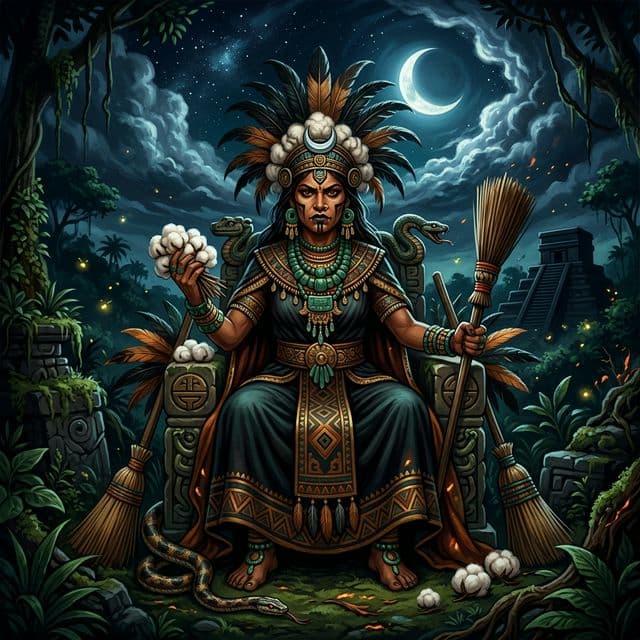 Centeotl
Questions about Centeotl's family
- Who are Centeotl's parents?
- The atlas's kinship records name one parent of Centeotl: Tlazolteotl. Ancient accounts do not always agree on divine parentage.
Sources and further reading
Source notes
These references are recorded in the catalog. Their passage wording and translation have not been checked, so quotations are not displayed here.
- Lewis Spence, The Myths of Mexico and Peru (1913)
About this entry
By Elizabeth Stein for Mythos Atlas. About the author. Editorial notes are grounded in the site's cited sources and can be challenged through the contact page.
Parallels are editorial comparisons across traditions: a shared role does not, by itself, establish a shared origin.
Family relationships come from the atlas's kinship records. Ancient sources often disagree on divine genealogy.
Keep exploring
One myth a week, with its sources in a short email. The sign-up form is just below.
Genealogy
Family tree
Centeotl's parents, consorts, children and rivals, as recorded in the atlas.