Side by sideParallel across traditions

Freyja vs Xochiquetzal

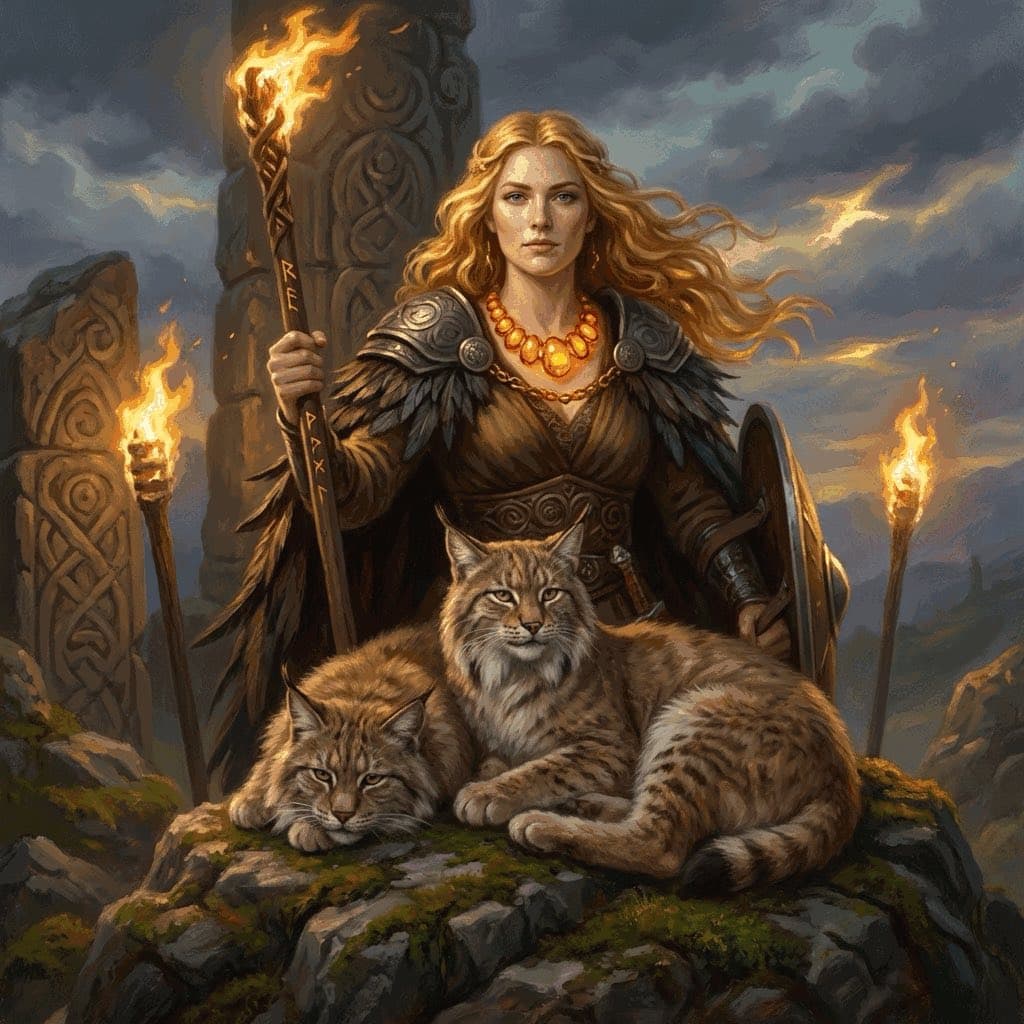
Freyja
FreyjaNorse
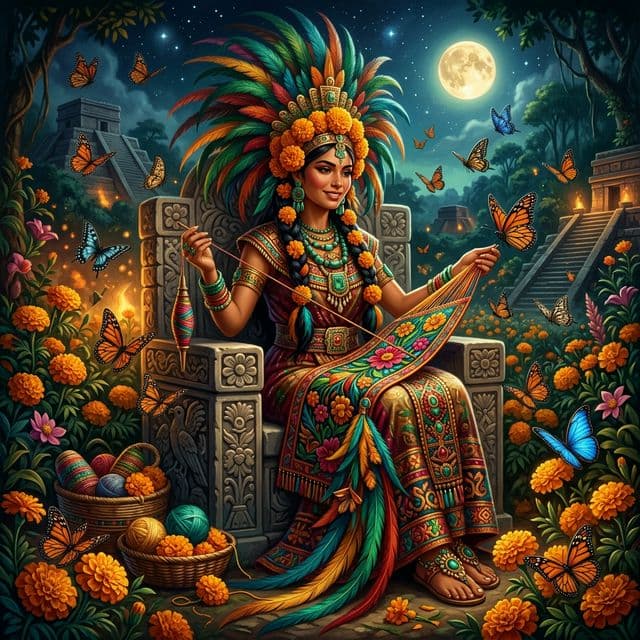
Xochiquetzal
XochiquetzalAztec

Both combine aspects of love, beauty, and fertility with patronage of arts and crafts.

At a glance

Freyja and Xochiquetzal compared
FreyjaXochiquetzal
TraditionNorse PantheonAztec Pantheon
Domainslove, beauty, fertility, war, death, magicbeauty, flowers, love, fertility, weaving, arts
Symbolsnecklace Brisingamen, falcon feather cloak, chariot pulled by cats, boar Hildisvinimarigolds, quetzal feathers, butterflies, spindle
Also calledFreya, Lady, VanadisPrecious Feather Flower, Ichpochtli

Where they meet

Both are associated with love, beauty, and fertility.

Where they part

Only Freyja

Associated with war, death, and magic.

Only Xochiquetzal

Associated with flowers, weaving, and arts.

How each was worshipped

Freyja

Cult sites
No standing temple identified; seiðr and rich graves are the nearer evidence
Festivals
Disablót (disir, overlapping); Friday in later naming

Love, gold, and the slain she shares with Odin. Cats, boar, and seiðr. Snorri says she taught the Aesir witchcraft. Cult is inferred from the Vanir peace, from women's graves, and from the stubborn popularity of her name.

Xochiquetzal

Cult sites
Flower and weaver precincts in Tenochtitlan
Festivals
Huey Tozoztli flower offerings; Linked days in the xiuhpohualli

Marigolds, sexual love, and the work of the loom. Young women and artisans kept her. Not a war cult: a soft, expensive one.

The two figures

Norse Pantheon

Freyja

Most renowned of the Vanir, goddess of love, beauty, and fertility, but also associated with war and death. She receives half of those who die in battle in her hall Folkvangr.

Freyja is the daughter of the sea god Njord and an unnamed mother, possibly the earth goddess Nerthus or a sister of Njord from the Vanir. She came to Asgard as a hostage after the Aesir-Vanir War, along with her father and twin brother Freyr. In exchange, the Aesir sent Hoenir and Mimir to the Vanir. The Vanir, feeling cheated, beheaded Mimir, but the exchange brought lasting peace. Freyja taught the Aesir the magic of seidr, a form of shamanic sorcery previously unknown to them. She became so beloved among the gods that she was granted her own hall, Sessrumnir, in the field of Folkvangr.

Freyja is the goddess of love, beauty, gold, and magic (*seidr*). She drives a chariot pulled by giant cats and wears the necklace Brisingamen.

Read the full Freyja entry

Aztec Pantheon

Xochiquetzal

The goddess of beauty, love, flowers, and female sexuality. Xochiquetzal was patron of artisans, weavers, and pregnant women, and dwelt in the paradise of Tamoanchan.

Xochiquetzal was created in the paradise of Tamoanchan. She was initially consort of the rain god Tlaloc, but Tezcatlipoca abducted her to be his own. Her abduction introduced desire and longing into the world.

Xochiquetzal ("Precious Feather Flower") was the Aztec goddess of **beauty, love, pleasure, flowers, and female sexuality**. Unlike many Aztec deities associated with darkness or sacrifice, she represented joy, youth, and the pleasures of life. She was eternally young and beautiful, dwelling in **Tamoanchan**, the paradise above the heavens.

Read the full Xochiquetzal entry
About this comparison

Comparisons pair figures that play a similar role across traditions, or that the myths connect within one. A shared role does not, by itself, establish a shared origin.