Mesoamerican Pantheon
Chaac
Also known as Chac, God B, Chaahk
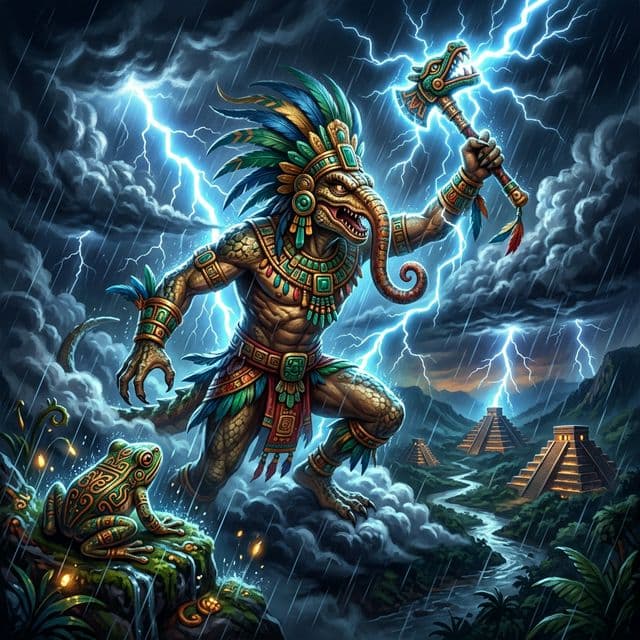
- rain
- lightning
- thunder
- agriculture
The Maya god of rain, lightning, and thunder. Chaac wields his lightning axe to split the clouds and bring life-giving rain to the maize fields. One of the most widely worshipped Maya deities.
About Chaac
The Lord of Rain
Chaac is the Maya god of rain, one of the most important deities for an agricultural civilization. He is recognizable by his long, curling nose, fangs, and the lightning axe he wields to break open the clouds.
The Four Chaacs
Chaac manifests in four forms associated with the cardinal directions: Red Chaac (East), White Chaac (North), Black Chaac (West), and Yellow Chaac (South).
The Lightning Axe
Chaac creates thunder and lightning by striking the clouds with his jade axe. The flash of lightning is the axe blade; the thunder is its impact.
Cenotes and Caves
Chaac was associated with cenotes and caves, considered entrances to the watery underworld where rain originated.
Agricultural Rituals
Farmers performed Cha-Chaac ceremonies to invoke rain, involving prayers and offerings. These ceremonies continue in traditional Maya communities today.
Origin story
Chaac emerged from the primordial waters as lord of rain and storms. He established the seasonal cycles that make agriculture possible.
Across traditions
Parallel figures
Figures who play a role like Chaac's in other traditions.
 MesoamericanTlalocIllustration
Tlaloc is the Aztec equivalent of Chaac, both being rain gods essential to maize agriculture
Compare Chaac and Tlaloc side by side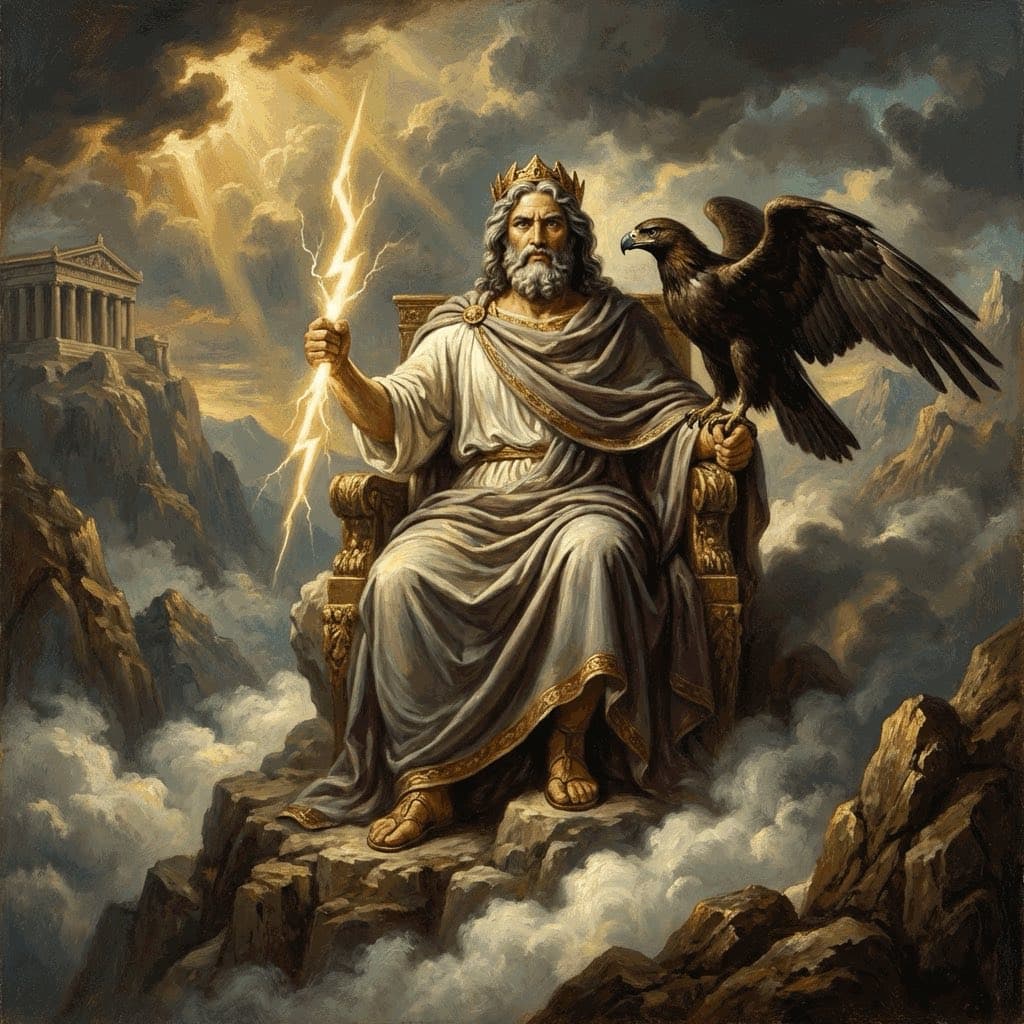 GreekZeusIllustration
Both are thunder gods who wield divine weapons to produce storms
Compare Chaac and Zeus side by side
Worship and cult
Temples, festivals, and practices recorded for Chaac
The long-nosed rain lord. Offerings go into sinkholes. Farmers still know the four Chaacs of the directions.
Sacred sites
- Cenotes; Chichen Itza's rain architecture
Festivals
- Rain-making; Ch'a Chaak in Yucatec practice
Sources and further reading
Source notes
These references are recorded in the catalog. Their passage wording and translation have not been checked, so quotations are not displayed here.
- Lewis Spence, The Myths of Mexico and Peru (1913)
About this entry
By Elizabeth Stein for Mythos Atlas. About the author. Editorial notes are grounded in the site's cited sources and can be challenged through the contact page.
Parallels are editorial comparisons across traditions: a shared role does not, by itself, establish a shared origin.
Keep exploring
One myth a week, with its sources in a short email. The sign-up form is just below.
Genealogy
Family tree
Chaac's parents, consorts, children and rivals, as recorded in the atlas.