Norse Pantheon
Frigg
Also known as Frigga, Fricka
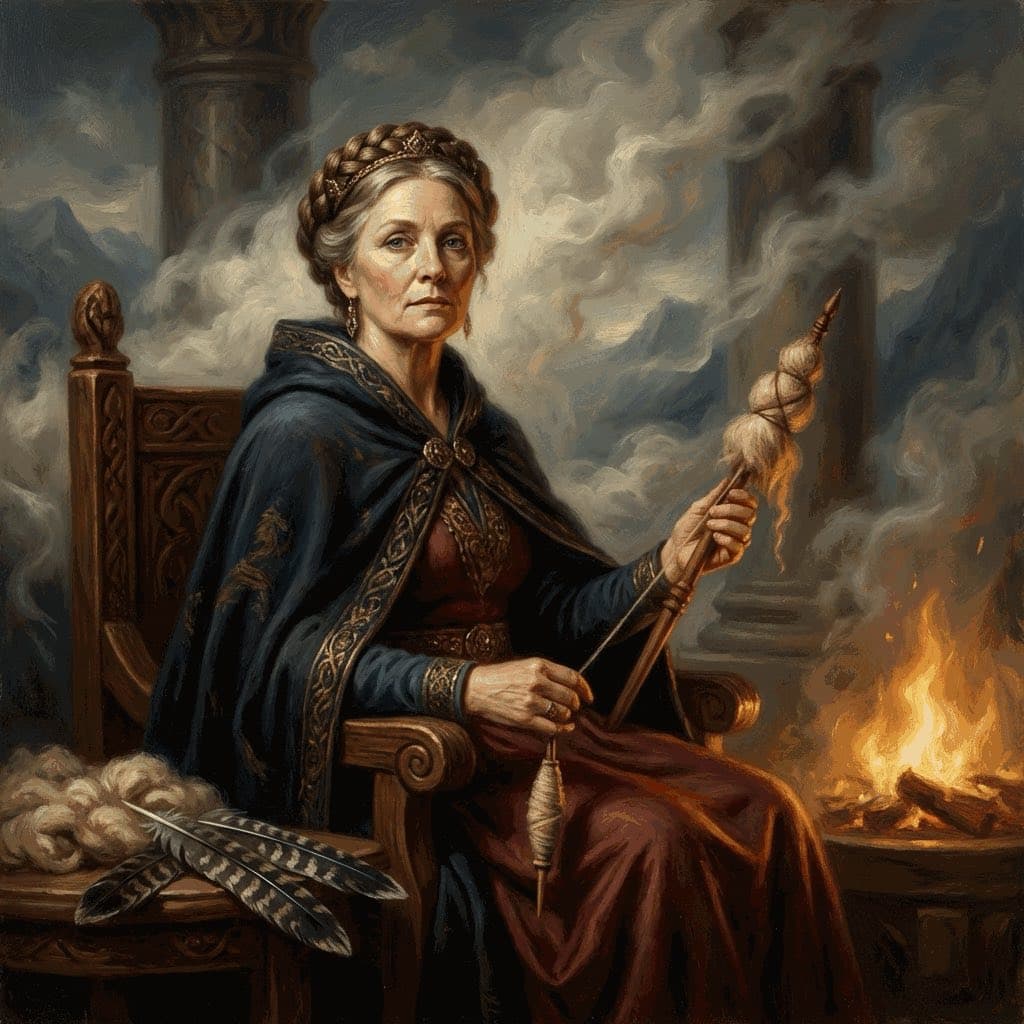
- marriage
- motherhood
- domestic arts
- prophecy
- fate
Queen of the Aesir and wife of Odin. Goddess of marriage, motherhood, and the home. She possesses the power of prophecy but chooses not to reveal what she knows.
About Frigg
Queen of Asgard
Frigg is the wife of Odin and the foremost goddess of the Aesir. She sits enthroned in Fensalir. She is the only one besides Odin allowed to sit on Hlidskjalf and look out over all the worlds.
The Silent Prophet
While Odin wanders constantly seeking knowledge, Frigg already knows the fate of all things ("orlog") but chooses to remain silent. Her greatest tragedy is the death of her son Baldur, whom she tried to protect by extracting oaths from everything in creation—except the mistletoe.
Origin story
Frigg is believed to be the daughter of the goddess Fjorgyn (Earth) and belongs to the Aesir, the ruling tribe of gods. Her origins stretch back to the earliest days of the cosmos. She became the wife of Odin and the Queen of Asgard, establishing her hall Fensalir in the realm of the gods. With Odin, she bore Baldur, the most beloved of gods, and Hodr, the blind god. Some scholars connect her to the Germanic goddess Frija, whose name gave us the word Friday. Her knowledge of fate and her role as cosmic mother made her one of the most revered goddesses in the Norse pantheon.
Across traditions
Parallel figures
Figures who play a role like Frigg's in other traditions.
 GreekHeraIllustration
Both are the wife of the chief sky god, presiding over marriage, motherhood, and the domestic sphere
Compare Frigg and Hera side by side RomanJunoIllustration
Both are the wife of the chief sky god, presiding over marriage, motherhood, and the domestic sphere
Compare Frigg and Juno side by side
Worship and cult
Temples, festivals, and practices recorded for Frigg
Spinning, foresight, and the high-seat woman. Cult evidence is thin. Friday in some languages remembers a related goddess (Frigg or Freyja; the names bled). Treat the quiet household rites as reconstruction, not a festival calendar.
Sacred sites
- No securely identified temple; paired with Odin in late sources
Festivals
- Winter-night offerings in later folklore
Family
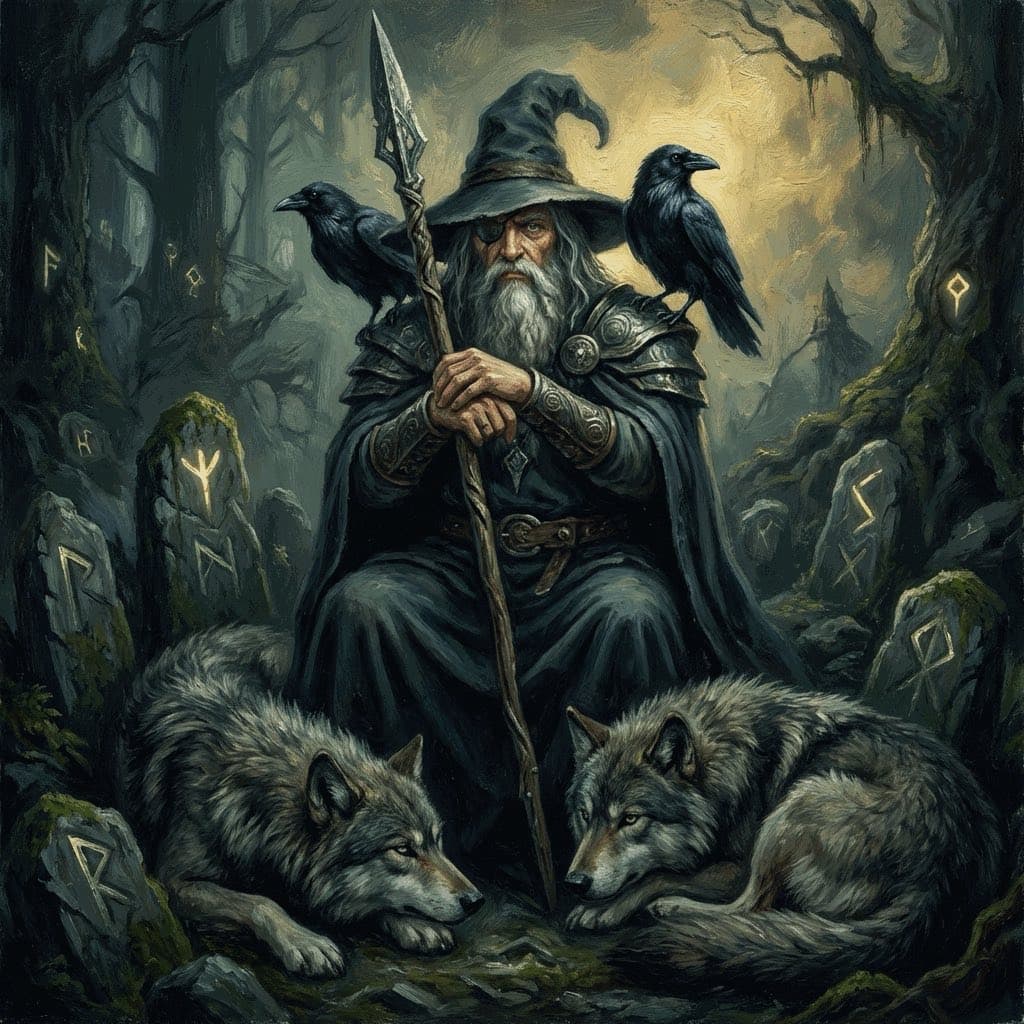
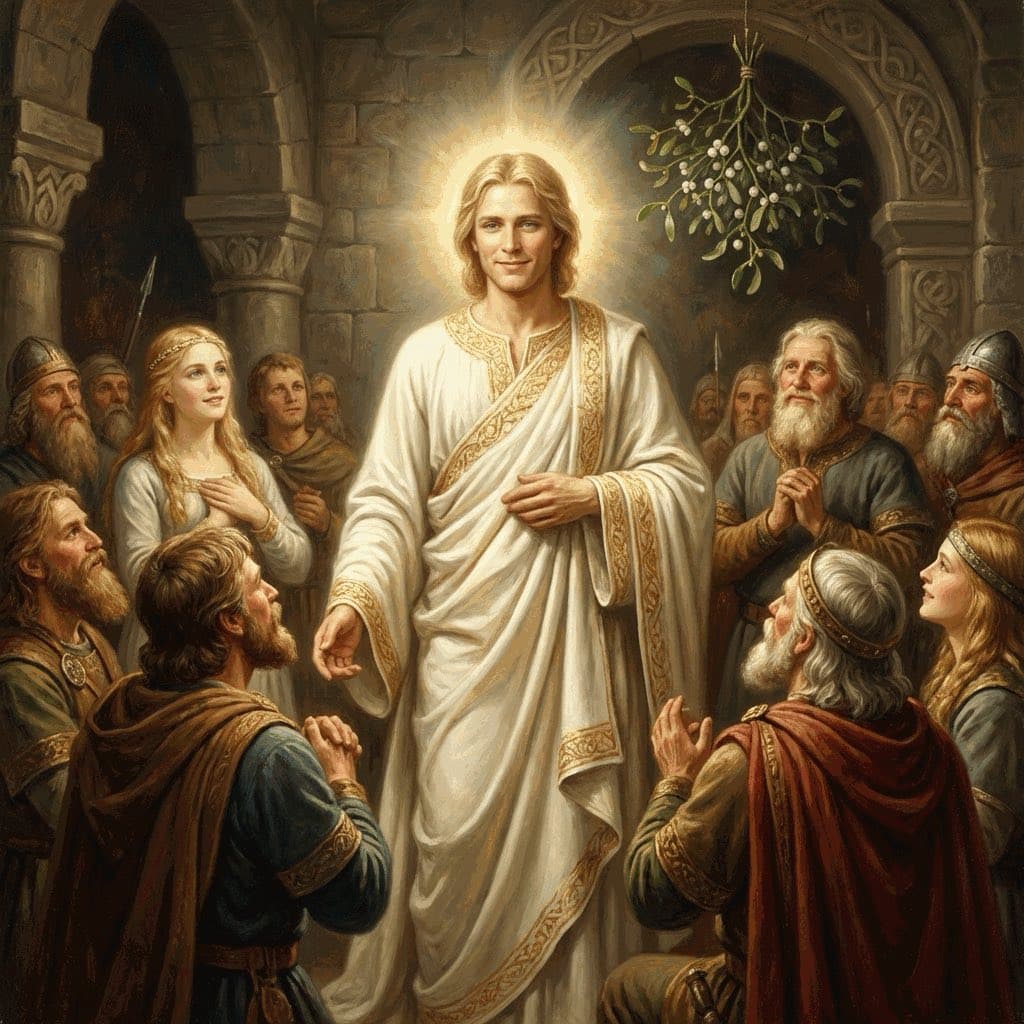
Relationship sources
Prose Edda — Odin spouse of Frigg
Snorri Sturluson · Arthur Gilchrist Brodeur, The Prose Edda (1916), American-Scandinavian Foundation; Internet Sacred Text Archive transcription · Gylfaginning XX (20)
Prose Edda — Frigg parent of Baldur
Snorri Sturluson · Arthur Gilchrist Brodeur, The Prose Edda (1916), American-Scandinavian Foundation; Internet Sacred Text Archive transcription · Skáldskaparmál V (5)
In the atlas
Where Frigg appears
Sources and further reading
Source notes
These references are recorded in the catalog. Their passage wording and translation have not been checked, so quotations are not displayed here.
- Prose Edda, Gylfaginning (trans. Anderson)
Cite this page
No publication date is recorded for this page, so each citation uses n.d. and today's date as the access date.
About this entry
By Elizabeth Stein for Mythos Atlas. About the author. Editorial notes are grounded in the site's cited sources and can be challenged through the contact page.
Parallels are editorial comparisons across traditions: a shared role does not, by itself, establish a shared origin.
Family relationships come from the atlas's kinship records. Ancient sources often disagree on divine genealogy.
Keep exploring
One myth a week, with its sources in a short email. The sign-up form is just below.
Genealogy
Family tree
Frigg's parents, consorts, children and rivals, as recorded in the atlas.