Hindu Pantheon
Ganesha
Also known as Ganapati, Vinayaka, Vighnaharta
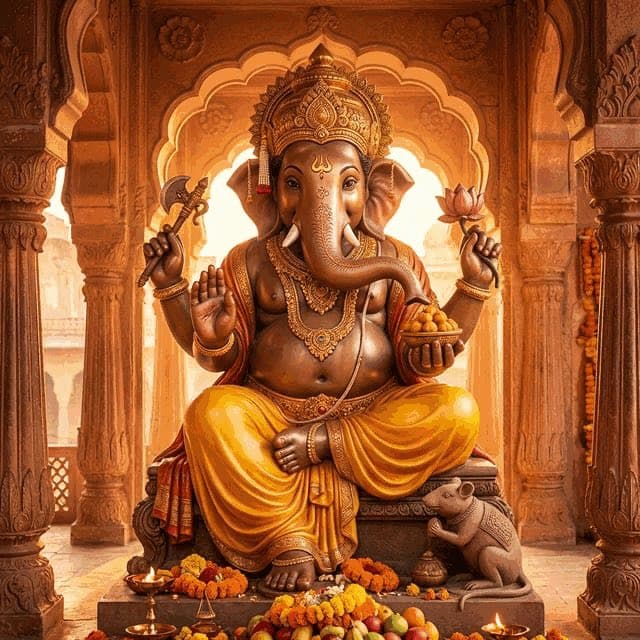
- wisdom
- beginnings
- obstacles
- intellect
- arts
Elephant-headed god of wisdom, new beginnings, and remover of obstacles. Son of Shiva and Parvati. Worshipped before any new venture. Patron of arts and sciences.
About Ganesha
The Remover of Obstacles
Ganesha is the beloved elephant-headed god of wisdom, new beginnings, and the remover of obstacles. Son of Shiva and Parvati, he is worshipped before any new venture, journey, or undertaking. He is also the patron of arts, sciences, and learning.
The Elephant Head
Parvati created Ganesha from sandalwood paste and clay to guard her privacy. When Shiva returned and was blocked by the boy, not recognizing him, he beheaded him in anger. To console the grieving Parvati, Shiva replaced Ganesha's head with that of the first creature found—an elephant.
Divine Attributes
Ganesha's large ears hear all prayers; his trunk symbolizes adaptability and strength. His big belly contains infinite universes. He holds an axe (to cut attachments), a rope (to pull devotees closer), a lotus (spiritual awakening), and a modak (sweet of wisdom). His mount is a mouse, representing controlled desires.
Ganesh Chaturthi
The festival of Ganesh Chaturthi celebrates his birthday with elaborate clay idols, prayers, and processions ending in immersion. The mantra "Om Gam Ganapataye Namah" is recited to invoke his blessings for new beginnings.
Origin story
Parvati created Ganesha from sandalwood paste to guard her. When Shiva tried to enter, he beheaded the boy. To console Parvati, Shiva replaced Ganesha's head with that of an elephant.
Across traditions
Parallel figures
Figures who play a role like Ganesha's in other traditions.
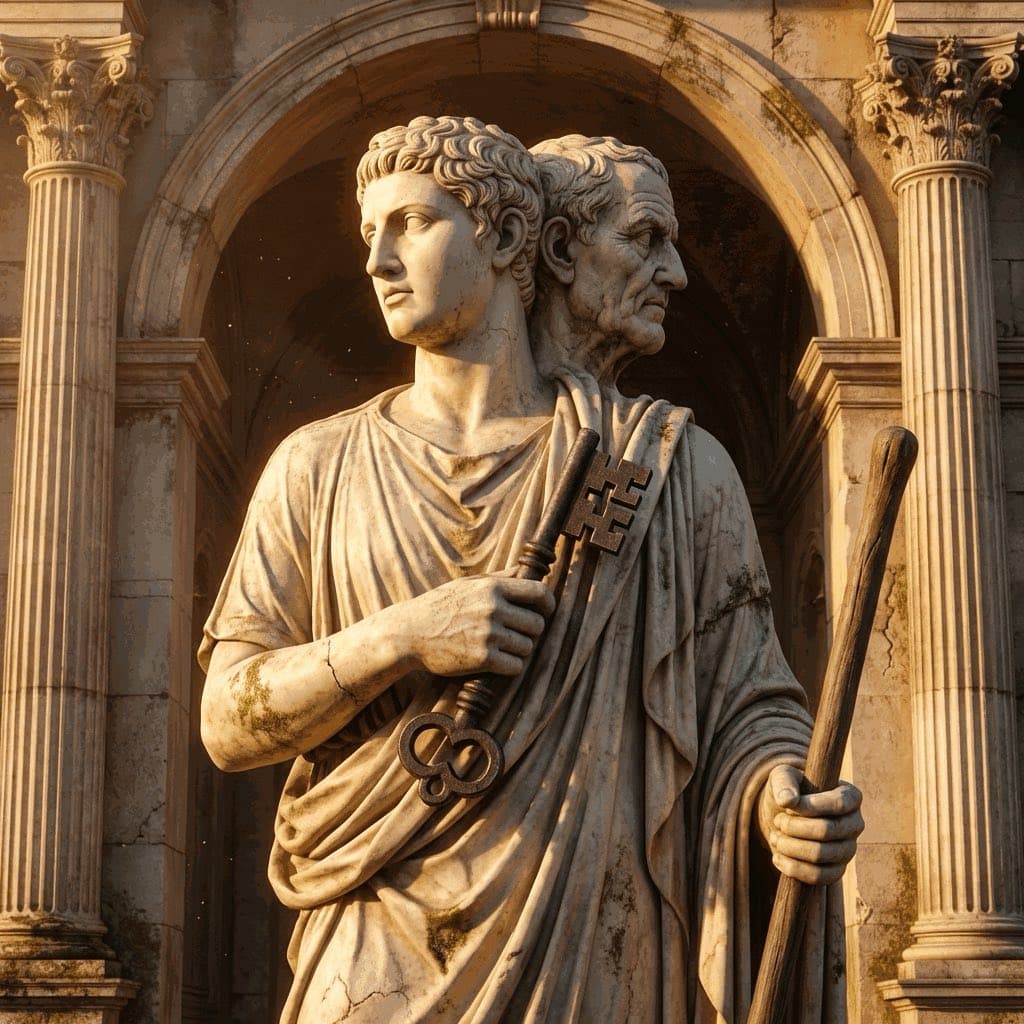 RomanJanusIllustration
Both are invoked at the very beginning of any endeavor or ceremony, before any other deity
Compare Ganesha and Janus side by side
Worship and cult
Temples, festivals, and practices recorded for Ganesha
First god named. A modak, a mouse, and in Mumbai a clay image that is drowned after ten days. Beginnings, ledgers, and the removal of obstacles: the cult is practical.
Sacred sites
- Siddhivinayak in Mumbai
- Ashtavinayak circuit in Maharashtra
- Doorway shrines at the start of any rite
Festivals
- Ganesh Chaturthi
- Vinayaka Chaturthi
Family
In the atlas
Where Ganesha appears
In the museums
Ganesha in art
Real objects in public collections, released into the public domain by the museums that hold them. Dates refer to when each object was made. Objects made within the tradition come first, later depictions after.
 (opens the museum record)
Ancient object
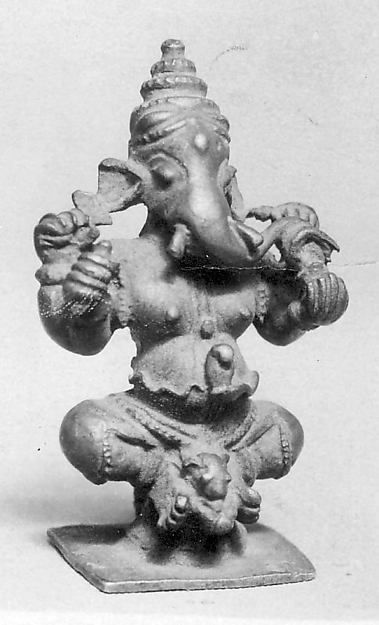
Seated Ganesha (opens the museum record)
A Thai bronze of a seated, elephant-headed Ganesha, tagged by the museum with his name. Ganesha's worship spread from India across Buddhist and Hindu Southeast Asia.
 (opens the museum record)
Later depiction
Ganesha (opens the museum record)
A South Indian bronze figurine of Ganesha, part of the continuous tradition of casting the elephant-headed god for household and temple shrines.
Sources and further reading
Source notes
These references are recorded in the catalog. Their passage wording and translation have not been checked, so quotations are not displayed here.
- Ganapati Atharvashirsha (opening invocation, English paraphrase)
About this entry
By Elizabeth Stein for Mythos Atlas. About the author. Editorial notes are grounded in the site's cited sources and can be challenged through the contact page.
Parallels are editorial comparisons across traditions: a shared role does not, by itself, establish a shared origin.
Family relationships come from the atlas's kinship records. Ancient sources often disagree on divine genealogy.
Keep exploring
One myth a week, with its sources in a short email. The sign-up form is just below.
Genealogy
Family tree
Ganesha's parents, consorts, children and rivals, as recorded in the atlas.