Hindu Pantheon
Shiva
शिव(Shiva)
Also known as Mahadeva, Rudra, Nataraja, Maheshvara
- destruction
- transformation
- meditation
- time
- dance
The destroyer and transformer, third member of the Trimurti. Shiva destroys the universe at the end of each cosmic cycle to allow recreation. God of meditation, yoga, and the arts.
About Shiva
The Destroyer and Transformer
Shiva is the third god of the Trimurti, the cosmic destroyer who dissolves the universe at the end of each cycle to enable its recreation. Far from merely destructive, Shiva transforms and regenerates, making way for new creation.
Nataraja - The Cosmic Dancer
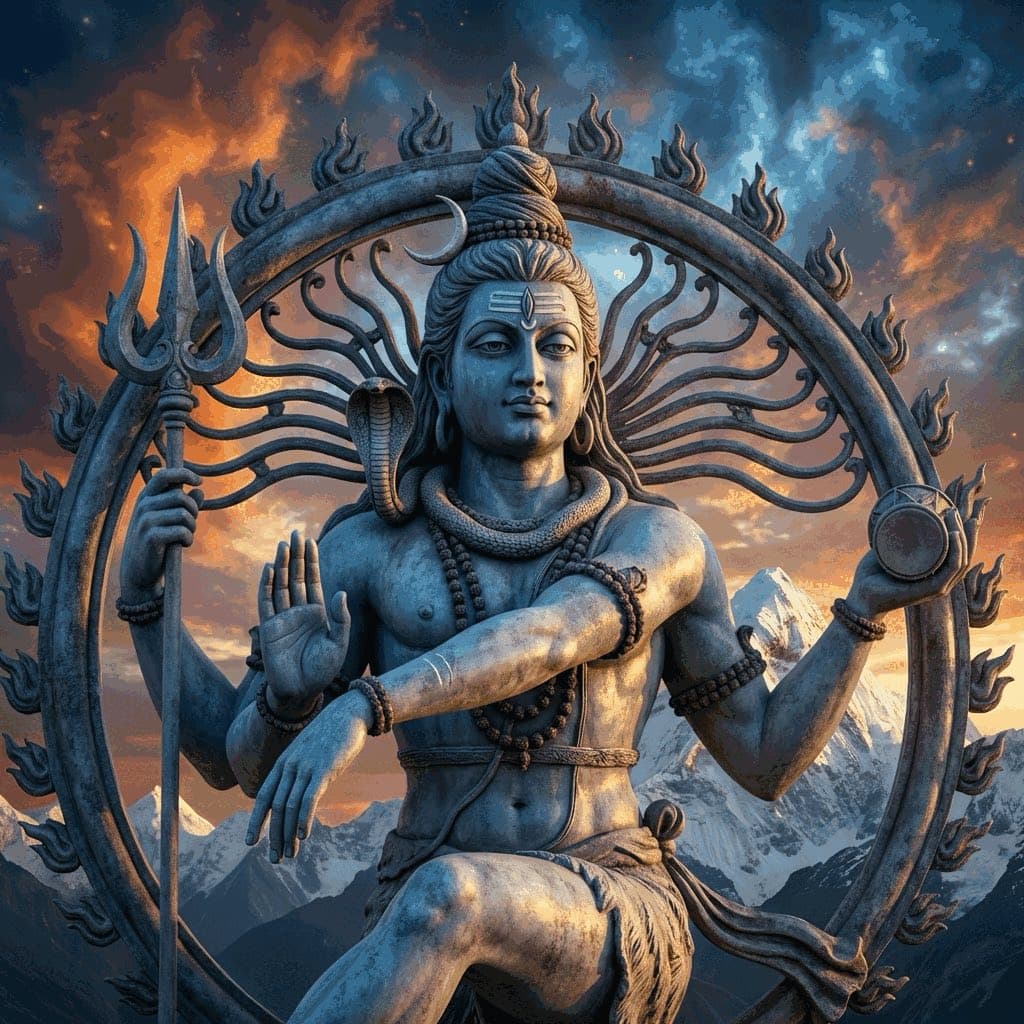
As Nataraja, Shiva performs the Tandava, the cosmic dance of creation, preservation, and destruction. His dance within a ring of fire represents the eternal cycle of the universe. One foot crushes the demon of ignorance (Apasmara).
The Third Eye and the Ganges
Shiva's third eye on his forehead represents wisdom and can emit flames to destroy evil. The holy river Ganges flows from his matted locks—he caught her in his hair when she descended from heaven to prevent Earth's destruction. The crescent moon adorns his head, and serpents coil around his neck.
Mount Kailash and Shaivism
Shiva resides on Mount Kailash with his consort Parvati and sons Ganesha and Kartikeya. Shaivism, devoted to Shiva worship, is a major Hindu denomination. The festival Maha Shivaratri honors him. His mantra "Om Namah Shivaya" is among the most sacred in Hinduism.
Origin story
Shiva is eternal and was never born. He manifested in various forms throughout cosmic time. He lives on Mount Kailash with his consort Parvati. His meditation sustains the universe.
Across traditions
Parallel figures
Figures who play a role like Shiva's in other traditions.
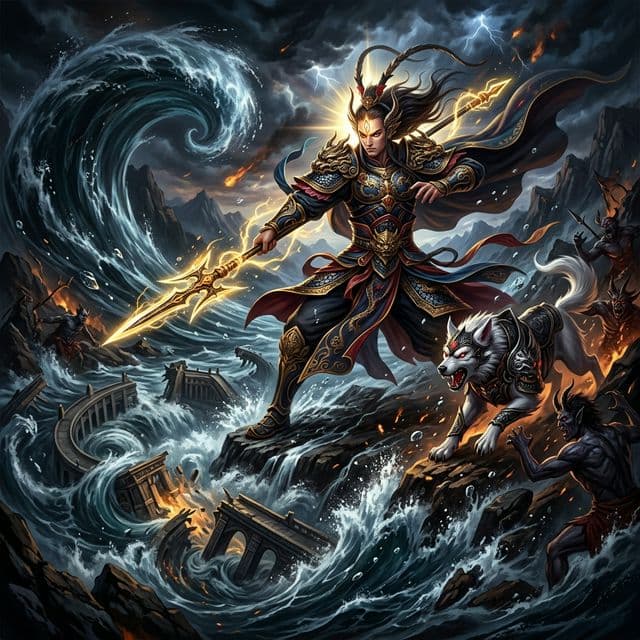 ChineseErlang ShenIllustration
Both are fierce warrior-ascetic gods with a third eye
Compare Shiva and Erlang Shen side by side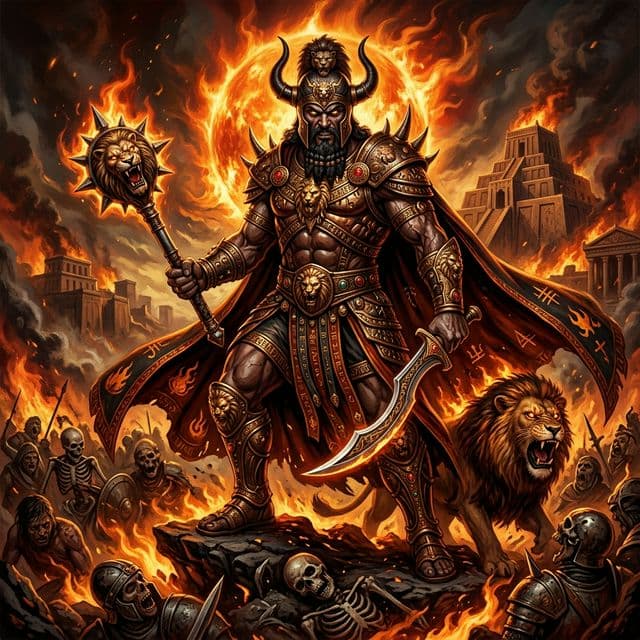 MesopotamianNergalIllustration
Both are destroyer gods associated with plague, death, and cosmic upheaval
Compare Shiva and Nergal side by side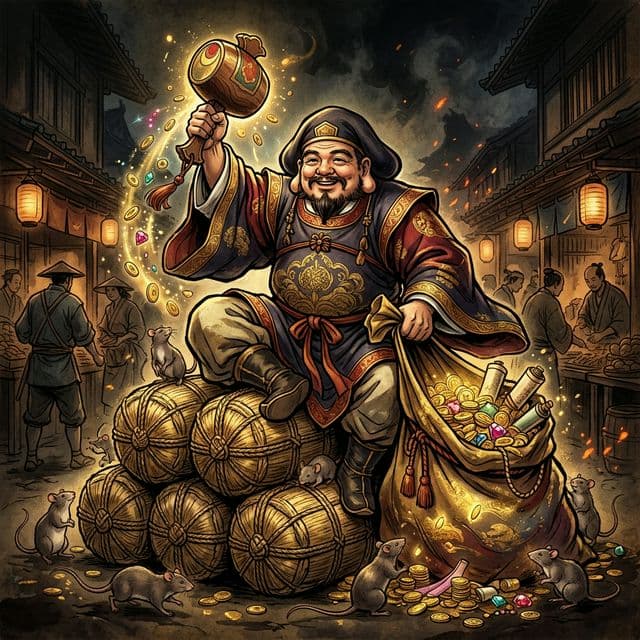 JapaneseDaikokutenIllustration
Both carry aspects of a fierce, transformative deity behind a more benevolent public form
Compare Shiva and Daikokuten side by side
Worship and cult
Temples, festivals, and practices recorded for Shiva
Linga, ashes, and the cremation ground. Householders and ascetics share him. Shivaratri is a night of waking and water on stone. He is destroyer only in the sense that every finished thing is his.
Sacred sites
- Kashi Vishwanath in Varanasi
- Chidambaram Nataraja
- The twelve Jyotirlinga shrines
Festivals
- Maha Shivaratri
- Pradosha
Family
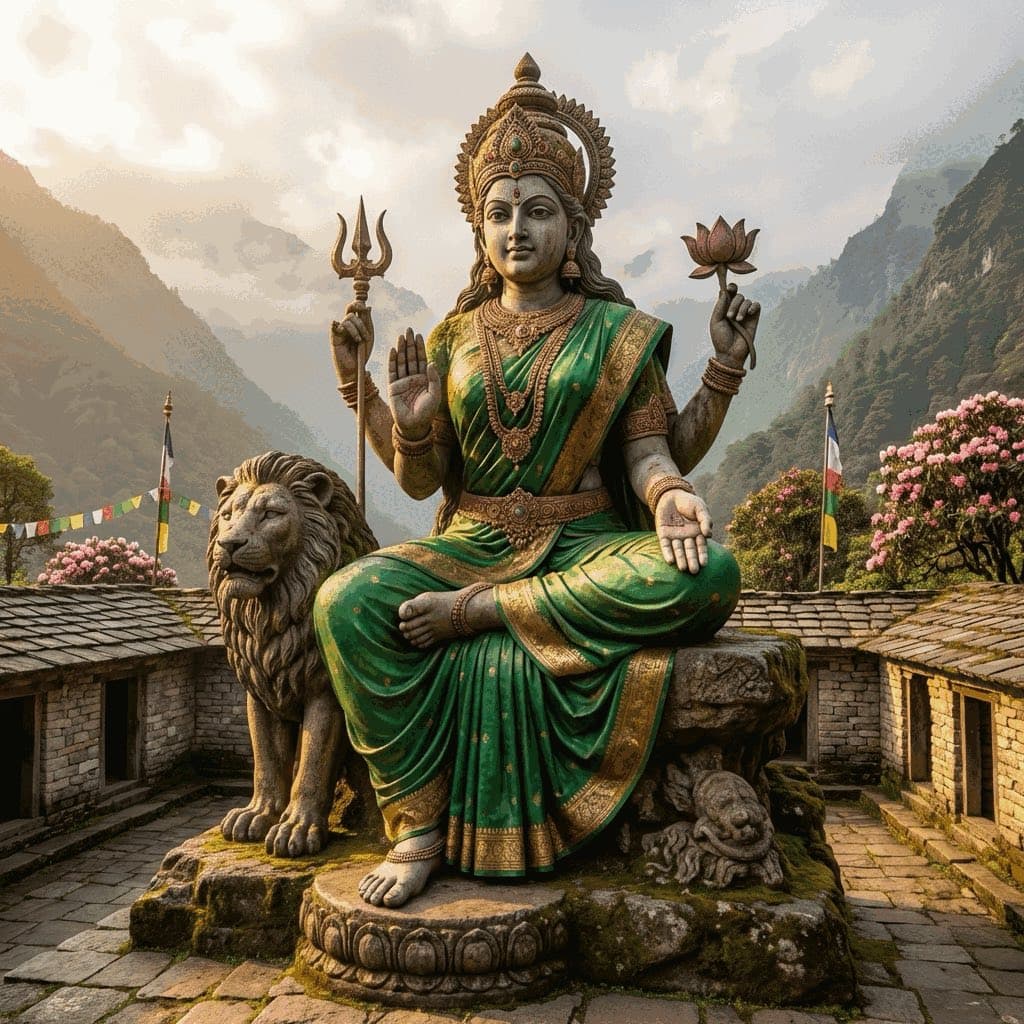
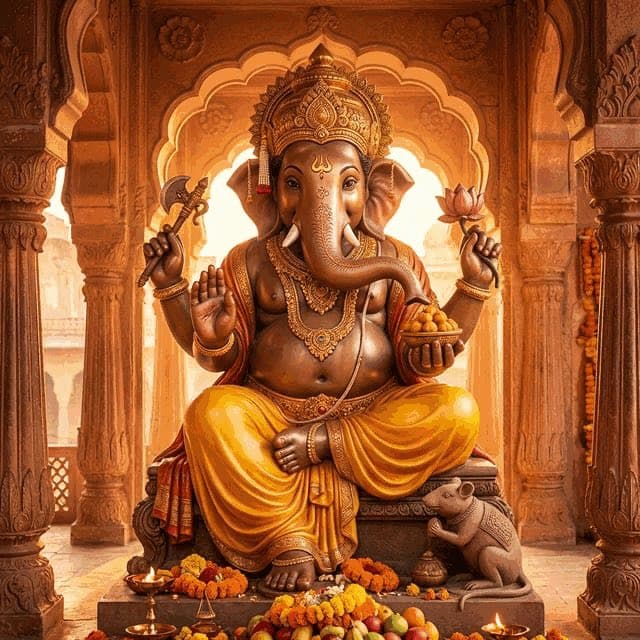
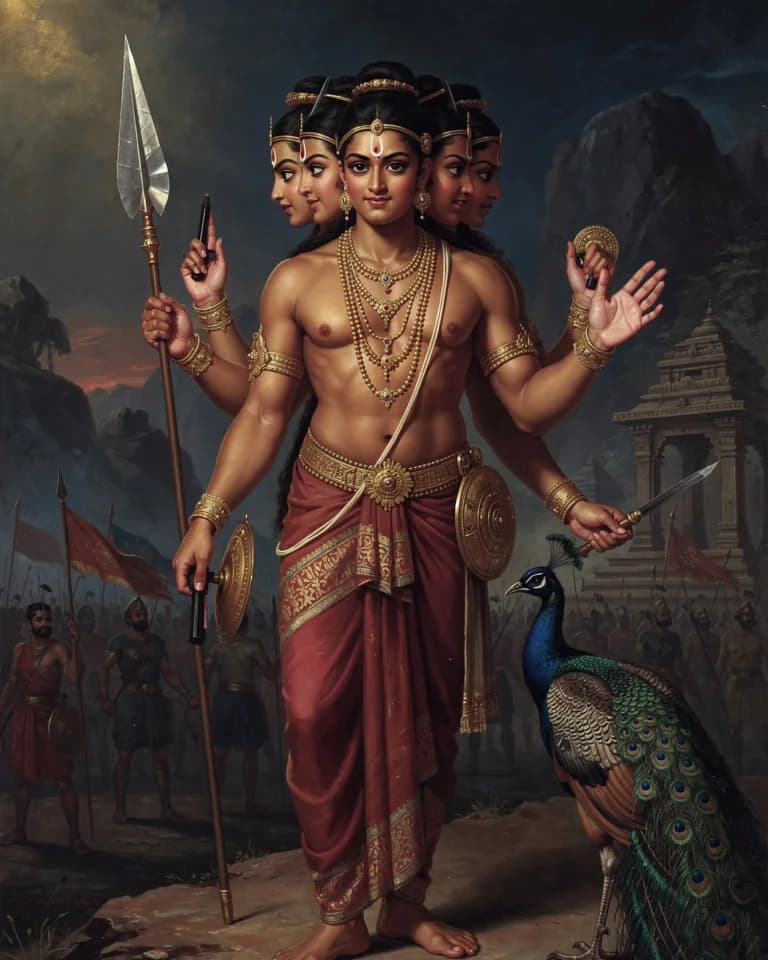
In the atlas
Where Shiva appears
In the museums
Shiva in art
Real objects in public collections, released into the public domain by the museums that hold them. Dates refer to when each object was made. Objects made within the tradition come first, later depictions after.
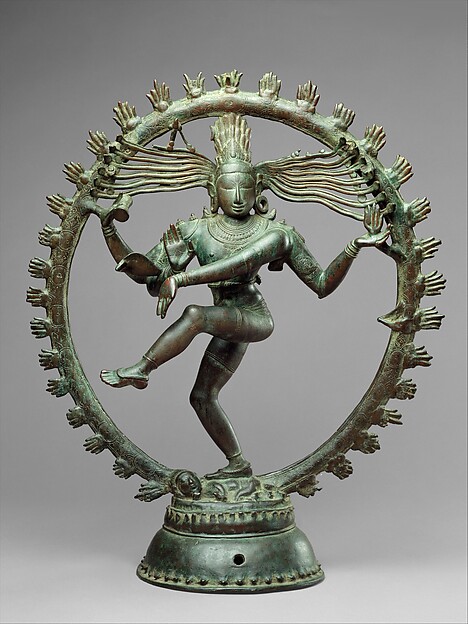 (opens the museum record)
Ancient object
Shiva as Lord of Dance (Nataraja) (opens the museum record)
A Chola bronze of Shiva as Nataraja, Lord of the Dance, encircled by a ring of flame. This is one of the most celebrated forms of Hindu bronze sculpture, cast for temple processions in South India.
 (opens the museum record)
Ancient object
Shiva Seated with Uma (Umamaheshvara) (opens the museum record)
A Pala-period bronze showing Shiva seated with his consort Uma, a form known as Umamaheshvara. It reflects the eastern Indian bronze-casting tradition centered in Bihar and Bengal.
Sources and further reading
Source notes
These references are recorded in the catalog. Their passage wording and translation have not been checked, so quotations are not displayed here.
- Vishnu Purana (trans. Dutt, after Wilson)
Appears in
Ancient and classical works featuring this figure.
Prefigured in the fierce storm archer Rudra, lord of the wilderness, diseases, and healing balms (Hymn 2.33)
About this entry
By Elizabeth Stein for Mythos Atlas. About the author. Editorial notes are grounded in the site's cited sources and can be challenged through the contact page.
Parallels are editorial comparisons across traditions: a shared role does not, by itself, establish a shared origin.
Family relationships come from the atlas's kinship records. Ancient sources often disagree on divine genealogy.
Keep exploring
One myth a week, with its sources in a short email. The sign-up form is just below.
Genealogy
Family tree
Shiva's parents, consorts, children and rivals, as recorded in the atlas.