Aztec Pantheon
Huitzilopochtli
Also known as Hummingbird of the South
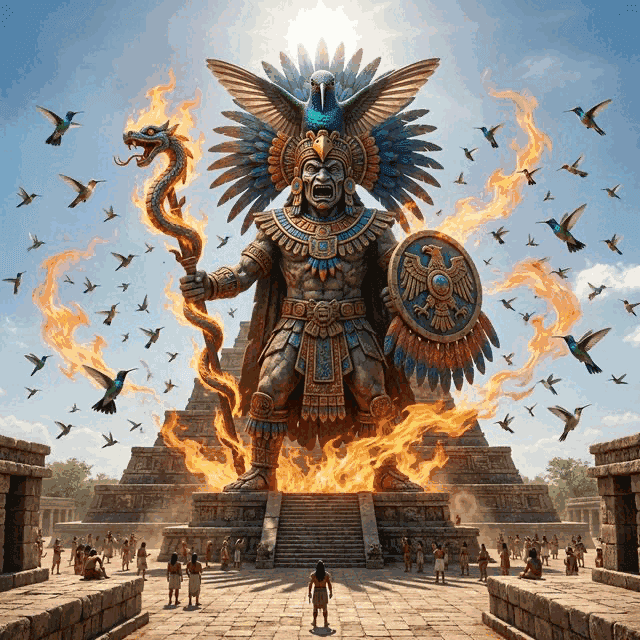
- sun
- war
- sacrifice
- Tenochtitlan
The patron god of the Aztecs and Tenochtitlan. A solar warrior who requires blood sacrifice to battle the infinite night and keep the sun moving.
About Huitzilopochtli
The Hummingbird of the South
Huitzilopochtli was the supreme deity of the Aztecs, the divine patron of their empire, and the god who guided them from their mythical homeland of Aztlan to found the great city of Tenochtitlan. His name means "Hummingbird of the Left (South)" - the hummingbird symbolizing the souls of fallen warriors who accompanied the sun across the sky.
Solar Warrior and Blood Sacrifice
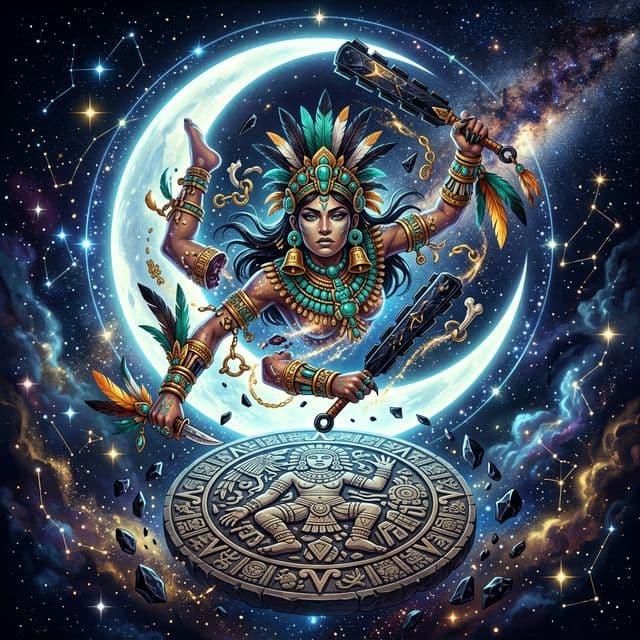
As the sun god, Huitzilopochtli fought an eternal battle each night against the forces of darkness, particularly his sister Coyolxauhqui (the moon) and the Centzon Huitznahua (the 400 stars). The Aztecs believed the sun would fail to rise without the nourishment of human blood and hearts, making sacrifice essential to cosmic survival. Warriors captured in the sacred Flower Wars were offered to sustain the sun's journey.
The Great Temple (Templo Mayor)
The twin pyramids of Templo Mayor in Tenochtitlan's center featured Huitzilopochtli's shrine at its summit alongside Tlaloc's. Annual festivals including Panquetzaliztli celebrated his birth with elaborate ceremonies, ritual combat, and human sacrifice. The great stone of Coyolxauhqui found at Templo Mayor's base depicts her dismembered body.
The Aztec Migration
Huitzilopochtli spoke to his people through priests, directing their centuries-long migration from Aztlan. He promised they would find their destined home where an eagle perched on a cactus devoured a serpent - the image now central to Mexico's flag.
Origin story
Born fully armed from his mother Coatlicue to defend her from his 400 siblings who plotted to kill her. He slew them and drove them away.
Across traditions
Parallel figures
Figures who play a role like Huitzilopochtli's in other traditions.
 MesopotamianMardukIllustration
Both are warrior gods who become the supreme patron deity of their city (Tenochtitlan/Babylon) through a myth of martial triumph
Compare Huitzilopochtli and Marduk side by side
Worship and cult
Temples, festivals, and practices recorded for Huitzilopochtli
Hummingbird of the south, sun at war. The Templo Mayor was his and Tlaloc's stacked mountain. Panquetzaliztli raised banners and, in the Mexica state cult, human offerings to keep the sun in motion. That is the imperial rite, not a metaphor.
Sacred sites
- Southern half of the Templo Mayor in Tenochtitlan
Festivals
- Panquetzaliztli
- Toxcatl adjacent in the same precinct
Family
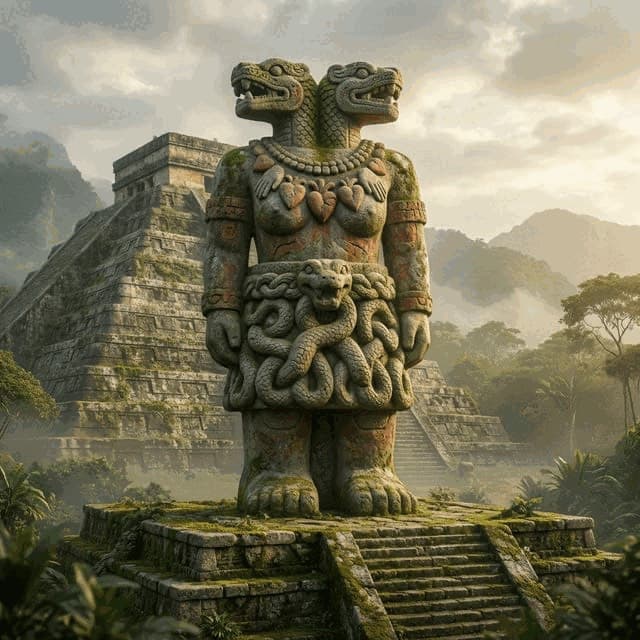
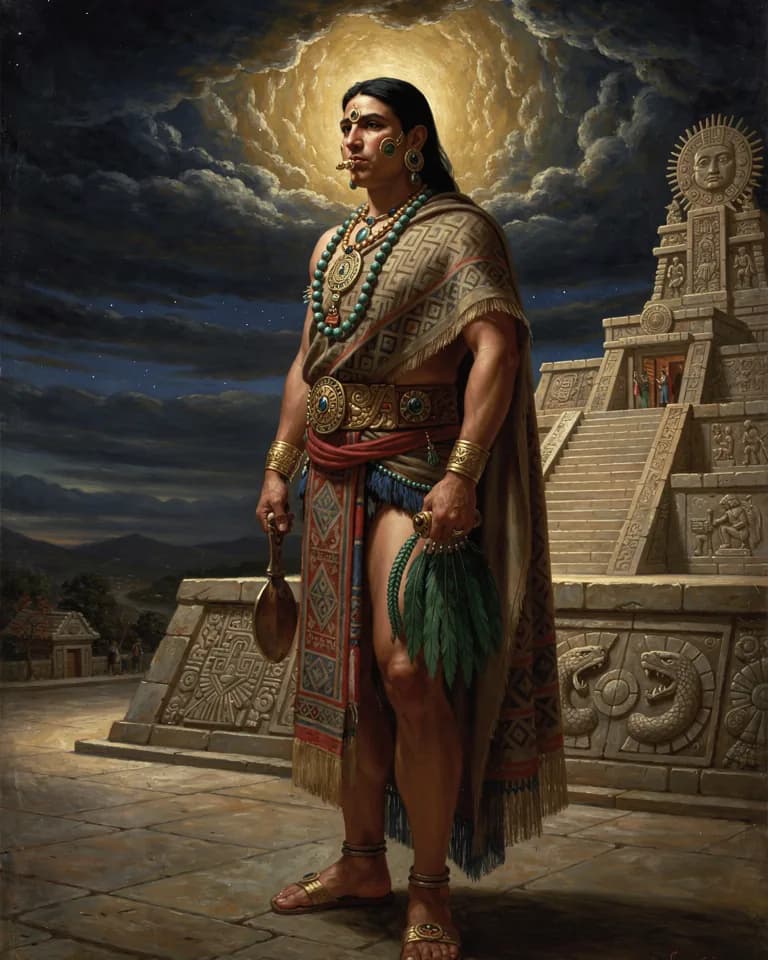
In the atlas
Where Huitzilopochtli appears
Sources and further reading
Source notes
These references are recorded in the catalog. Their passage wording and translation have not been checked, so quotations are not displayed here.
- Lewis Spence, The Myths of Mexico and Peru (1913)
Cite this page
No publication date is recorded for this page, so each citation uses n.d. and today's date as the access date.
About this entry
By Elizabeth Stein for Mythos Atlas. About the author. Editorial notes are grounded in the site's cited sources and can be challenged through the contact page.
Parallels are editorial comparisons across traditions: a shared role does not, by itself, establish a shared origin.
Family relationships come from the atlas's kinship records. Ancient sources often disagree on divine genealogy.
Keep exploring
One myth a week, with its sources in a short email. The sign-up form is just below.
Genealogy
Family tree
Huitzilopochtli's parents, consorts, children and rivals, as recorded in the atlas.