Chinese Pantheon
Mazu
Also known as Tianhou, Empress of Heaven, Lin Moniang, Goddess of the Sea
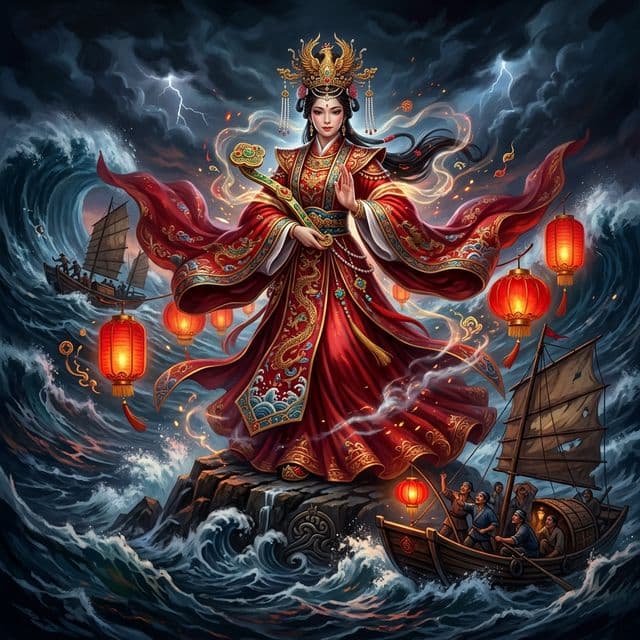
- sea
- sailors
- fishermen
- protection
- storms
The goddess of the sea and protector of sailors, fishermen, and all who travel by water. Originally a human girl from Fujian Province with miraculous powers, she was deified after her death.
About Mazu
The Heavenly Empress of the Sea
Mazu is the most important sea goddess in Chinese coastal religion, worshipped by millions of fishermen, sailors, and coastal communities across East and Southeast Asia. Her origins as a historical woman from Fujian Province make her one of the most relatable deities in the Chinese pantheon.
The Historical Lin Moniang
According to tradition, Mazu was born as Lin Moniang in 960 CE in Meizhou Island, Fujian Province. She was born silent and did not cry for a month, so she was named 'Silent Girl' (Mo = silent, Niang = girl). From childhood, she displayed supernatural abilities, including the power to calm storms and predict weather.
The Miraculous Rescue
The most famous story tells how Lin Moniang, while in a trance, spiritually projected herself to save her father and brothers from a storm at sea. Her mother, seeing her unresponsive, shook her awake - causing her to 'drop' one brother, who drowned. In other versions, she walked on clouds or across the water itself to guide ships to safety.
Deification
Lin Moniang died young (around age 27-28) under mysterious circumstances - some say she ascended to heaven from Meizhou Peak, others that she died peacefully. Shortly after, sailors began reporting miraculous rescues by a woman in red who calmed storms. The Song Emperor officially recognized her as a goddess in 1123 CE, and subsequent emperors elevated her status further.
Global Influence
From her origins in Fujian, Mazu worship spread with Chinese maritime traders to Taiwan (where she is the most important deity), Southeast Asia, Japan, and beyond. Today there are over 1,500 Mazu temples worldwide. Her annual pilgrimage in Taiwan is one of the largest religious gatherings on Earth.
Origin story
Lin Moniang was born on Meizhou Island in 960 CE and displayed miraculous powers from childhood. After saving many sailors from storms through spiritual intervention, she ascended to heaven and was deified as Mazu, protector of all who travel by sea.
Across traditions
Parallel figures
Figures who play a role like Mazu's in other traditions.
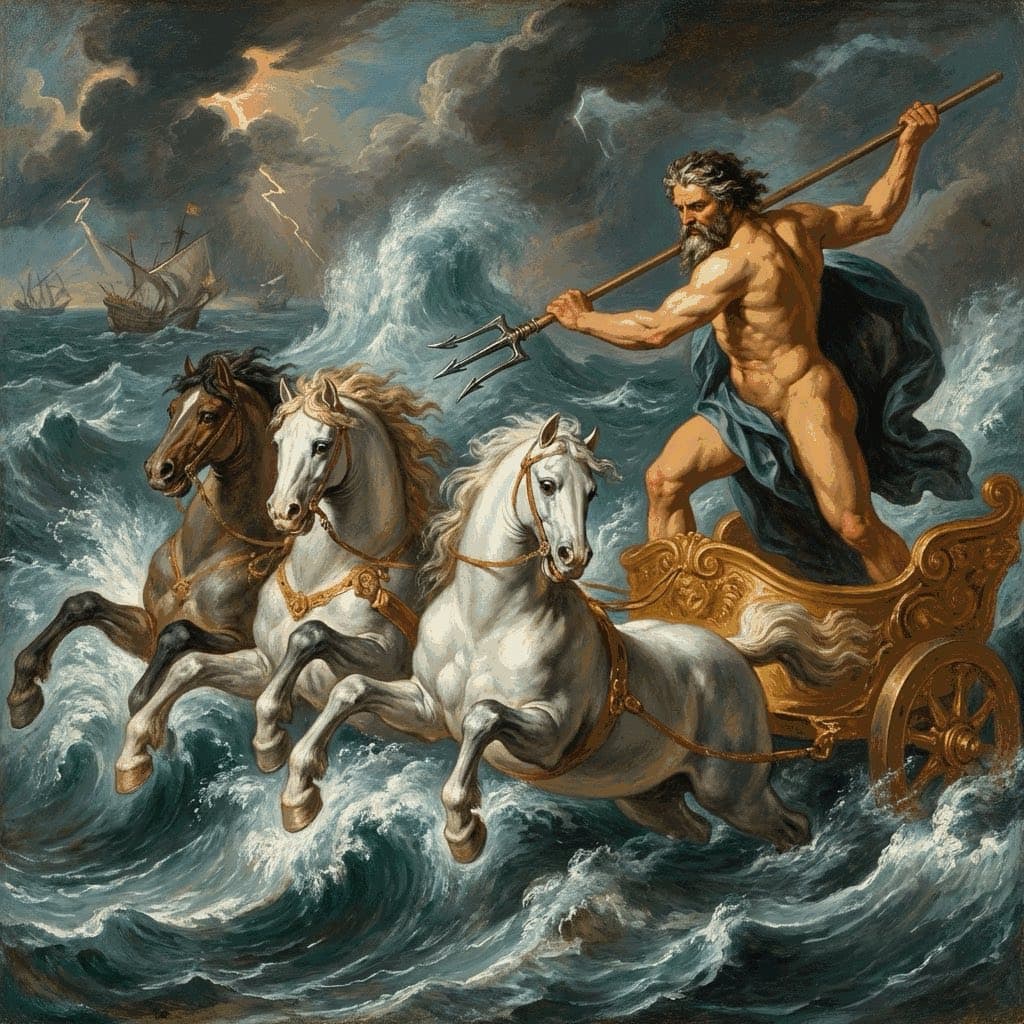 GreekPoseidonIllustration
Both are deities who control the seas and protect (or endanger) sailors, though Mazu is more benevolent
Compare Mazu and Poseidon side by side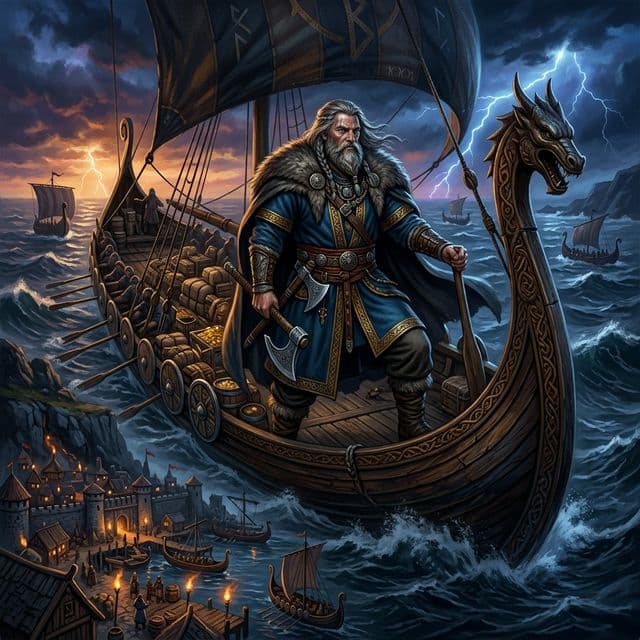 NorseNjordIllustration
Both are sea deities invoked for safe voyages and good fishing
Compare Mazu and Njord side by side
Worship and cult
Temples, festivals, and practices recorded for Mazu
The girl who did not come back from the sea. Fishermen, crews, and a palanquin that runs. This is a living maritime cult, not a museum label.
Sacred sites
- Chaotian Temple at Beigang
- Tianhou temples on every Fujian and Taiwan waterfront
Festivals
- Mazu's birthday pilgrimage
- Dajia procession
Sources and further reading
Source notes
These references are recorded in the catalog. Their passage wording and translation have not been checked, so quotations are not displayed here.
- Mazu Temple Records
About this entry
By Elizabeth Stein for Mythos Atlas. About the author. Editorial notes are grounded in the site's cited sources and can be challenged through the contact page.
Parallels are editorial comparisons across traditions: a shared role does not, by itself, establish a shared origin.
Keep exploring
One myth a week, with its sources in a short email. The sign-up form is just below.
Genealogy
Family tree
Mazu's parents, consorts, children and rivals, as recorded in the atlas.