Norse Pantheon
Njord
Also known as Njordr, Njörðr
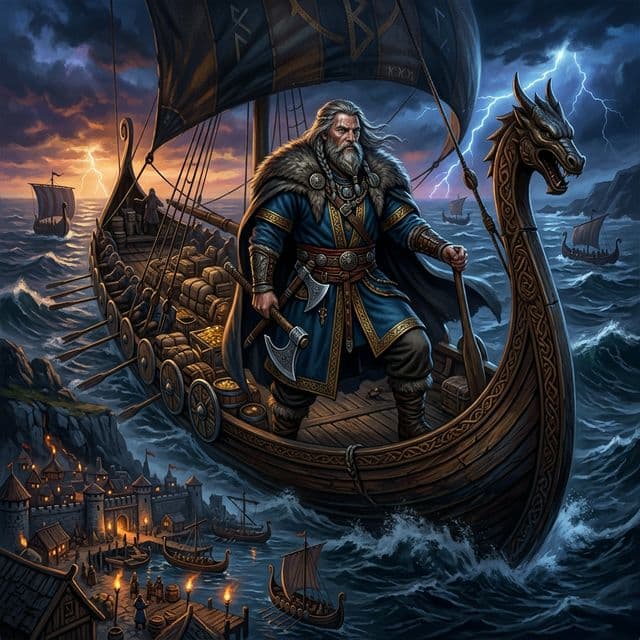
- sea
- wealth
- prosperity
- seafaring
- trade
Vanir god of the sea, seafaring wealth, trade, and calm waters. Father of Freyja and Freyr.
About Njord
Lord of Noatun
Njord belongs to the Vanir, the gods of wealth, harbor weather, and the kind of luck that arrives with a full hold. After the Aesir-Vanir war he was sent to Asgard as a hostage, together with his children Freyja and Freyr, to keep the peace. The arrangement stuck: he lives among the Aesir at Noatun, the enclosure of ships, but his cult still smells of salt and trade rather than of Odin's hall.
Marriage to Skadi
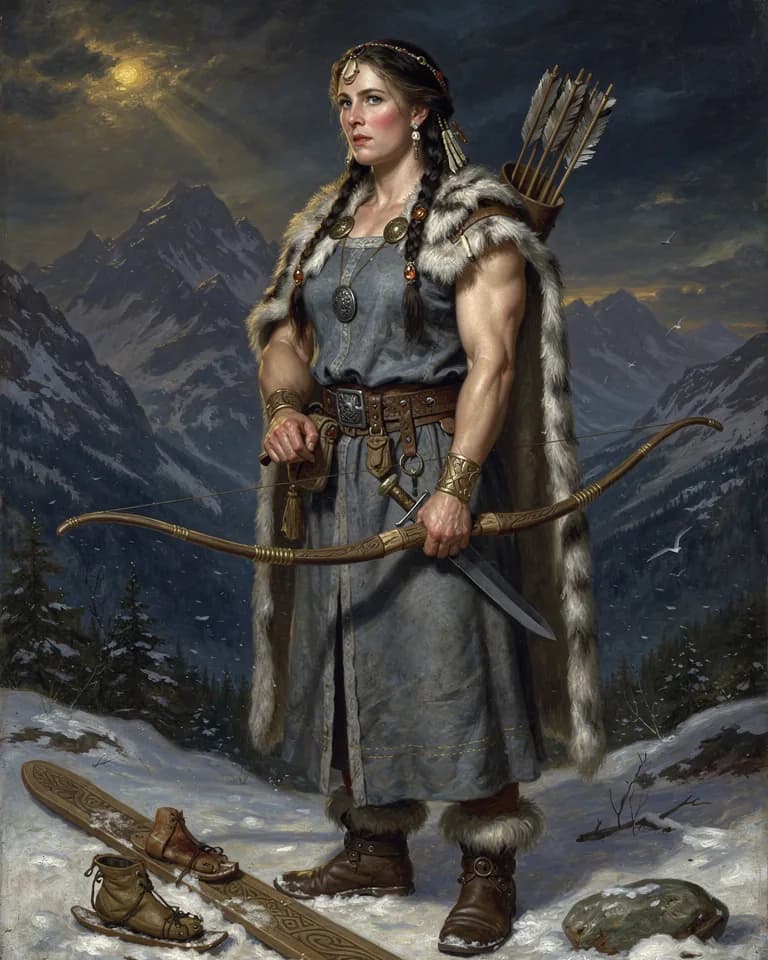
When the Aesir killed Thjazi, the giant's daughter Skadi came armed for weregild. Part of the settlement was a husband chosen from the gods by looking only at their feet. She picked the most beautiful pair, expecting Baldr, and got Njord. They tried to split their lives between her mountain home and his sea halls. Each hated the other's weather. The marriage failed, which the myths treat as a joke and as a fact about where each god belongs.
Sea wealth
Sailors and coastal farmers invoked Njord for fair winds and for the profit that follows them. He is not a storm-raiser in the style of Thor. Calm water, safe passage, and the money that moves along a coast are his brief.
Origin story
Njord is one of the Vanir, the divine clan associated with prosperity, fertility, and the wealth that comes from land and sea. After the Aesir-Vanir War, he came to live among the Aesir as part of the hostage exchange that secured peace between the two groups of gods. In later Norse tradition he is remembered as a patron of sailors, merchants, fishermen, and all who rely on favorable winds and safe coasts.
Across traditions
Parallel figures
Figures who play a role like Njord's in other traditions.
 GreekPoseidonIllustration
Both are major gods of the sea
Compare Njord and Poseidon side by side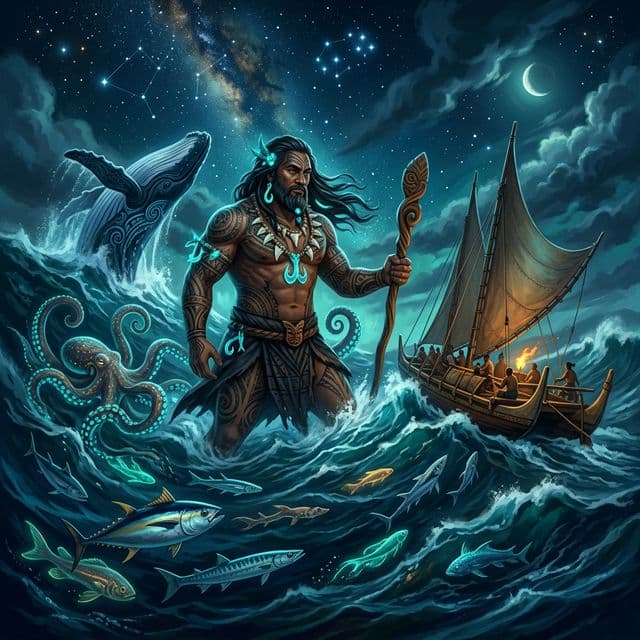 PolynesianTangaroaIllustration
Both are sea gods tied to seafaring, fish, and the ocean's bounty
Compare Njord and Tangaroa side by side ChineseMazuIllustration
Both are sea deities invoked by sailors and traders for safe passage and prosperity
Compare Njord and Mazu side by side
Worship and cult
Temples, festivals, and practices recorded for Njord
Njord is asked for wind, wealth, and a safe voyage. Snorri says he rules the motion of wind and sea and the gifts of land and livestock. Evidence for a fixed festival calendar is thin; what we have is a sea god of plenty, not a temple inventory.
Sacred sites
- No named temple survives in the sources; later tradition places his cult in coastal Norway and Sweden, especially among people who lived by ships and trade.
- The Ynglinga saga makes him a king at Noatun after the Aesir-Vanir peace, which is a way of saying his house was a harbor.
Festivals
- Seafaring offerings
- Harvest and plenty (Vanir cult)
Family

Relationship sources
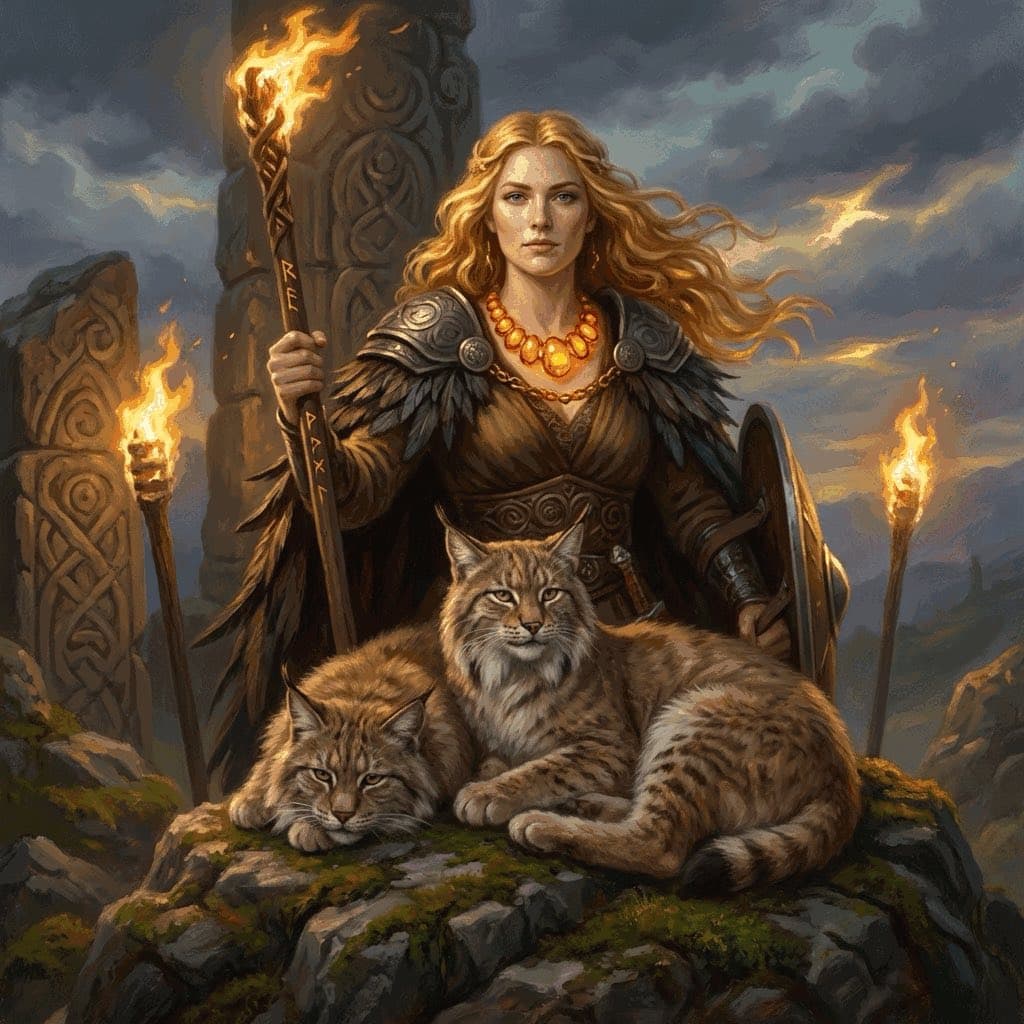
Prose Edda — Njord parent of Freyja: Njord is father of Freyja
Snorri Sturluson · Arthur Gilchrist Brodeur, The Prose Edda (1916), American-Scandinavian Foundation; Internet Sacred Text Archive transcription · Gylfaginning XXIV (24)
Prose Edda — Njord parent of Freyr: Njord is father of Freyr
Snorri Sturluson · Arthur Gilchrist Brodeur, The Prose Edda (1916), American-Scandinavian Foundation; Internet Sacred Text Archive transcription · Gylfaginning XXIV (24)
In the atlas
Where Njord appears
Sources and further reading
Source notes
These references are recorded in the catalog. Their passage wording and translation have not been checked, so quotations are not displayed here.
- Prose Edda, Gylfaginning (trans. Anderson)
Cite this page
No publication date is recorded for this page, so each citation uses n.d. and today's date as the access date.
About this entry
By Elizabeth Stein for Mythos Atlas. About the author. Editorial notes are grounded in the site's cited sources and can be challenged through the contact page.
Parallels are editorial comparisons across traditions: a shared role does not, by itself, establish a shared origin.
Family relationships come from the atlas's kinship records. Ancient sources often disagree on divine genealogy.
Keep exploring
One myth a week, with its sources in a short email. The sign-up form is just below.
Genealogy
Family tree
Njord's parents, consorts, children and rivals, as recorded in the atlas.