Side by sideParallel across traditions

Njord vs Tangaroa

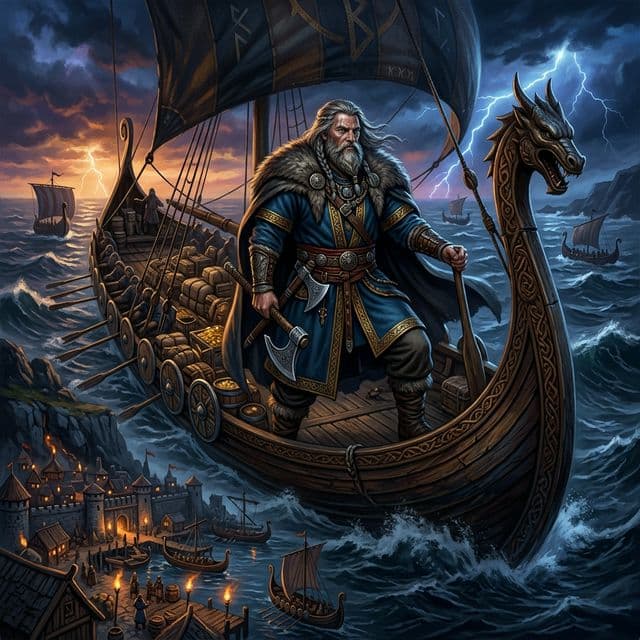
Njord
NjordNorse
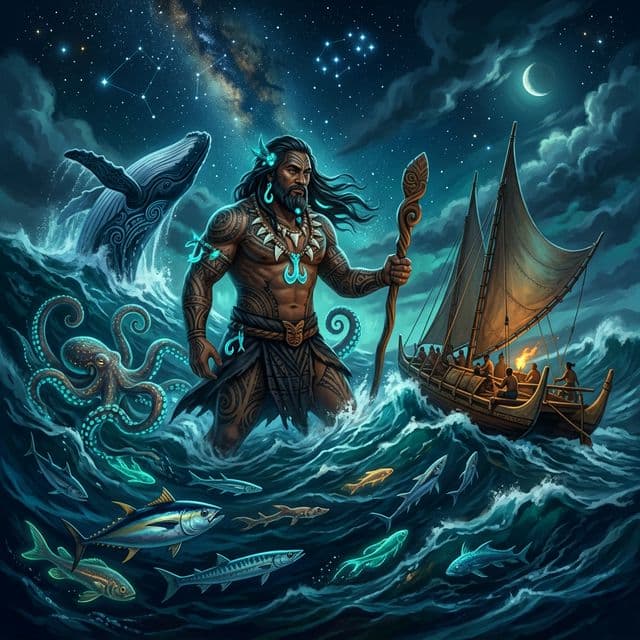
Tangaroa
TangaroaPolynesian

Both are sea gods tied to seafaring, fish, and the ocean's bounty.

At a glance

Njord and Tangaroa compared
NjordTangaroa
TraditionNorse PantheonPolynesian Pantheon
Domainssea, wealth, prosperity, seafaring, tradesea, ocean, fish, marine life, navigation
Symbolsship, sea, wind, harboroctopus, whale, ocean waves, canoe
Also calledNjordr, NjörðrKanaloa (Hawaiian), Ta'aroa (Tahitian), Tagaloa (Samoan)

Where they meet

Both are associated with sea.

Where they part

Only Njord

Associated with wealth, prosperity, seafaring, and trade.

Only Tangaroa

Associated with ocean, fish, marine life, and navigation.

Why they are compared

Both are sea gods important to seafaring peoples.

How each was worshipped

Njord

Cult sites
No named temple survives in the sources; later tradition places his cult in coastal Norway and Sweden, especially among people who lived by ships and trade.; The Ynglinga saga makes him a king at Noatun after the Aesir-Vanir peace, which is a way of saying his house was a harbor.
Festivals
Seafaring offerings; Harvest and plenty (Vanir cult)

Njord is asked for wind, wealth, and a safe voyage. Snorri says he rules the motion of wind and sea and the gifts of land and livestock. Evidence for a fixed festival calendar is thin; what we have is a sea god of plenty, not a temple inventory.

Tangaroa

Cult sites
Sea tapu; coastal shrines vary by island

Ocean, fish, and the law of the reef. Offerings differ from Aotearoa to Tahiti. Treat local tapu as the liturgy; there is no single cathedral.

The two figures

Norse Pantheon

Njord

Vanir god of the sea, seafaring wealth, trade, and calm waters. Father of Freyja and Freyr.

Njord is one of the Vanir, the divine clan associated with prosperity, fertility, and the wealth that comes from land and sea. After the Aesir-Vanir War, he came to live among the Aesir as part of the hostage exchange that secured peace between the two groups of gods. In later Norse tradition he is remembered as a patron of sailors, merchants, fishermen, and all who rely on favorable winds and safe coasts.

Njord belongs to the Vanir, the gods of wealth, harbor weather, and the kind of luck that arrives with a full hold. After the Aesir-Vanir war he was sent to Asgard as a hostage, together with his children Freyja and Freyr, to keep the peace. The arrangement stuck: he lives among the Aesir at **Noatun**, the enclosure of ships, but his cult still smells of salt and trade rather than of Odin's hall.

Read the full Njord entry

Polynesian Pantheon

Tangaroa

The great god of the sea and all that dwells within it. In some traditions, particularly Tahitian and Samoan, Tangaroa/Tagaloa is the supreme creator god who brought forth the world from primordial darkness.

In Maori tradition, Tangaroa was born from the union of Rangi (Sky Father) and Papa (Earth Mother), emerging when his brothers separated their parents. In Tahitian tradition, he existed eternally in primordial darkness within a cosmic shell, eventually breaking free to create the universe from his own body.

Tangaroa is one of the great gods of Polynesia, revered across the Pacific as the deity of the ocean and all marine life. For peoples who lived by the sea and traveled across vast ocean distances, Tangaroa was one of the most important gods, protector of fishermen and navigators.

Read the full Tangaroa entry
About this comparison

Comparisons pair figures that play a similar role across traditions, or that the myths connect within one. A shared role does not, by itself, establish a shared origin.