Norse Pantheon
Skadi
Skaði(Skaði)
Also known as Skaði, Öndurgoð (Snowshoe-Goddess), Öndurdís (Lady of the Snowshoes)
- mountains
- winter
- hunting
- skiing
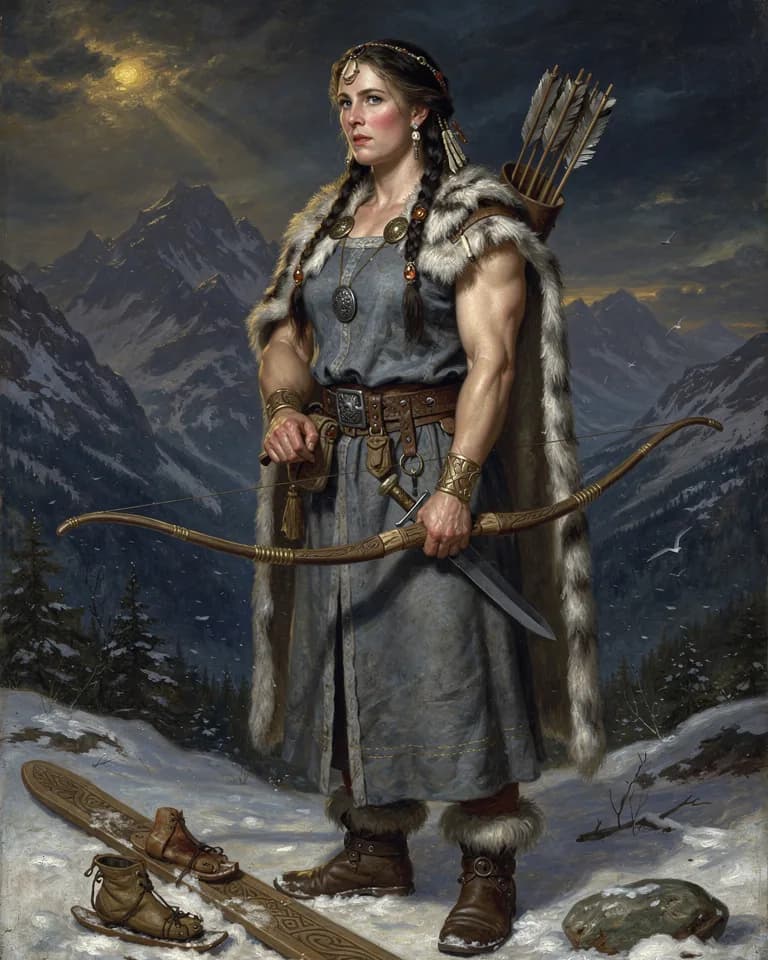
A giantess who came armed to Asgard to avenge her father Thjazi and was offered a husband in compensation, choosing Njord by his feet alone. She is the huntress of the snowy mountains who travels on snowshoes with her bow.
About Skadi
Vengeance for Thjazi
Skadi's father, the giant Thjazi, abducted the goddess Idunn and her apples of youth and was killed by the gods when he pursued Loki back to Asgard. Snorri Sturluson's Skaldskaparmal tells how Skadi took up helmet, mail, and weapons and went to Asgard to avenge him. The gods offered compensation: she might choose a husband from among them, seeing only their feet. Hoping for Baldr, she chose the most beautiful feet, and they belonged to Njord, god of the sea. The gods also had to make her laugh, which Loki managed with a crude trick, and Odin threw Thjazi's eyes into the sky as stars.
Mountains and Sea
The marriage failed. Skadi wanted to live in her father's mountain hall Thrymheim; Njord wanted his seaside home Noatun. They agreed to alternate, nine nights in each, but each hated the other's home, and Skadi returned to the mountains, where she hunts on snowshoes with her bow.
Against Loki
Skadi is bitterly hostile to Loki. When the gods bind him after Baldr's death, it is Skadi who fastens a venomous serpent above his face. In the poem Lokasenna Loki taunts her with his part in her father's death, and she answers with threats.
Traces of Cult
Place names in Norway and Sweden may preserve her name, suggesting she had cult sites, though scholars dispute the readings. Later sources, including the Ynglinga saga, pair her with Odin as ancestress of Norwegian jarls.
Origin story
Skadi is the daughter of the giant Thjazi. After the gods killed him, she came to Asgard in arms to avenge him and accepted a marriage to Njord, chosen by his feet, as part of the settlement.
Across traditions
Parallel figures
Figures who play a role like Skadi's in other traditions.
 PolynesianPoliahu
Both are goddesses associated with snow and high mountains
Compare Skadi and Poliahu side by side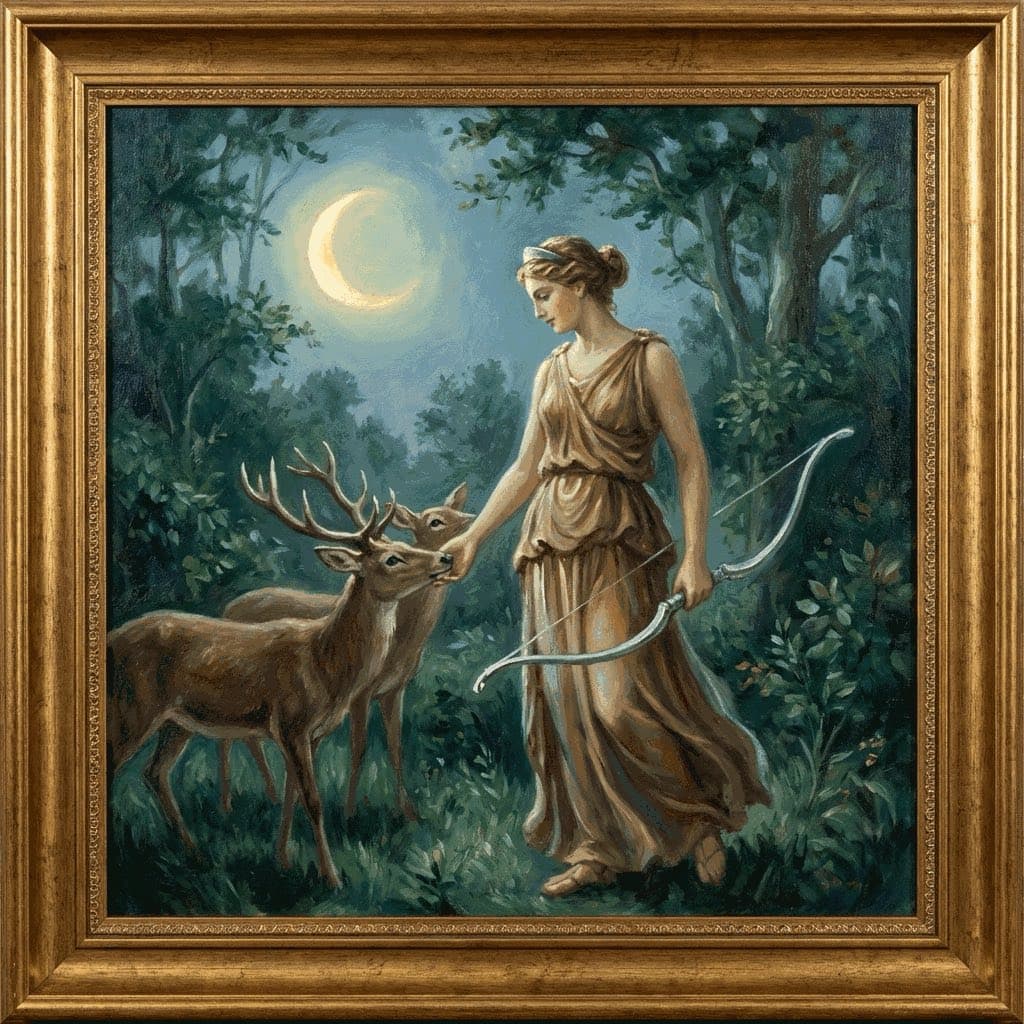 GreekArtemis
Both are huntresses with the bow who keep to the wild mountains
Compare Skadi and Artemis side by side
Family
Sources and further reading
Source notes
These references are recorded in the catalog. Their passage wording and translation have not been checked, so quotations are not displayed here.
- Snorri Sturluson, Prose Edda, Gylfaginning (trans. Brodeur)
- Snorri Sturluson, Prose Edda, Gylfaginning (trans. Brodeur)
Further reading
Gylfaginning 23 on her marriage; Skaldskaparmal on the settlement for Thjazi
Read online: Prose Edda (opens in new tab)Lokasenna, where she trades threats with Loki
Read online: Poetic Edda (opens in new tab)Retelling of the marriage by the feet and the failed compromise
Read online: The Norse Myths (opens in new tab)
About this entry
By Elizabeth Stein for Mythos Atlas. About the author. Editorial notes are grounded in the site's cited sources and can be challenged through the contact page.
Parallels are editorial comparisons across traditions: a shared role does not, by itself, establish a shared origin.
Family relationships come from the atlas's kinship records. Ancient sources often disagree on divine genealogy.
Genealogy
Family tree
Skadi's parents, consorts, children and rivals, as recorded in the atlas.