Egyptian Pantheon
Sekhmet
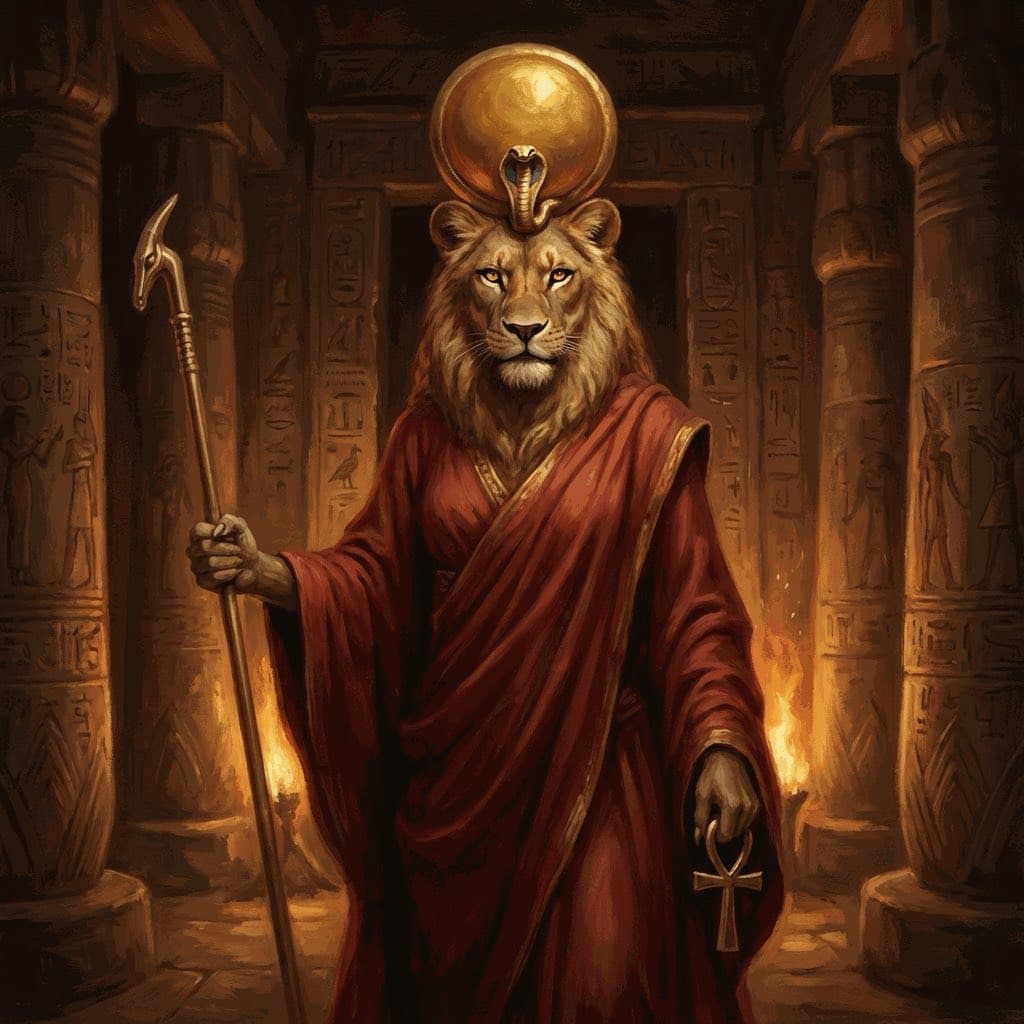
Also known as Sakhmet, Lady of Slaughter, The Scarlet Lady
- war
- plague
- healing
- vengeance
- fire
Fierce goddess of war, plagues, and healing. The destructive aspect of the sun. Ra sent her to punish humanity.
About Sekhmet
The Powerful One
Sekhmet is the fearsome lioness-headed goddess whose name means "She Who Is Powerful." She embodies the scorching, destructive heat of the sun and is one of the most formidable deities in the Egyptian pantheon. Warriors prayed to her before battle, and her breath was said to create the desert.
The Eye of Ra
Sekhmet is the wrathful form of the Eye of Ra, sent to punish humanity when they rebelled against the aging sun god. She slaughtered humans with such bloodthirsty fury that the Nile ran red. Ra, fearing she would destroy all life, ordered 7,000 jugs of beer dyed with pomegranate to be poured on the ground. Sekhmet, mistaking it for blood, drank until she passed out, and humanity was saved.
Goddess of Plagues and Healing
Sekhmet was believed to send plagues and epidemics as punishment, but her priests (wab Sekhmet) were also renowned physicians who could cure the diseases she sent. This duality made her both feared and revered as a healer.
Cult Center and Sacred Animals
Her primary cult center was at Memphis, where she was worshipped as the consort of Ptah and mother of Nefertum. Lions were sacred to her, and hundreds of statues of Sekhmet lined the temple precincts at Karnak, one for each day of the year to appease her wrath.
Origin story
Sekhmet was created by Ra from the fire of his eye to punish humanity for their rebellion and mockery of the aging sun god. She is the fierce, destructive aspect of the gentler Hathor, representing the burning heat of the midday sun. In essence, Sekhmet and Hathor are two faces of the same goddess: Sekhmet the destroyer and Hathor the nurturer. Her leonine form symbolizes the fierce power of the sun that can bring both life and death to the land of Egypt.
Across traditions
Parallel figures
Figures who play a role like Sekhmet's in other traditions.
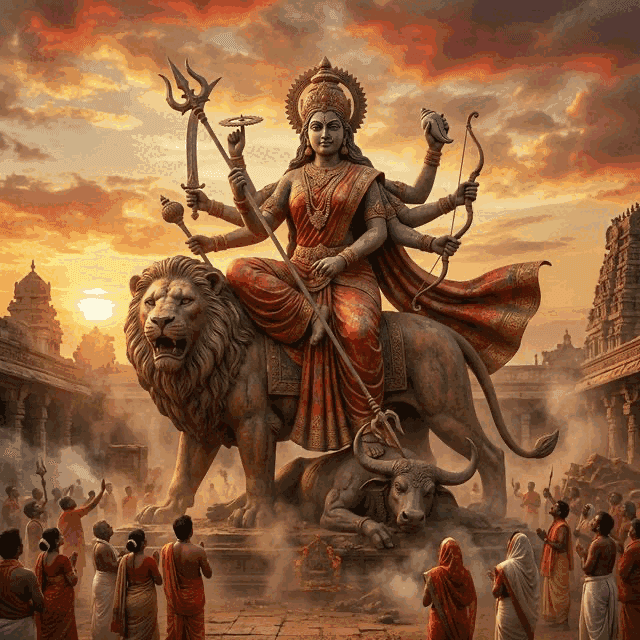 HinduDurgaIllustration
Both are fierce warrior goddesses who unleash destructive violence against enemies of order
Compare Sekhmet and Durga side by side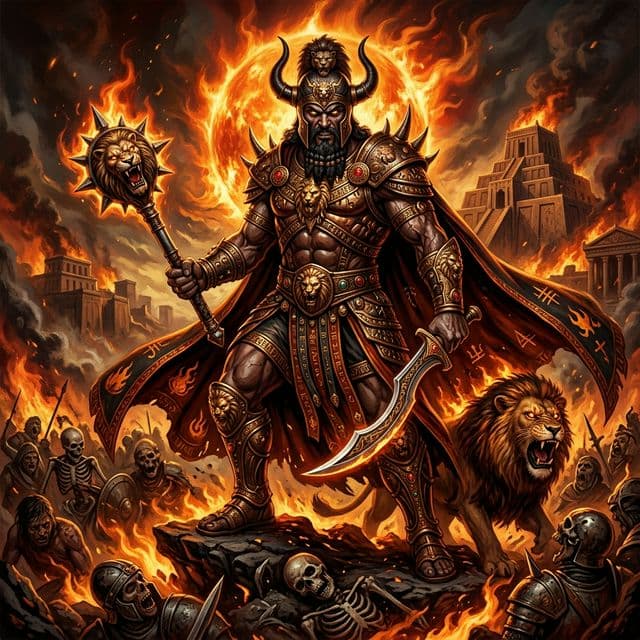 MesopotamianNergalIllustration
Both are deities of war, plague, and vengeful destruction
Compare Sekhmet and Nergal side by side
Worship and cult
Temples, festivals, and practices recorded for Sekhmet
Plague and its cure. Priests sang her quiet. Beer dyed red to look like blood is the myth of her pacification turned into rite. She is the same eye of Ra that Bastet can also be.
Sacred sites
- Memphis, with Ptah and Nefertem
- Hundreds of seated lioness statues from Amenhotep III
Festivals
- Pacification of Sekhmet
- New Year plague-aversion rites
Family
In the atlas
Where Sekhmet appears
In the museums
Sekhmet in art
Real objects in public collections, released into the public domain by the museums that hold them. Dates refer to when each object was made. Objects made within the tradition come first, later depictions after.
 (opens the museum record)
Ancient object
Lion-Headed Goddess (opens the museum record)
A cast metal statuette of a lion-headed goddess the museum tags as Sekhmet, the fierce protector deity associated with war and healing. Bronze figures of Sekhmet were dedicated by worshippers seeking her dual powers of destruction and protection.
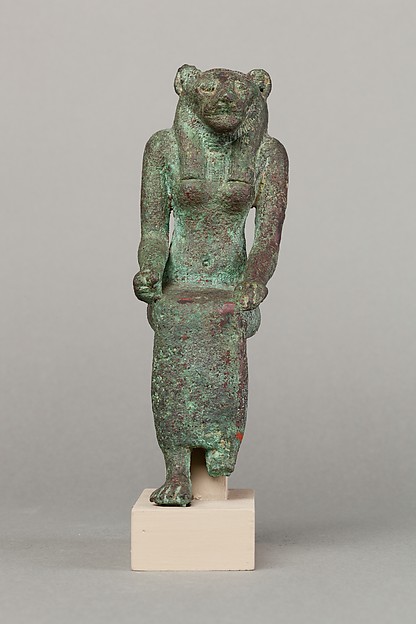 (opens the museum record)
Ancient object
Lion-headed goddess (opens the museum record)
A second lion-headed goddess statuette tagged by the museum as Sekhmet, part of the large body of Late Period bronze votive figures dedicated to her.
Sources and further reading
Source notes
These references are recorded in the catalog. Their passage wording and translation have not been checked, so quotations are not displayed here.
- Pacification hymns of Sekhmet (Memphite/Theban temple tradition)
About this entry
By Elizabeth Stein for Mythos Atlas. About the author. Editorial notes are grounded in the site's cited sources and can be challenged through the contact page.
Parallels are editorial comparisons across traditions: a shared role does not, by itself, establish a shared origin.
Family relationships come from the atlas's kinship records. Ancient sources often disagree on divine genealogy.
Keep exploring
One myth a week, with its sources in a short email. The sign-up form is just below.
Genealogy
Family tree
Sekhmet's parents, consorts, children and rivals, as recorded in the atlas.