Source recordAncient text
Táin Bó Cúailnge
Anonymous (Ulster Cycle) · c. 8th century CE (oral tradition; earliest manuscripts 12th century CE) · Old Irish
Ancient text
Táin Bó Cúailnge
Anonymous (Ulster Cycle)
The central epic of the Ulster Cycle of Irish mythology, telling how Queen Medb of Connacht invaded Ulster to seize the Brown Bull of Cooley, and how the young hero Cu Chulainn held the province alone against her army.
About this work
The central epic of the Ulster Cycle of Irish mythology, telling how Queen Medb of Connacht invaded Ulster to seize the Brown Bull of Cooley, and how the young hero Cu Chulainn held the province alone against her army.
Where to start
Thomas Kinsella's 1969 translation is the classic English starting point; Ciaran Carson's 2007 Penguin Classics translation is a livelier modern alternative.
Figures in the text
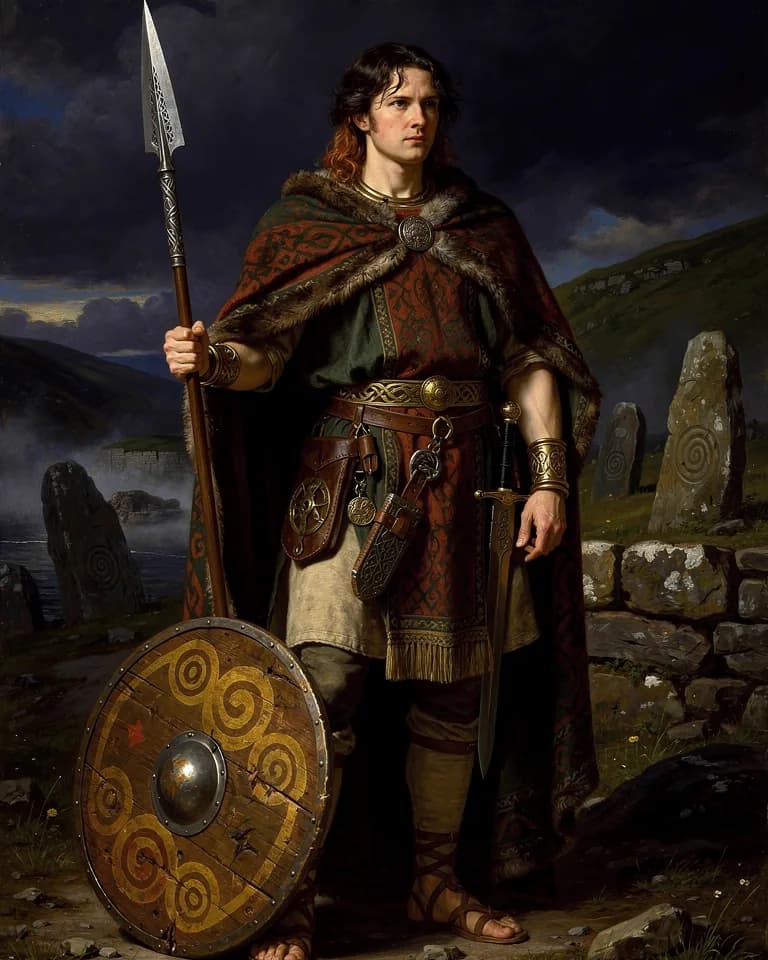
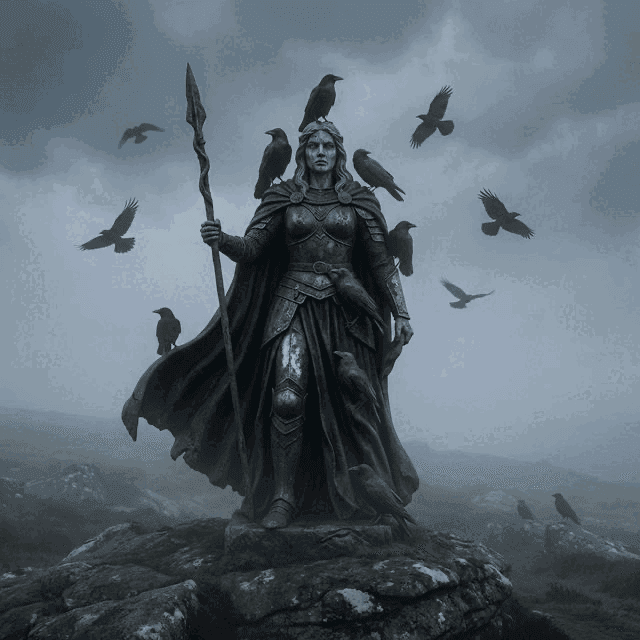
Heroes and divinities who feature prominently, with where they appear.
Key scenes
Turning points of the work, in reading order.
The Pillow Talk
Queen Medb goes to war with Ulster after a boasting contest with her husband over their wealth turns on the Brown Bull of Cooley's equal.
Cu Chulainn's Single Combats
With Ulster's warriors disabled by a curse, the young Cu Chulainn holds off Medb's army alone in a series of ford duels.
The Death of Ferdiad
Cu Chulainn is forced to kill his foster-brother and friend Ferdiad in a grueling multi-day duel.
The Battle of the Bulls
The Brown Bull of Cooley and Connacht's White-Horned Bull fight to the death as Ulster's men finally rise to rout Medb's army.
Stories drawn from it
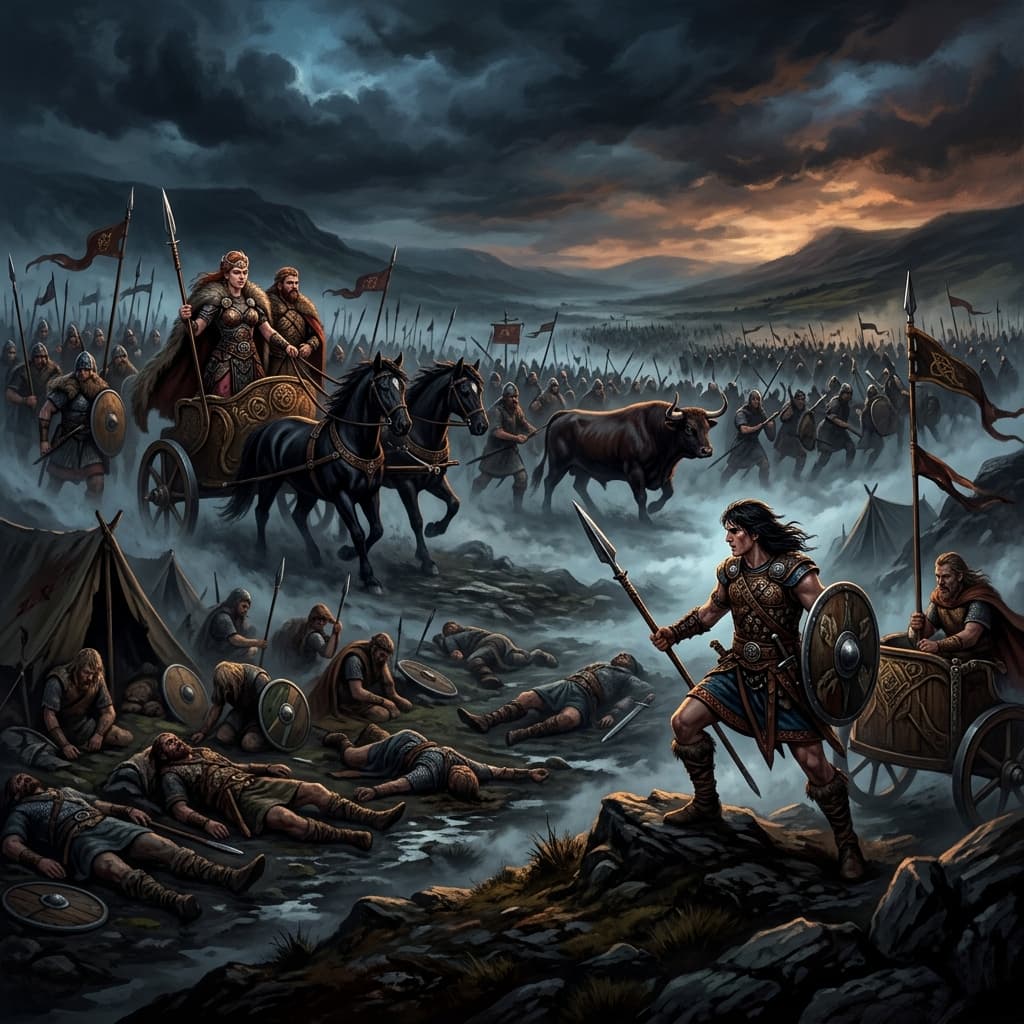
Retellings in the atlas that quote or cite this work.
About this record
By Elizabeth Stein for Mythos Atlas. About the author. Editorial notes are grounded in the site's cited sources and can be challenged through the contact page.
Dates and authorship follow standard scholarly references; for many ancient works both are approximate or disputed.