Collectionsun
Children of the Sun
Radiant deities who drive the sun across the sky, bringing light, warmth, and the cycle of days.
Across traditions
The figures
They share a theme; their roles, beliefs and histories differ from one tradition to the next.
 Egyptian PantheonRaIllustration
The supreme solar deity and creator god.
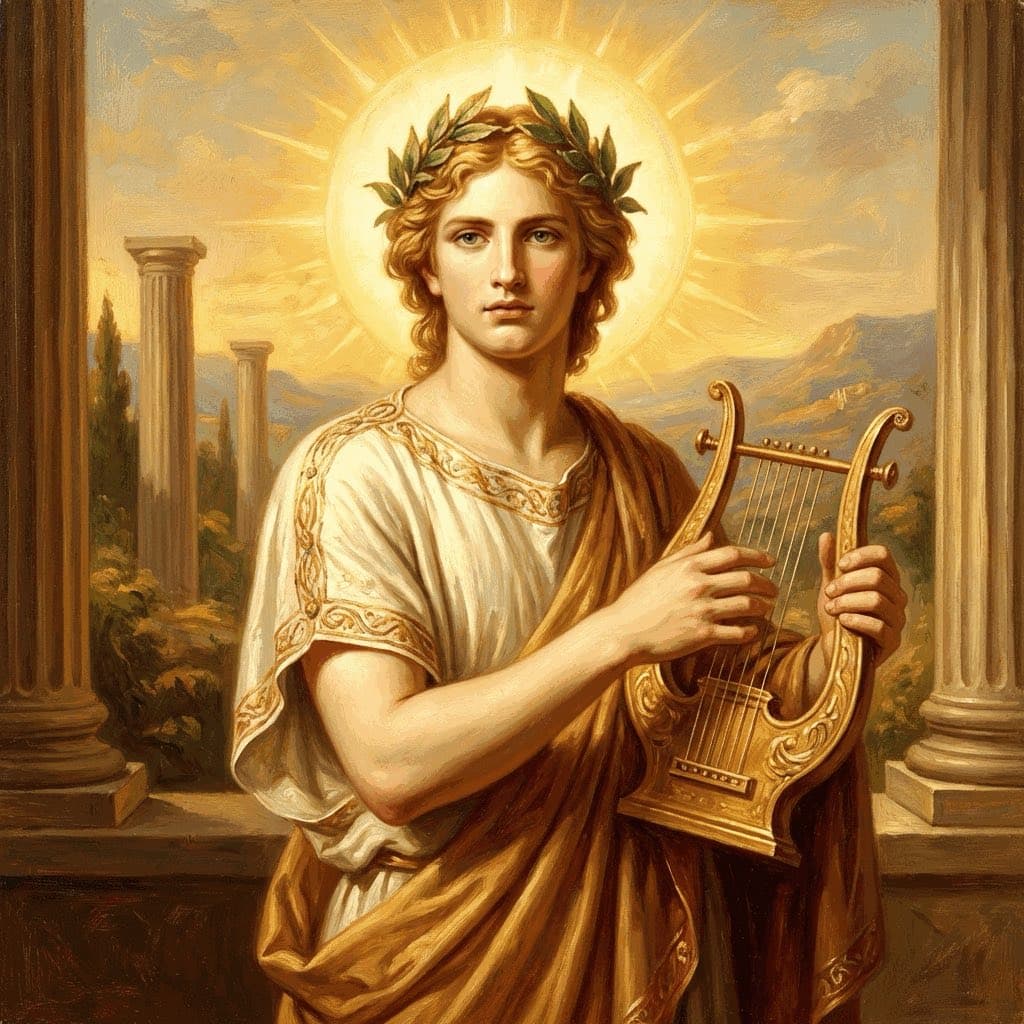 Greek PantheonApolloIllustration
God of sun, music, poetry, prophecy, and healing.
 Mesopotamian PantheonShamashIllustration
The sun god and divine judge.
 Japanese PantheonAmaterasuIllustration
Supreme goddess of the sun and universe.
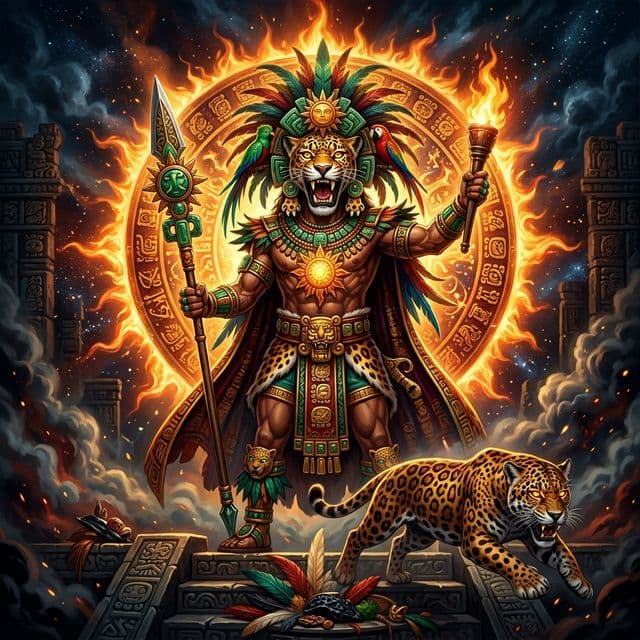 Mesoamerican PantheonKinich AhauIllustration
The Maya sun god with large square eyes and jaguar features.
 Aztec PantheonTonatiuhIllustration
The sun god of the Fifth Sun (the current world age).
 Norse PantheonFreyrIllustration
One of the Vanir, god of fertility, prosperity, and fair weather.
The stories
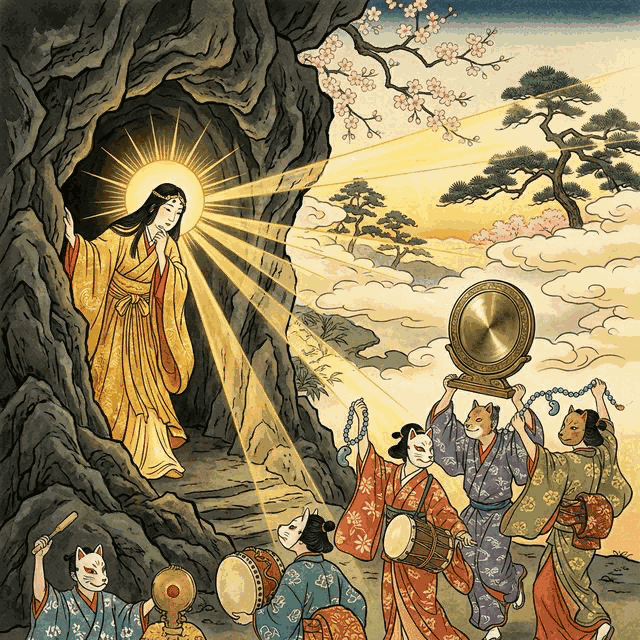 Amaterasu and the Heavenly CaveJapanese PantheonWhen Susanoo's violence drives Amaterasu into hiding in a cave, the world falls into darkness. The gods devise a plan to lure her out, restoring light to the world. Explains the importance of ritual.
 Maui Slows the SunPolynesian PantheonWhen the sun raced too quickly across the sky, leaving people without enough daylight for their work, Maui captured and beat it until it agreed to move slowly. This myth explains the length of days.
 The Heliopolitan Creation MythEgyptian PantheonIn the beginning was the primordial waters of Nun, dark and chaotic. From these waters arose the primeval mound, and upon it stood Atum (later identified with Ra), the self-created god.
 How Hina and Maui Lengthened the DayPolynesian PantheonWhen the sun raced too fast for Hina to dry her bark cloth, Maui and his brothers snared it with ropes of flax (or, in Hawaiian tellings, coconut fibre and hair) until it promised to walk slowly across the sky.
About this collection
By Elizabeth Stein for Mythos Atlas. About the author. Editorial notes are grounded in the site's cited sources and can be challenged through the contact page.
Collections group figures and myths by a shared theme. A shared theme is an editorial lens, not evidence that the traditions borrowed from one another.