
Side by sideParallel across traditions

Ares vs Nergal

Ares
AresGreek
Nergal
NergalMesopotamian

Both are gods of war in its brutal, destructive aspect.

At a glance

Ares and Nergal compared
AresNergal
TraditionGreek PantheonMesopotamian Pantheon
Domainswar, violence, bloodshedwar, plague, underworld, the burning sun
Symbolssword, spear, shield, helmet, vulturemace, lion, scimitar
Also calledMarsErra, Irra

Where they meet

Both are associated with war.

Where they part

Only Ares

Associated with violence and bloodshed.

Only Nergal

Associated with plague, underworld, and the burning sun.

How each was worshipped

Ares

Cult sites
Temple of Ares in the Athenian Agora (moved stone, late); Theban and Spartan cults of the war god
Festivals
Areia; Gymnopaidiai (Spartan war festivals, adjacent)

Athens gave him little love and less architecture. Sparta and Thebes treated the war god as a fact. Dogs and night sacrifices appear in some rites. He is battlefield panic, not a patriotic mascot.

Nergal

Cult sites
E-meslam at Kutha
Festivals
Plague and war rites; the god who stays in the underworld half the year

Kutha's god of pestilence and the dead. Kings feared him. The cult is apotropaic: keep the plague god fed and far.

The two figures

Greek Pantheon

Ares

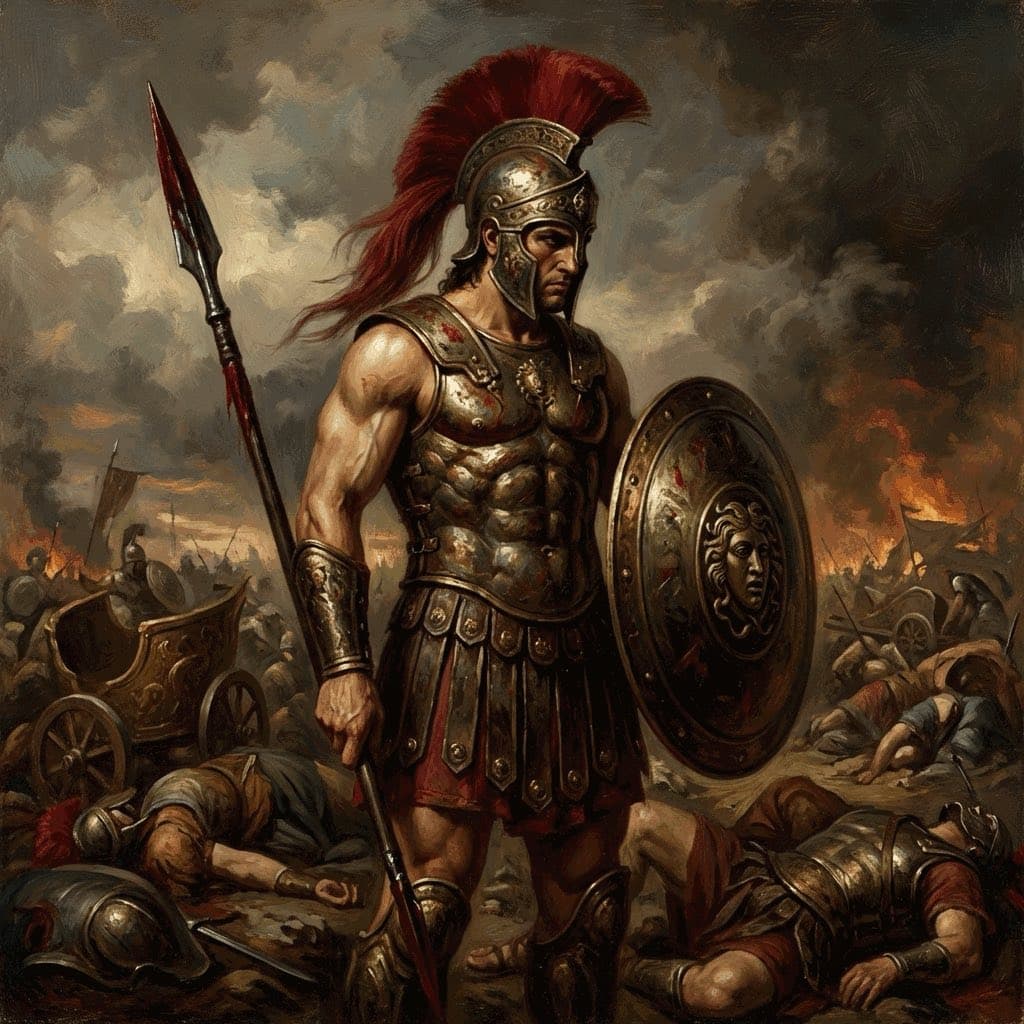
God of war, violence, and bloodshed. Son of Zeus and Hera, representing the brutal and chaotic aspects of warfare.

Ares embodies the physical valor and untamed violence of war. While Athena represents strategy, Ares is the chaotic frenzy of battle. He was not well-liked by the Greeks, who found him dangerous and overwhelming.

Read the full Ares entry

Mesopotamian Pantheon

Nergal

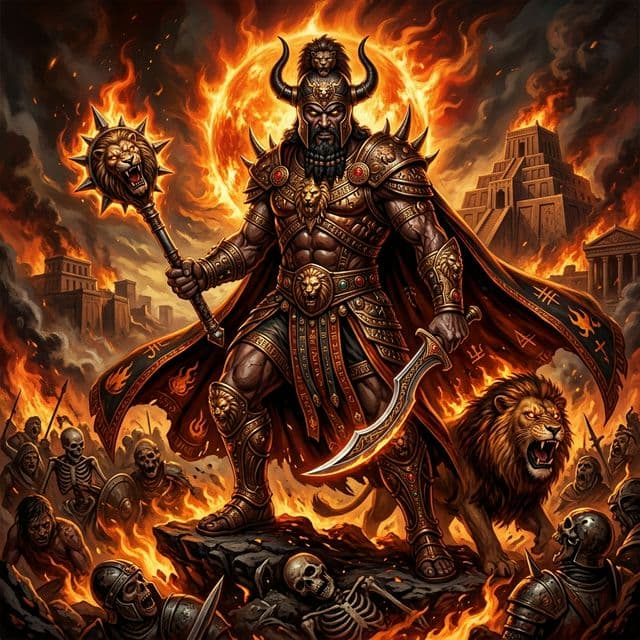
God of war, plague, and the destructive aspects of the sun. Nergal embodies death in its violent forms and co-rules the underworld with his wife Ereshkigal.

Nergal was born a god of the burning sun and pestilence. When he offended Ereshkigal by not standing in her presence, he was summoned to the underworld to apologize. Instead, he fought his way to her throne, and their violent encounter transformed into passion. He became her consort and co-ruler of the dead.

Nergal is the god of war, plague, and the scorching summer sun. Where other war gods might represent heroic combat, Nergal embodies the horror of warfare: the screaming, the blood, the pestilence that follows in an army's wake. He is death in its most violent forms, the antithesis of civilization's protective order.
Read the full Nergal entry
About this comparison

Comparisons pair figures that play a similar role across traditions, or that the myths connect within one. A shared role does not, by itself, establish a shared origin.