Side by sideParallel across traditions

Brigid vs Minerva

Brigid
BrigidCeltic
Minerva
MinervaRoman

Cormac's Glossary (9th c. Irish) compares Brigid, patroness of poetry and craft, to the classical Minerva.

At a glance

Brigid and Minerva compared
BrigidMinerva
TraditionCeltic PantheonRoman Pantheon
Domainsfire, poetry, smithcraft, healing, spring, fertilitywisdom, warfare, crafts, strategy, arts
Symbolsflame, Brigid's cross, holy well, anvilowl, olive tree, aegis, spear
Also calledBríd, Brighid, BrigitNone recorded

Where they meet

The atlas records no domain or symbol that Brigid and Minerva share.

They are compared for the part each plays in their own tradition rather than for any attribute in common.

Where they part

Only Brigid

Associated with fire, poetry, smithcraft, healing, spring, and fertility.

Only Minerva

Associated with wisdom, warfare, crafts, strategy, and arts.

Why they are compared

Cormac's Glossary compares Brigid, goddess of poetry and craft, to the classical Minerva.

How each was worshipped

Brigid

Cult sites
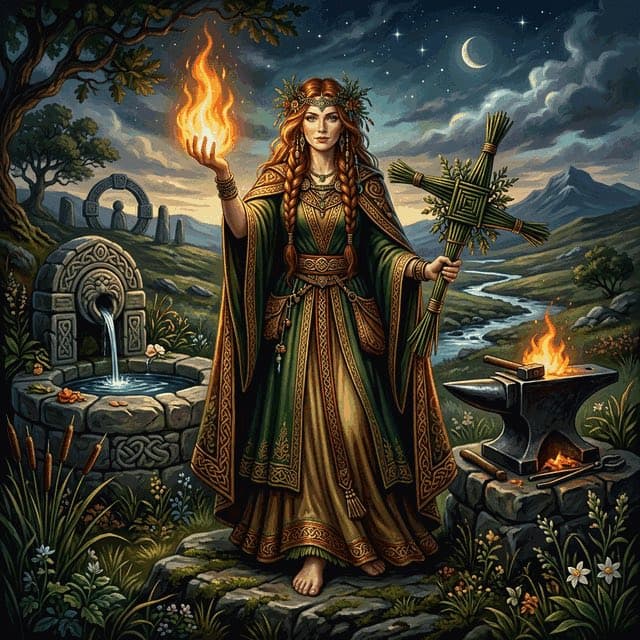
Kildare, where a fire and a saint overlap a goddess; Holy wells across Ireland
Festivals
Imbolc (1 February); St Brigid's Day

Poetry, smithcraft, and healing in the mythological layers; a monastic fire in the Christian ones. Imbolc and the well-cults are the working trail. Do not pretend the saint erased the goddess or that they are simply identical.

Minerva

Cult sites
Temple of Minerva on the Aventine; Capitoline triad cella; Minerva Capta after the sack of Falerii
Festivals
Quinquatrus (19–23 March); Quinquatrus Minusculae (June)

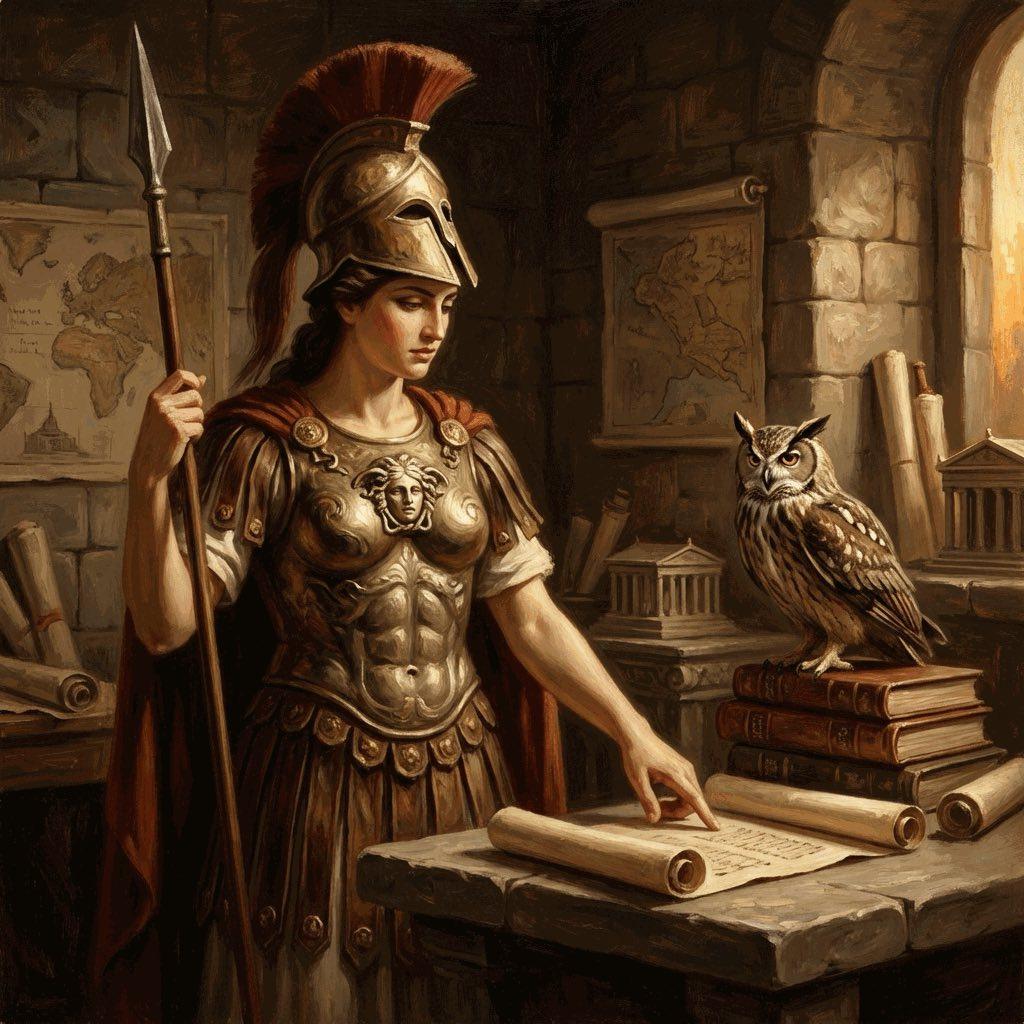
Artisans, flute-players, and schoolchildren kept the Quinquatrus. Minerva's Aventine temple was a crafts guild center. Romans treated her as a working goddess of skill and counsel, housed with Jupiter and Juno on the Capitol, not as a borrowed Athena in a separate Greek precinct.

The two figures

Celtic Pantheon

Brigid

The exalted goddess of fire, poetry, and the forge. She bridges the worlds of creativity and craftsmanship, and her sacred flame burns eternally.

Brigid is the daughter of **the Dagda**, the father god of the Tuatha Dé Danann, making her one of the most important deities of the Irish pantheon. Her mother is sometimes given as the goddess Danu or one of the Dagda's other consorts. She was married to Bres, a half-Fomorian who briefly ruled the Tuatha Dé Danann. When her son Ruadán was killed in the Second Battle of Mag Tuired while fighting for the Fomorians, Brigid's keening became the first mourning cry heard in Ireland, connecting her to both creation (poetry, smithcraft) and grief.

Brigid, whose name means **"the Exalted One,"** is one of the most beloved deities of Irish mythology, a goddess whose influence transcended the coming of Christianity. She presides over three essential crafts: **poetry** (the fire of inspiration), **smithwork** (the fire of the forge), and **healing** (the fire of the hearth). In some traditions, she is described as three sisters, all named Brigid, each governing one of these domains.

Read the full Brigid entry

Roman Pantheon

Minerva

Goddess of wisdom, strategic warfare, and crafts. Part of the Capitoline Triad with Jupiter and Juno. Patron of artisans, teachers, and strategic warfare. Roman equivalent of Athena.

Minerva is wisdom, crafts, and the intelligent side of war. With Jupiter and Juno she forms the **Capitoline Triad**, a grouping that has no exact Greek temple equivalent. Her own Aventine temple and the craftsmen's guilds that honored her made her a goddess of making: weaving, metalwork, teaching, the slow skill that wins a campaign as surely as a charge.

Read the full Minerva entry
About this comparison

Comparisons pair figures that play a similar role across traditions, or that the myths connect within one. A shared role does not, by itself, establish a shared origin.