Side by sideParent and child

Ometeotl vs Tezcatlipoca

Ometeotl
OmeteotlAztec
Tezcatlipoca
TezcatlipocaAztec

Ometeotl and Tezcatlipoca are recorded as parent and child in the Aztec Pantheon.

At a glance

Ometeotl and Tezcatlipoca compared
OmeteotlTezcatlipoca
TraditionAztec PantheonAztec Pantheon
Domainsduality, primordial creation, the origin of the godsnight, sorcery, obsidian, destiny, jaguars
SymbolsOmeyocan, the highest heaven, the paired male-female creative principleobsidian mirror, jaguar
Also calledOmetecuhtli (male aspect), Omecihuatl (female aspect), Tonacatecuhtli/Tonacacihuatl (associated forms)Smoking Mirror

Where they meet

The atlas records no domain or symbol that Ometeotl and Tezcatlipoca share.

They are compared because of how the myths connect them, not because of what they rule.

Where they part

Only Ometeotl

Associated with duality, primordial creation, and the origin of the gods.

Only Tezcatlipoca

Associated with night, sorcery, obsidian, destiny, and jaguars.

How each was worshipped

Ometeotl

Cult sites
No securely attested dedicated temple; the associated forms Tonacatecuhtli/Tonacacihuatl were venerated as remote, abstract creators rather than through an active, image-based state cult

Unlike the major gods of the Aztec state cult (Huitzilopochtli, Tezcatlipoca, Tlaloc), the dual creator described in sources like the Historia de los Mexicanos por sus pinturas appears as a remote, largely abstract originating principle rather than a deity with an active, image-centered public cult of temples and festivals.

Tezcatlipoca

Cult sites
Temples in the sacred precinct of Tenochtitlan; Texcoco and other altepetl houses of the Smoking Mirror
Festivals
Toxcatl

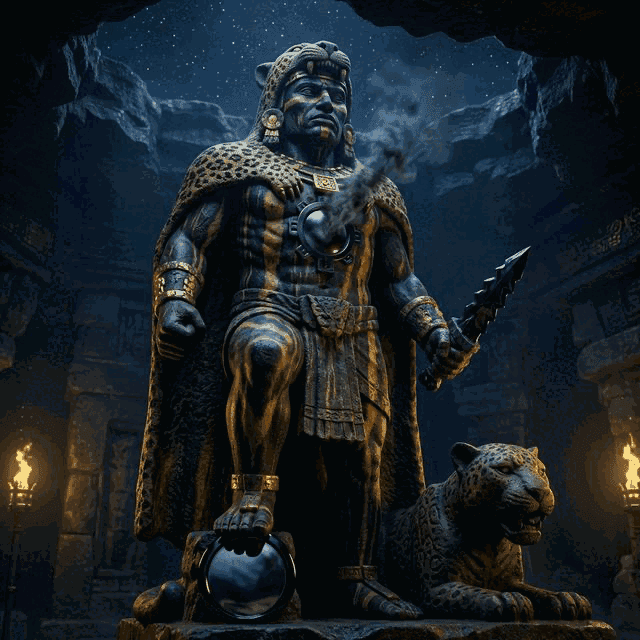
Obsidian mirror, night, and the beautiful captive who lived as the god for a year before Toxcatl. Jaguar, music, and kingship's dark twin. He is not Quetzalcoatl's cartoon opposite; they share cities and fight in story.

The two figures

Aztec Pantheon

Ometeotl

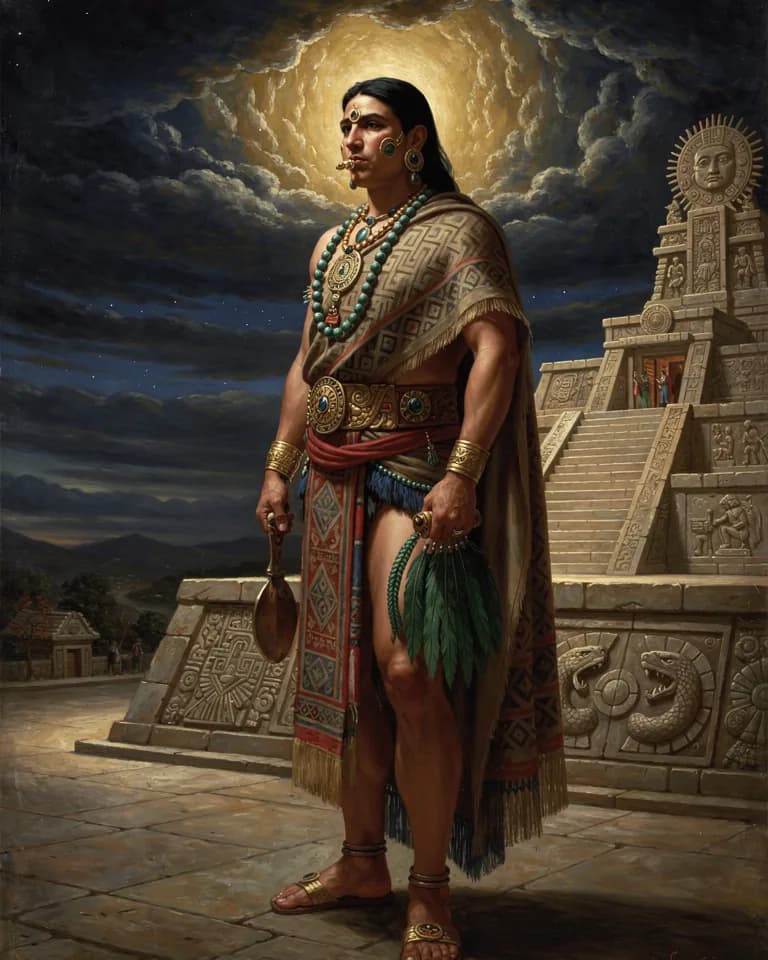
A primordial dual-gendered creative principle described in some colonial-era Nahua sources as residing in Omeyocan, the highest level of the heavens, and identified with the paired deities Ometecuhtli and Omecihuatl. Whether Ometeotl represents a single, named pre-Columbian deity or is chiefly a later scholarly synthesis of the paired creator gods is a genuinely unresolved debate among specialists.

According to the Historia de los Mexicanos por sus pinturas, the dual creator, dwelling in the highest heaven of Omeyocan and known also as Tonacatecuhtli and Tonacacihuatl, engendered the four Tezcatlipoca brothers, who then undertook the work of shaping the world and its successive ages. Scholars remain divided over whether 'Ometeotl' should be understood as a single named deity in pre-Columbian thought or as a modern synthesis of the paired creator gods.

Ometeotl, meaning "Two God" or "Dual God," names a primordial, dual-gendered creative force described in a cluster of colonial-era Nahua sources, most notably the anonymous 16th-century Spanish compilation *Historia de los Mexicanos por sus pinturas*, as dwelling in Omeyocan, the thirteenth and highest level of the Aztec heavens. In this account, the dual god, also called Tonacatecuhtli and Tonacacihuatl ("Lord and Lady of Our Sustenance"), engendered the four Tezcatlipocas (Xipe Totec (the Red Tezcatlipoca), Huitzilopochtli (associated with the Blue Tezcatlipoca in this telling), Quetzalcoatl (the White Tezcatlipoca), and Tezcatlipoca proper (the Black Tezcatlipoca)) who in turn undertook the work of creating the world and the successive Suns (world-ages).

Read the full Ometeotl entry

Aztec Pantheon

Tezcatlipoca

The omnipotent and capricious god of the night sky, ancestral memory, and time. Rival to Quetzalcoatl and tester of humanity.

He sacrificed his foot to lure the earth monster Cipactli so the world could be made from her body.

Tezcatlipoca, whose name means "Smoking Mirror," was one of the most powerful and feared deities in the Aztec pantheon. He embodied **change through conflict**, the unpredictable nature of fate, and the darkness that balances light. His obsidian mirror could see into the hearts of men and reveal hidden truths - or deceive utterly.

Read the full Tezcatlipoca entry
About this comparison

Comparisons pair figures that play a similar role across traditions, or that the myths connect within one. A shared role does not, by itself, establish a shared origin.