Side by sideParallel across traditions

Perun vs Thor

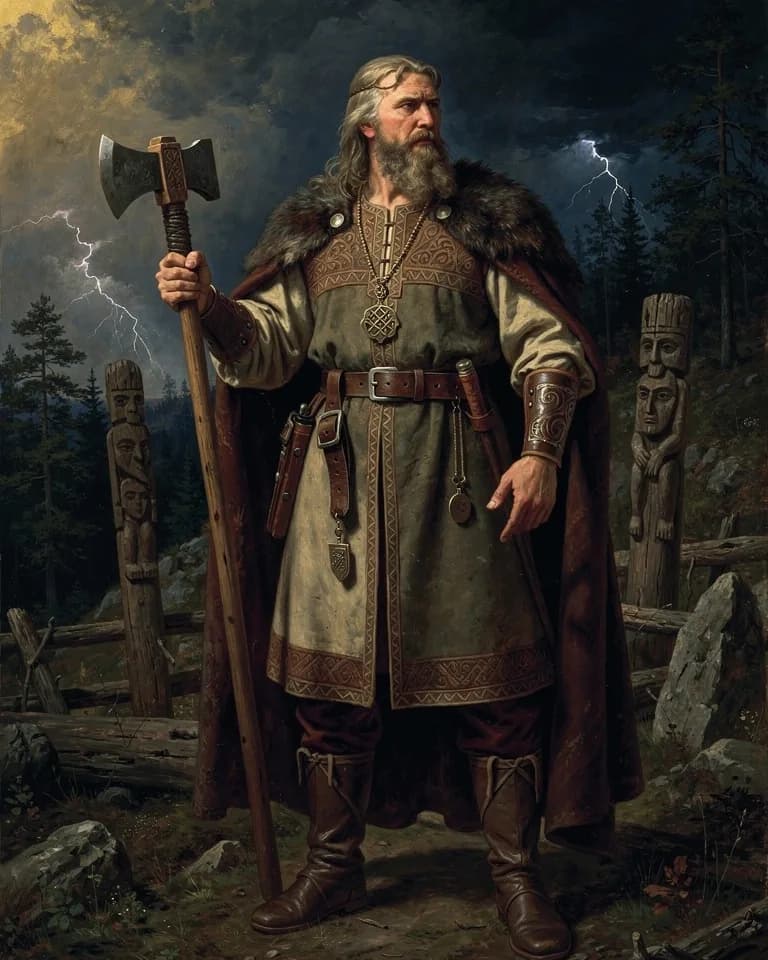
Perun
PerunSlavic
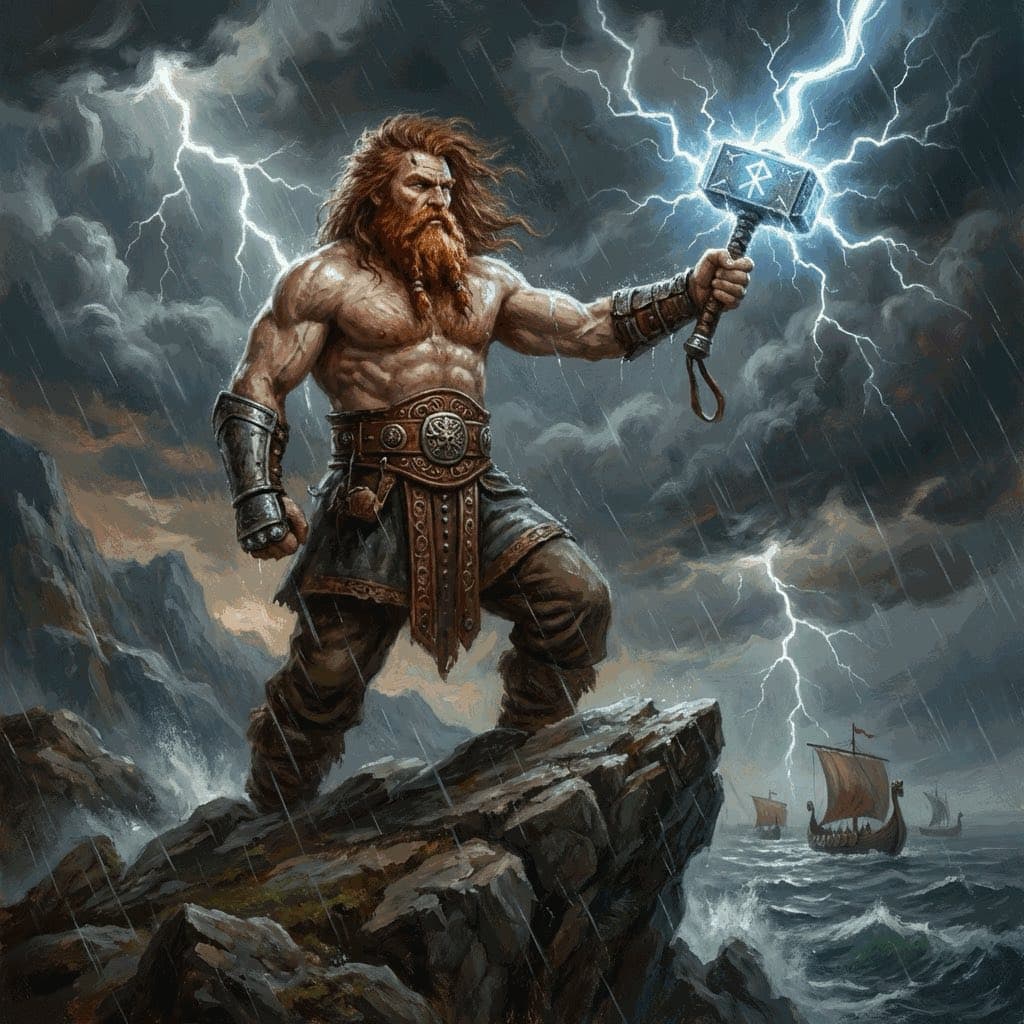
Thor
ThorNorse

Both are hammer/axe-wielding thunder gods invoked in oaths, part of the wider Indo-European storm-god pattern; Perun's name is directly cognate with Baltic Perkūnas, Thor's closest attested parallel outside Scandinavia.

At a glance

Perun and Thor compared
PerunThor
TraditionSlavic PantheonNorse Pantheon
Domainsthunder, lightning, war, oathsthunder, lightning, strength, protection, storms
Symbolsaxe, oak tree, thunderbolthammer Mjolnir, belt Megingjord, iron gloves, goats, red beard
Also calledPerunŭDonar, Thunder God

Where they meet

Both are associated with thunder and lightning.

Where they part

Only Perun

Associated with war and oaths.

Only Thor

Associated with strength, protection, and storms.

How each was worshipped

Perun

Cult sites
No enclosed temple building is attested for Perun among the East Slavs; worship was in the open air. An excavated horseshoe-shaped ditch and central post-pit at Peryn, near Novgorod, is widely interpreted by archaeologists as a Perun sanctuary, matching the First Novgorod Chronicle's report that Bishop Akim had Perun's idol thrown into the Volkhov there in 989.

Oaths of state were sworn on Perun's name alongside weapons (907, 945, 971 treaties). Procopius describes cattle and other animals sacrificed to the Slavs' supreme thunder-god in general terms. In later East Slavic folklore, Perun's thunder role and his midsummer date were partly absorbed into the feast of the prophet Elijah (Ilyin Den), a post-Christian folk continuation, not a pagan-era practice.

Thor

Cult sites
Uppsala temple beside Odin and Freyr; Wayside hammers and holy oaks more than a single great fane
Festivals
Thursday observances; Hammer-blessings of marriages and land

The most popular of the North's gods in the settlement period. Miniature hammers, Thursday, and oak. He fights giants and blesses the farm. Adam puts him in the high seat at Uppsala; farmers put him over the door.

The two figures

Slavic Pantheon

Perun

The thunder god of the Kievan Rus', sworn by in treaties and installed at the head of Prince Vladimir's official pantheon in 980 before Vladimir himself had his idol destroyed in 988.

Perun is the best-attested of the Rus' gods. The *Russian Primary Chronicle* has the Rus' swear by him and by their weapons in the treaties of 907 and 945, and again in 971; under 980 he stands first among the six idols Vladimir raises on the hill outside his Kiev palace, with a head of silver and a moustache of gold. Procopius, writing in the 550s, describes the early Slavs sacrificing cattle to an unnamed god who alone is "master of all" and "the maker of lightning", not a named source for Perun, but read by most historians as the same figure centuries earlier.

Read the full Perun entry

Norse Pantheon

Thor

Son of Odin and the earth goddess Jord. God of thunder, lightning, and storms. Protector of mankind and the gods, wielding the mighty hammer Mjolnir.

Thor was born to Odin, the Allfather, and Jord, the personification of the earth itself. This union of sky and earth made Thor one of the mightiest beings in existence. From birth, he displayed incredible strength - as an infant, he could lift ten loads of bearskins. He grew quickly into the powerful protector of both gods and mortals. He married Sif, the golden-haired goddess, and with her had a daughter named Thrud. With the giantess Jarnsaxa, he fathered Magni and Modi, who will inherit Mjolnir after Ragnarok.

Thor is the defender of Asgard and Midgard, wielding the mighty hammer **Mjolnir**. Unlike the cunning Odin, Thor is straightforward, strong, and short-tempered, but fiercely loyal.

Read the full Thor entry
About this comparison

Comparisons pair figures that play a similar role across traditions, or that the myths connect within one. A shared role does not, by itself, establish a shared origin.