Mesoamerican PantheonCreature
Nagual
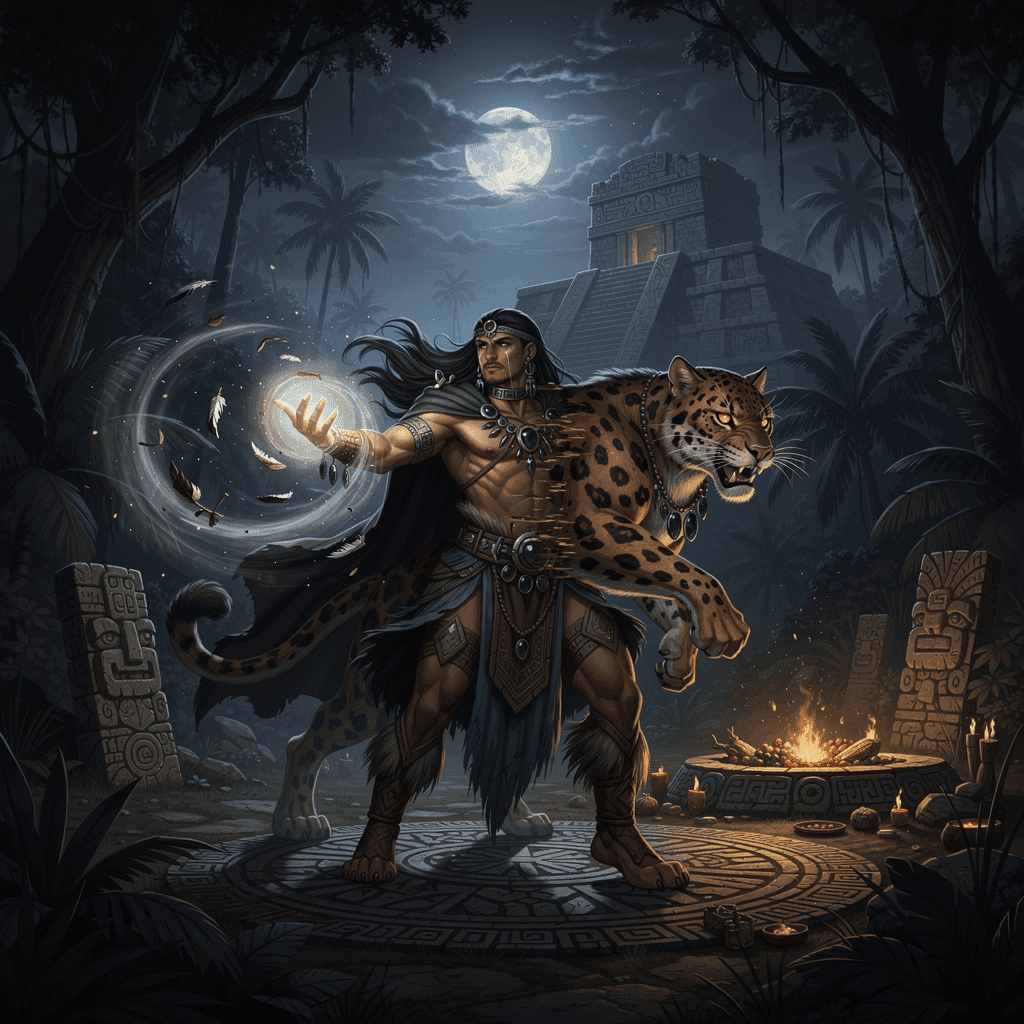
- Shapeshifting
- Spirit Walking
- Soul Bonding
- Animal Communication
A shapeshifting sorcerer or spirit animal from Mesoamerican belief systems. Each person is believed to have a nagual spirit that shares their soul, typically in animal form. Powerful naguals can transform into jaguars, eagles, or other creatures, and shamans use this ability to travel between worlds, heal the sick, or curse enemies.
About Nagual
Co-Essence, Not a Single Beast
Nahual / nagual in Mesoamerican ethnography is a linked animal or the transforming specialist who shares its skin. Sahagún records nahualli sorcerers; modern Maya and Nahua communities keep tonal/nahual doctrines. This is a relation, not a zoo specimen. A jaguar, turkey, or lightning-bolt can be a person's nahualli; freeze it as one animal and the doctrine collapses.
Nahualli in the Florentine Codex
Sahagún's informants (Book 10) describe the nahualli as a person who can take animal form, a counsellor and keeper of secrets when good, and a bewitcher of people when bad. Book 4 explains how a person's birth-day in the ritual calendar shapes their fate, a concept later ethnographers linked to the tonal, the animal companion whose fate is joined with a person's own. In many modern communities these ideas remain part of lived religion.
Quick answers about Nagual
- What is Nagual?
- A shapeshifting sorcerer or spirit animal from Mesoamerican belief systems. Each person is believed to have a nagual spirit that shares their soul, typically in animal form. Powerful naguals can transform into jaguars, eagles, or other creatures, and shamans use this ability to travel between worlds, heal the sick, or curse enemies.
- Where does Nagual live?
- The atlas lists Nagual's habitat as Between the Human and Spirit Worlds.
- What abilities does Nagual have?
- The atlas lists these abilities for Nagual: Shapeshifting, Spirit Walking, Soul Bonding, and Animal Communication.
Sources and further reading
Source notes
These references are recorded in the catalog. Their passage wording and translation have not been checked, so quotations are not displayed here.
- Sahagún, Florentine Codex; Mesoamerican ethnography
About this entry
By Elizabeth Stein for Mythos Atlas. About the author. Editorial notes are grounded in the site's cited sources and can be challenged through the contact page.
The danger rating is an editorial shorthand for how the myths portray the creature, not a claim made by the sources.
Keep exploring
One myth a week, with its sources in a short email. The sign-up form is just below.