Aztec PantheonCreature
Cipactli
- Endless Hunger
- Multiple Mouths
- Primordial Power
- Earth Foundation
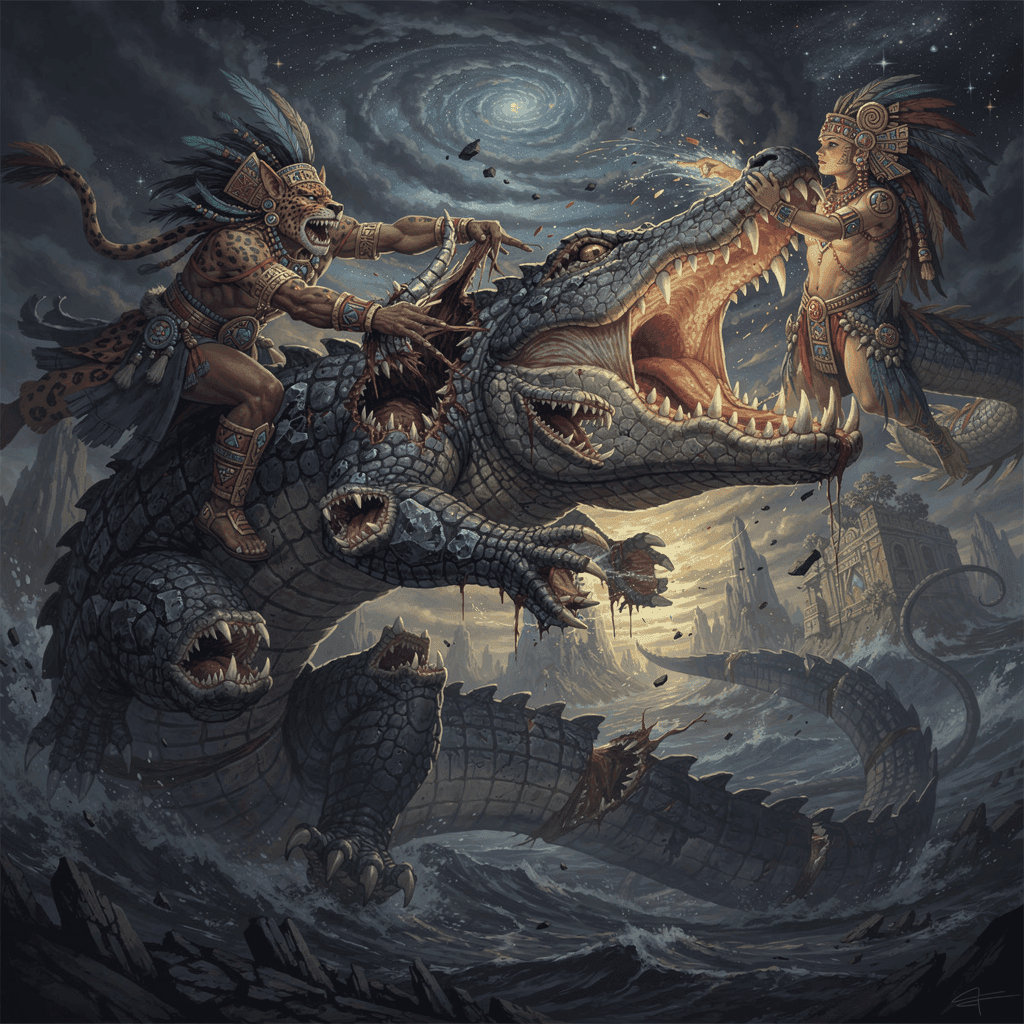
The primordial sea monster from Aztec creation mythology, a massive crocodilian creature with mouths at every joint of its body. The gods Tezcatlipoca and Quetzalcoatl tore Cipactli apart to create the earth and sky, with its body becoming the land and its endless hunger explaining why the earth demands blood sacrifice.
About Cipactli
The Earth That Was a Crocodile
In the Histoyre du Mechique and related Nahua cosmogonies, Tezcatlipoca and Quetzalcoatl tear the primordial caiman Cipactli to make land. Mouths at the joints explain why the earth still drinks blood. The day-sign Cipactli opens the 260-day count. One caiman, one world-body: later art still shows earth as a hungry hide.
The first day
Cipactli is the first of the twenty day signs of the tonalpohualli, the 260-day ritual calendar, which is why the creature appears at the start of the calendar in divinatory codices like the Codex Borgia. In the Histoyre du Mechique the gods make the plants, springs, and caves of the earth from her body to compensate her, and she cries out at night for human hearts, a clear link with the earth deity Tlaltecuhtli.
Quick answers about Cipactli
- What is Cipactli?
- The primordial sea monster from Aztec creation mythology, a massive crocodilian creature with mouths at every joint of its body. The gods Tezcatlipoca and Quetzalcoatl tore Cipactli apart to create the earth and sky, with its body becoming the land and its endless hunger explaining why the earth demands blood sacrifice.
- Where does Cipactli live?
- The atlas lists Cipactli's habitat as The Primordial Waters.
- What abilities does Cipactli have?
- The atlas lists these abilities for Cipactli: Endless Hunger, Multiple Mouths, Primordial Power, and Earth Foundation.
Sources and further reading
Source notes
These references are recorded in the catalog. Their passage wording and translation have not been checked, so quotations are not displayed here.
- Histoyre du Mechique; Nahua cosmogony (day-sign Cipactli)
About this entry
By Elizabeth Stein for Mythos Atlas. About the author. Editorial notes are grounded in the site's cited sources and can be challenged through the contact page.
The danger rating is an editorial shorthand for how the myths portray the creature, not a claim made by the sources.
Keep exploring
One myth a week, with its sources in a short email. The sign-up form is just below.