Yoruba Tradition
Aganju
Also known as Aganyu
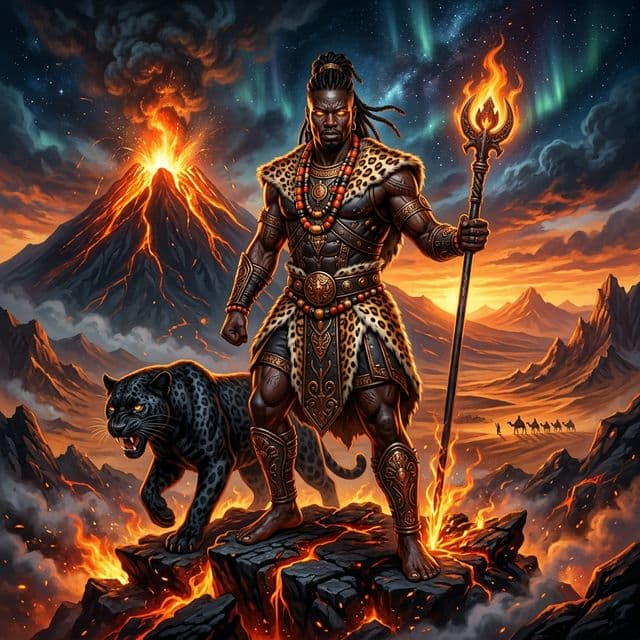
- volcanoes
- wilderness
- earth
- desert
- fire
The Orisha of volcanoes, wilderness, and the untamed earth. Aganju represents the raw, primal power of the natural world.
About Aganju
The Wild One
Aganju personifies the untamed forces of nature—volcanic eruptions, earthquakes, and the vast wilderness beyond human settlement. He is the father of Shango by Yemoja.
The Ferryman
In some traditions, Aganju is the ferryman who transports souls across the river of death. He carries the deceased on his back across the waters separating the living from the ancestors.
Primal Power
As the deity of volcanoes, Aganju represents both destruction and creation. Volcanic soil is among the most fertile, and new land emerges from lava flows.
Origin story
Aganju was born from the union of earth and sky in the earliest days of creation. He embodies the primordial wilderness before human civilization.
Across traditions
Parallel figures
Figures who play a role like Aganju's in other traditions.
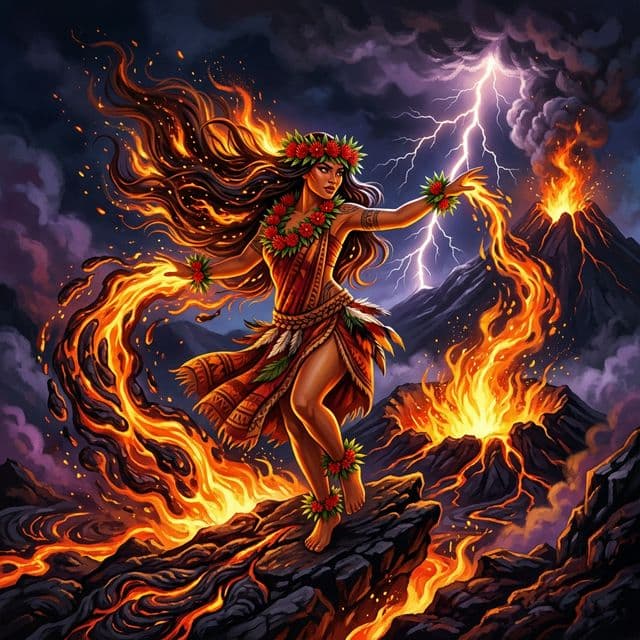 PolynesianPeleIllustration
Both are deities of volcanoes and the destructive/creative fire of the earth
Compare Aganju and Pele side by side
Worship and cult
Temples, festivals, and practices recorded for Aganju
Shango's father in some houses, a barren-land orisha in others. Thin public festival file. Treat as a hard-country god, not a carnival headliner.
Sacred sites
- Wilderness and volcano in some lineages
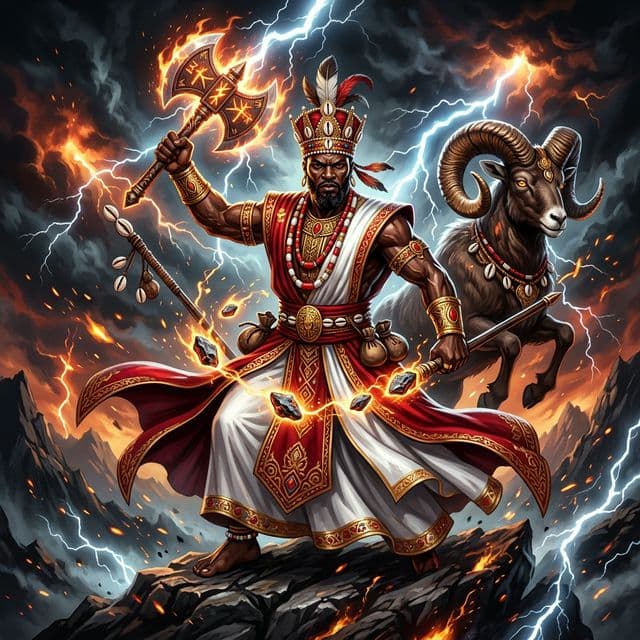
Family
Sources and further reading
Source notes
These references are recorded in the catalog. Their passage wording and translation have not been checked, so quotations are not displayed here.
- Lucumí/Yoruba praise names of Aganju (oral)
About this entry
By Elizabeth Stein for Mythos Atlas. About the author. Editorial notes are grounded in the site's cited sources and can be challenged through the contact page.
Parallels are editorial comparisons across traditions: a shared role does not, by itself, establish a shared origin.
Family relationships come from the atlas's kinship records. Ancient sources often disagree on divine genealogy.
Keep exploring
One myth a week, with its sources in a short email. The sign-up form is just below.
Genealogy
Family tree
Aganju's parents, consorts, children and rivals, as recorded in the atlas.