Greek PantheonHero
Atalanta
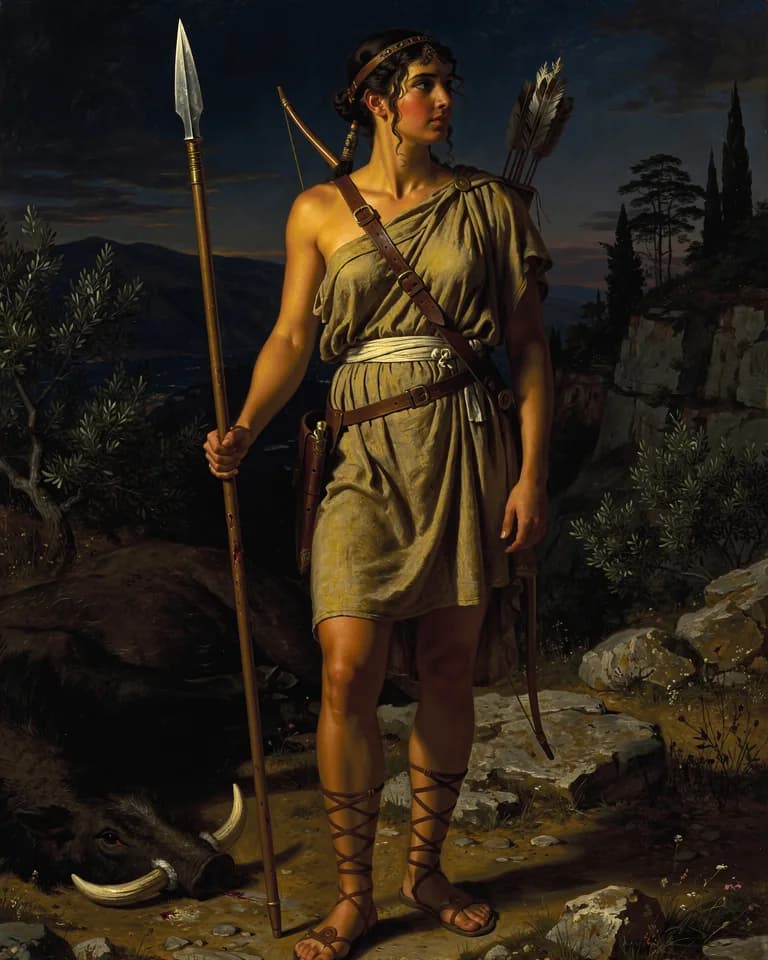
Swift-footed huntress raised in the wild, celebrated for outrunning every suitor and for drawing first blood on the Calydonian Boar.
About Atalanta
Raised by a Bear
Exposed on a mountainside as an infant by a father who wanted a son, Atalanta was suckled by a she-bear, sent by the goddess Artemis, and raised by hunters, growing into a huntress feared and admired for her speed and her skill with a bow. She refused marriage, having been warned by an oracle that it would ruin her, and devoted herself to Artemis's wild, unmarried life instead.
The Calydonian Boar Hunt
When King Oeneus of Calydon offended Artemis and she sent a monstrous boar to ravage his land, the greatest heroes of Greece gathered for the hunt, Atalanta among them, over the objections of several who thought a woman had no place there. She drew first blood on the boar with an arrow, and the hero Meleager, who loved her, killed it and awarded her the hide as the hunt's true victor, a decision that led to a fatal quarrel among the other hunters.
The Footrace
Atalanta's most famous story is the footrace she set for her suitors: any man who wished to marry her had to outrun her, and any who lost was killed. Hippomenes finally won by dropping golden apples, a gift from Aphrodite, one at a time during the race; Atalanta could not resist stopping to pick each one up, and lost the race, marrying him.
On parentage: Wholly mortal parentage; closely associated with Artemis as her devoted, unmarried follower rather than her daughter.
Key deeds
- Drew first blood on the Calydonian Boar
- Was awarded the boar's hide by Meleager, sparking a fatal quarrel
- Set a fatal footrace as the price of her hand in marriage
- Was outrun by Hippomenes, who distracted her with golden apples
Fate
Married Hippomenes after losing the footrace to his trick with the golden apples; some sources add that the couple later offended Aphrodite or Zeus and were transformed into lions.
Sources and further reading
Source notes
These references are recorded in the catalog. Their passage wording and translation have not been checked, so quotations are not displayed here.
- Apollodorus, Bibliotheca
- Ovid, Metamorphoses
About this entry
By Elizabeth Stein for Mythos Atlas. About the author. Editorial notes are grounded in the site's cited sources and can be challenged through the contact page.
Hero legends were retold for centuries, and the sources often disagree on parentage, deeds and death. This entry follows the best-known versions and notes the main alternatives.
Keep exploring
One myth a week, with its sources in a short email. The sign-up form is just below.