Source recordAncient text
Aeneid
Virgil · 19 BCE · Latin
Ancient text
Aeneid
Virgil
The Roman national epic following Trojan hero Aeneas from the fall of Troy to the founding of Rome. Primary source for Roman mythology and religious practice.
About this work
The Roman national epic following Trojan hero Aeneas from the fall of Troy to the founding of Rome. Primary source for Roman mythology and religious practice.
Where to start
Robert Fagles's 2006 translation is a vivid, widely read starting point; Sarah Ruden's 2021 translation is a tighter, line-for-line modern alternative.
Figures in the text
Heroes and divinities who feature prominently, with where they appear.
Heroes and mortals
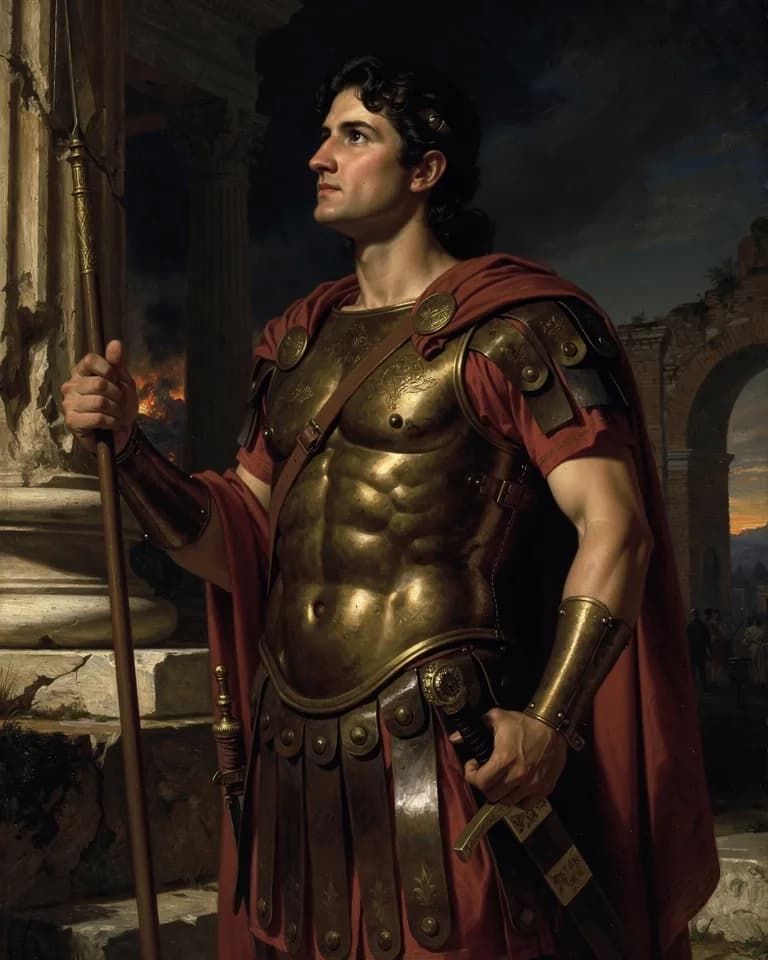
Deities and immortals
 VenusBooks 1-12Aeneas divine mother and guardian guide through his journey
 JunoBooks 1-12implacable adversary of the Trojans stirring Carthage and Turnus
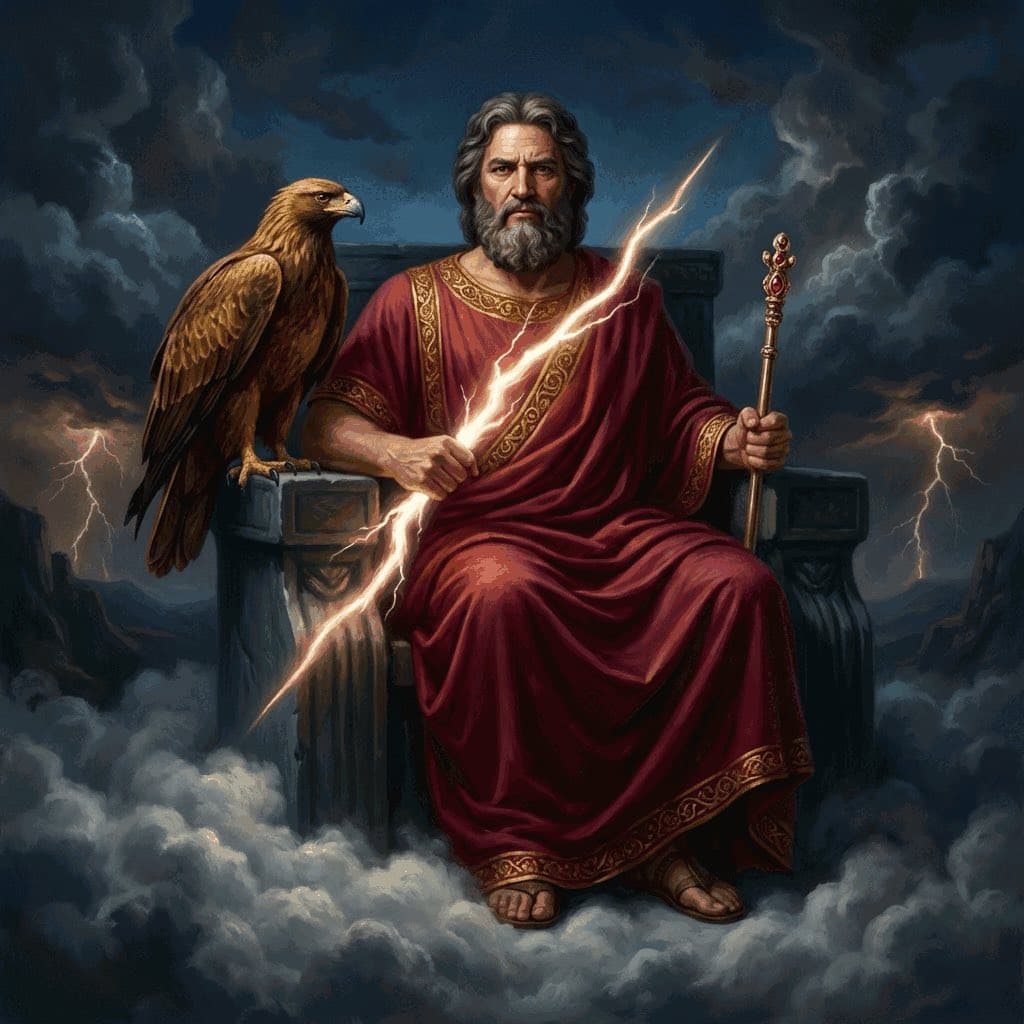 JupiterBooks 1 and 12sovereign ruler of destiny who foretells Rome endless empire
 NeptuneBook 1calms the storm unleashed by Aeolus against the Trojan fleet
 MercuryBook 4divine messenger who orders Aeneas to abandon Carthage and fulfill destiny
Key scenes
Turning points of the work, in reading order.
The Fall of Troy
Aeneas recounts the Greeks' wooden horse and Troy's destruction, escaping with his father and son.
Dido and Aeneas
Aeneas's affair with Queen Dido of Carthage ends when he abandons her to continue his divinely ordained journey.
The Descent to the Underworld
Aeneas visits his dead father Anchises and glimpses the future glory of Rome.
The War in Latium
Aeneas fights Turnus and the Latin peoples for the right to settle in Italy.
The Death of Turnus
Aeneas kills Turnus in single combat, ending the epic.
Passages
Direct quotations are distinguished from editorial paraphrases and records awaiting verification.
“Arms and the man I sing, who first from the coasts of Troy, an exile by fate, came to Italy and Lavinian shores; much was he tossed on land and on the deep by violence of the gods, for cruel Juno's unforgetting wrath.”
Virgil, Aeneid · 1.1-4
Translation: H. Rushton Fairclough
H. Rushton Fairclough, 1916
Read source“But, Rome, ’tis thine alone, with awful sway, To rule mankind, and make the world obey, Disposing peace and war by thy own majestic way; To tame the proud, the fetter’d slave to free: These are imperial arts, and worthy thee.”
Virgil, Aeneid · Book VI, Anchises’s address on Roman rule; corresponding to Latin 6.851–853
Translation: John Dryden
1697 translation; Project Gutenberg eBook 228. Verse whitespace normalized; outer dialogue quotation marks omitted. English transcription checked 2026-09-23. Replaces prior unverified wording; no original-language text is supplied or certified.
Read sourceStories drawn from it
Retellings in the atlas that quote or cite this work.
 The Aeneid - Journey to RomeepicThe epic tale of Aeneas, Trojan hero and son of Venus, who escapes the fall of Troy and journeys to Italy to found the Roman race. Guided by fate and divine will, he overcomes trials, wars, and personal loss.
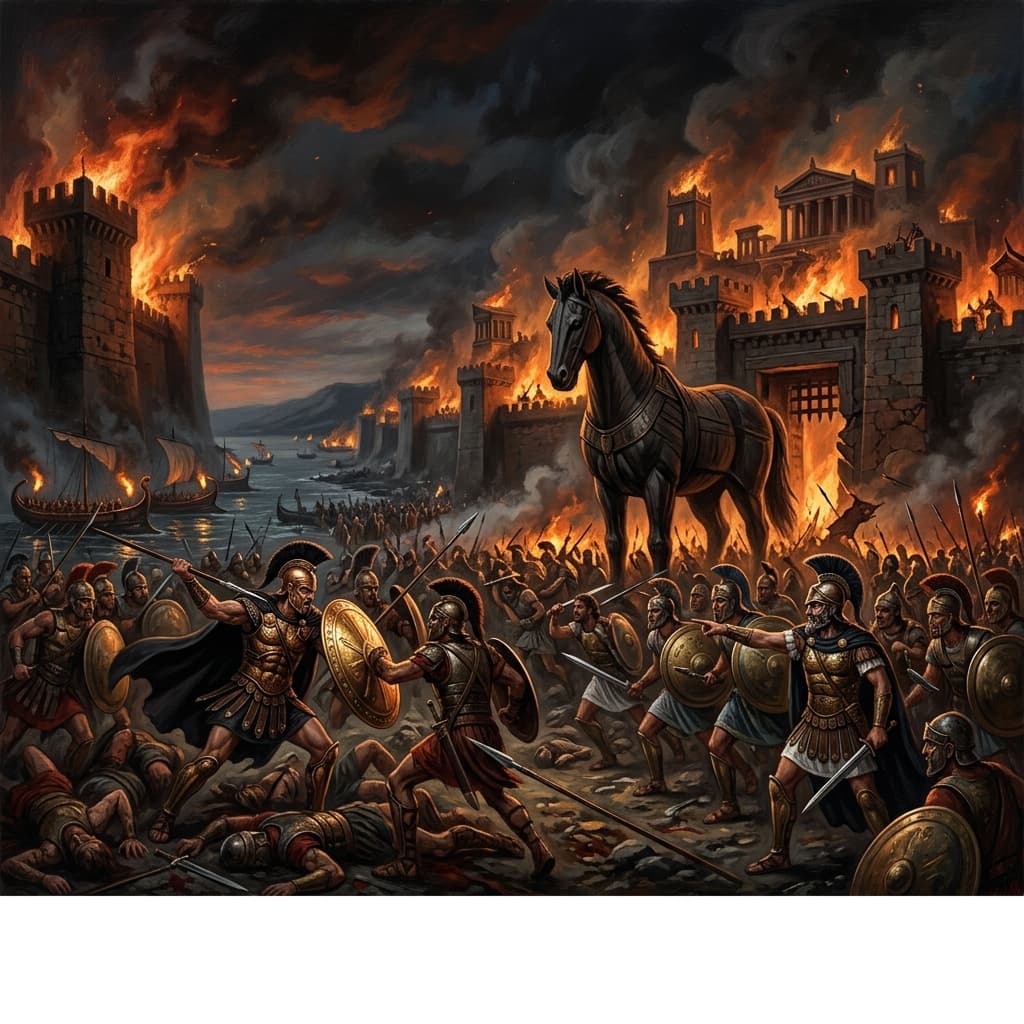 The Trojan WarepicThe epic decade-long conflict between Greece and Troy, sparked by Paris's abduction of Helen, featuring the wrath of Achilles, the cunning of Odysseus, and the fall of the greatest city in the world.
 Dido and AeneasromanceThe Trojan prince Aeneas, fleeing the destruction of his city, finds refuge with Queen Dido of Carthage. They fall deeply in love, but fate demands Aeneas continue his mission to found Rome, leading to Dido's tragic death.
About this record
By Elizabeth Stein for Mythos Atlas. About the author. Editorial notes are grounded in the site's cited sources and can be challenged through the contact page.
Dates and authorship follow standard scholarly references; for many ancient works both are approximate or disputed.