Norse Pantheontool
Gleipnir
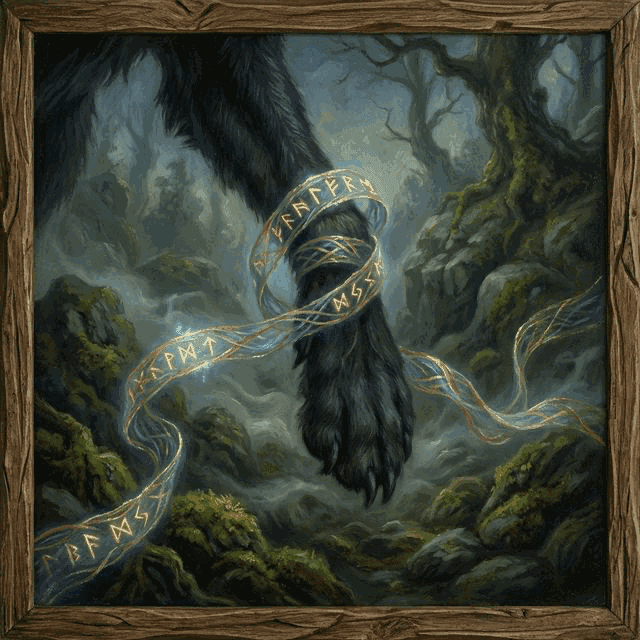
- Unbreakable Binding
- Monster Restraint
- Magical Durability
The magical fetter that binds the monstrous wolf Fenrir. Though thin as a silk ribbon, it is stronger than any iron chain, forged from impossible ingredients by the dwarves.
About Gleipnir
The fetter on Fenrir
Gylfaginning: the wolf Fenrir, Loki's son by Angrboða, outgrows Leyding and Dromi, the iron fetters. The dwarves then make Gleipnir, thin as silk, from six impossibles — a cat's footfall, a woman's beard, a mountain's roots, a bear's sinews, a fish's breath, a bird's spittle. Fenrir agrees to try it only if a god's hand is in his jaws; Týr pays the hand. They bind him on the island Lyngvi, a sword propped in his mouth, until Ragnarok, when he breaks free and swallows Odin. Gleipnir is that binding, not a temple ribbon. Fenrir in the poems and in Snorri's prose is the same bound wolf; this is the dwarven fetter that holds him.
Origin
Forged by the dwarves from six impossible things: the sound of a cat's footsteps, the beard of a woman, the roots of a mountain, the sinews of a bear, the breath of a fish, and the spittle of a bird.
Sources and further reading
Source notes
These references are recorded in the catalog. Their passage wording and translation have not been checked, so quotations are not displayed here.
- Prose Edda, Gylfaginning (binding of Fenrir)
About this entry
By Elizabeth Stein for Mythos Atlas. About the author. Editorial notes are grounded in the site's cited sources and can be challenged through the contact page.
Keep exploring
One myth a week, with its sources in a short email. The sign-up form is just below.