Slavic Pantheonidol
Three-Headed Idol of Triglav
- Rule over three realms (as the biographers report the priests explaining)
- Oracle by the god's black horse
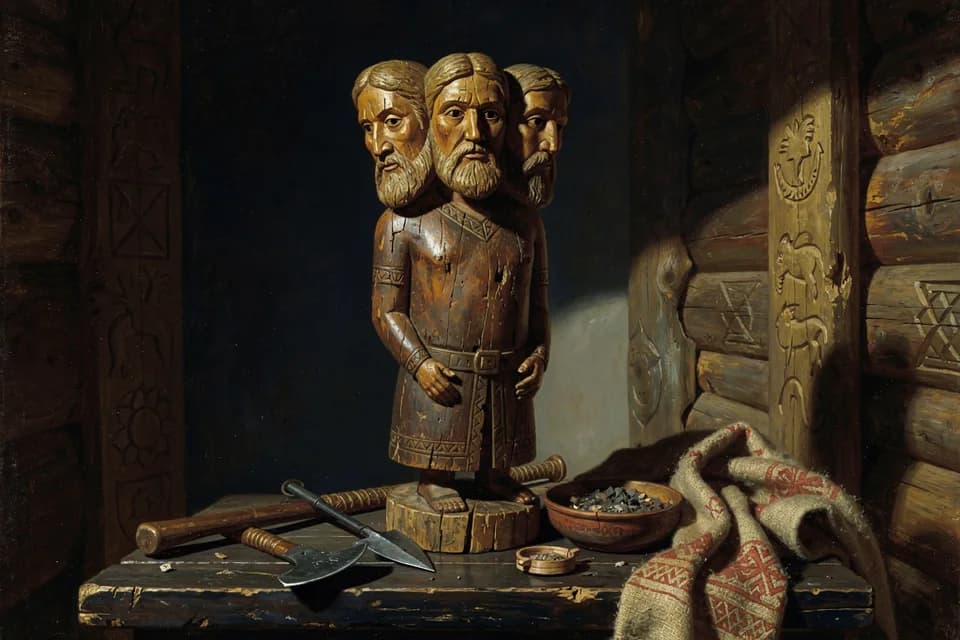
The three-headed image of Triglav at Szczecin, described by the biographers of Bishop Otto of Bamberg, who had it broken during his mission to Pomerania in the 1120s and sent its heads away as a trophy.
About Three-Headed Idol of Triglav
The witnesses
Triglav is known almost entirely from the Lives of Otto of Bamberg, the German bishop who led missions to Pomerania in 1124 and 1128. His biographers Ebbo and Herbord, writing in the mid-12th century from the reports of Otto's companions, describe a temple at Szczecin with a three-headed image of the god. Herbord reports the priests' explanation that the three heads signified rule over heaven, earth, and the underworld, and that the god's eyes were covered with a golden band so that he would not see the sins of men.
Broken and sent away
According to Herbord, Otto had the image broken and sent its three joined heads away as a trophy of the mission. Ebbo tells a different detail, that a golden image of Triglav was hidden by the pagans and could not be found. The biographers also describe a black horse used for divination, led over spears laid on the ground.
Attestation
These are hostile, second-hand Christian sources, and they disagree with each other; but they are contemporary with the cult, which is more than can be said for most Slavic gods.
Origin
Kept in a temple at Szczecin (Stettin) in Pomerania; described in the 12th-century Lives of Otto of Bamberg by Ebbo and Herbord.
Sources and further reading
Source notes
These references are recorded in the catalog. Their passage wording and translation have not been checked, so quotations are not displayed here.
- Herbord, Dialogus de vita Ottonis episcopi Babenbergensis
- Ebbo, Vita Ottonis episcopi Babenbergensis
About this entry
By Elizabeth Stein for Mythos Atlas. About the author. Editorial notes are grounded in the site's cited sources and can be challenged through the contact page.