Side by sideParallel across traditions

Anu vs Zeus

Anu
AnuMesopotamian
Zeus
ZeusGreek

Both are sky fathers and kings of the gods, though Zeus is far more active in myths.

At a glance

Anu and Zeus compared
AnuZeus
TraditionMesopotamian PantheonGreek Pantheon
Domainssky, heavens, kingship, authoritysky, thunder, lightning, law, order
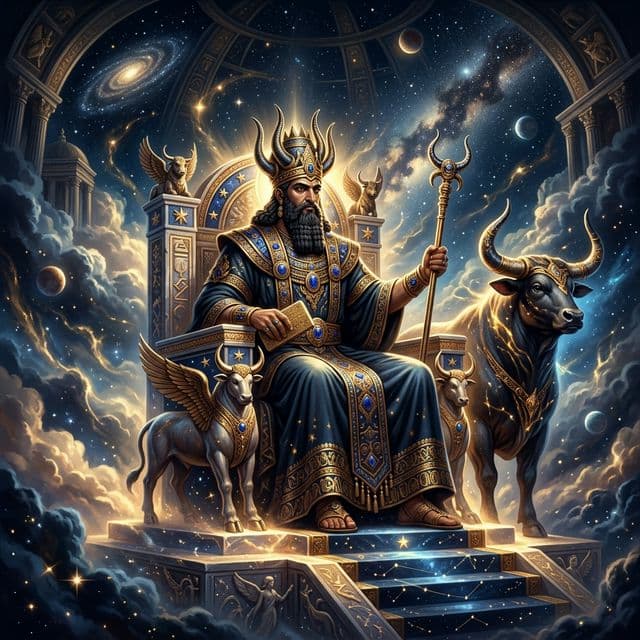
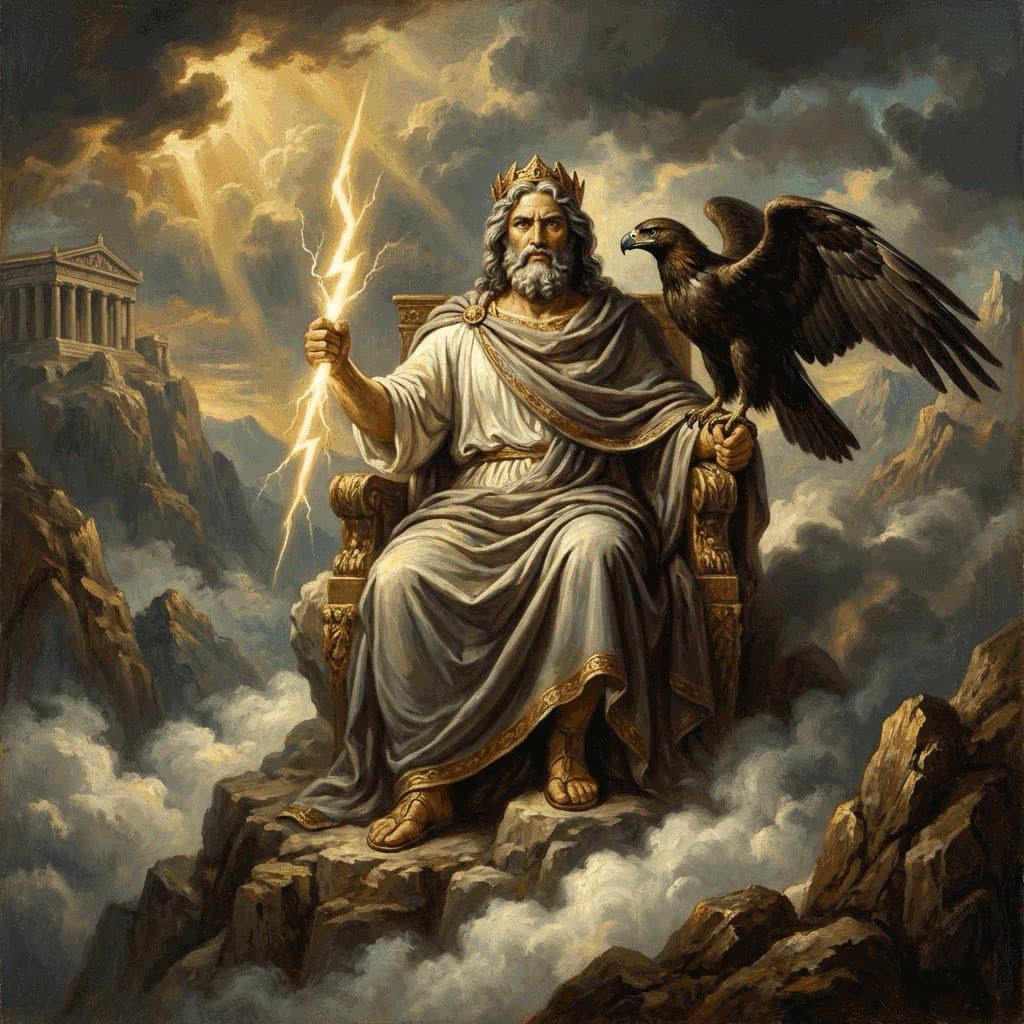
Symbolshorned crown, bull, throne of heaventhunderbolt, eagle, oak tree, bull
Also calledAn, AnumJupiter, Jove

Where they meet

Both are associated with sky.

They share a symbol: bull.

  • bull

Where they part

Only Anu

Associated with heavens, kingship, and authority.

Only Zeus

Associated with thunder, lightning, law, and order.

How each was worshipped

Anu

Cult sites
Uruk, the sky god's city; High temples (ziggurats) dedicated in his name across Sumer and Akkad
Festivals
Akitu in cities where Anu headed the rite

Sky, kingship's source, and a god who recedes as Marduk and others rise. The horned crown and the highest shrine. Offerings go up. He is remote on purpose.

Zeus

Cult sites
Temple of Zeus at Olympia; Oracle of Zeus at Dodona; Nemean sanctuary
Festivals
Olympic Games; Diasia; Dipolieia

White bulls and the thunderbolt belong to him. Olympic contest was a sacrifice as much as a race. Dodona spoke through oak and doves. Civic oaths called Zeus Horkios; a perjurer feared the sky more than the court.

The two figures

Mesopotamian Pantheon

Anu

King of the gods and lord of the heavens. Anu is the supreme deity of the Mesopotamian pantheon, father of the gods, and source of all royal authority.

In the beginning, heaven and earth were joined as one. When they separated, Anu took the heavens as his domain while Enlil claimed the earth. Anu fathered the great gods and established the cosmic order, assigning each deity their domains and powers through divine decree.

Anu stands at the apex of the Mesopotamian divine hierarchy as the god of the sky and the embodiment of supreme authority. His name literally means 'heaven' in Sumerian, and he personifies the distant, transcendent dome of the sky itself. From his throne in the highest heavens, Anu presides over the assembly of the gods, though he rarely intervenes directly in earthly affairs.

Read the full Anu entry

Greek Pantheon

Zeus

King of the gods and ruler of Mount Olympus. God of the sky, thunder, and justice. Zeus overthrew his father Cronus to become the supreme deity of the Greek pantheon.

Zeus was the youngest son of the Titans Cronus and Rhea. Cronus, fearing a prophecy that he would be overthrown by his children, swallowed each child at birth. Rhea hid Zeus and gave Cronus a stone wrapped in swaddling clothes instead. Zeus was raised in secret and later forced Cronus to regurgitate his siblings, leading the rebellion against the Titans.

Zeus is the supreme ruler of the gods, the lord of the sky, and the wielder of the thunderbolt. His power is greater than that of all the other gods combined. He presides over the oaths of men and the laws of the universe, ensuring justice and order.

Read the full Zeus entry
About this comparison

Comparisons pair figures that play a similar role across traditions, or that the myths connect within one. A shared role does not, by itself, establish a shared origin.