Side by sideParallel across traditions

Amun vs Zeus

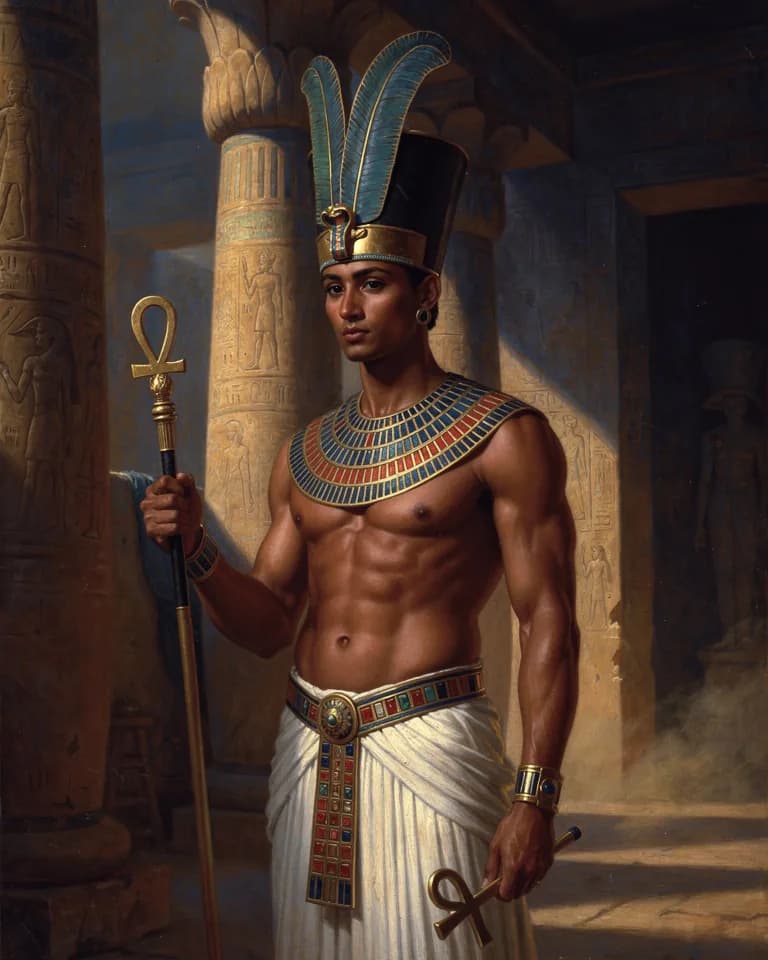
Amun
AmunEgyptian
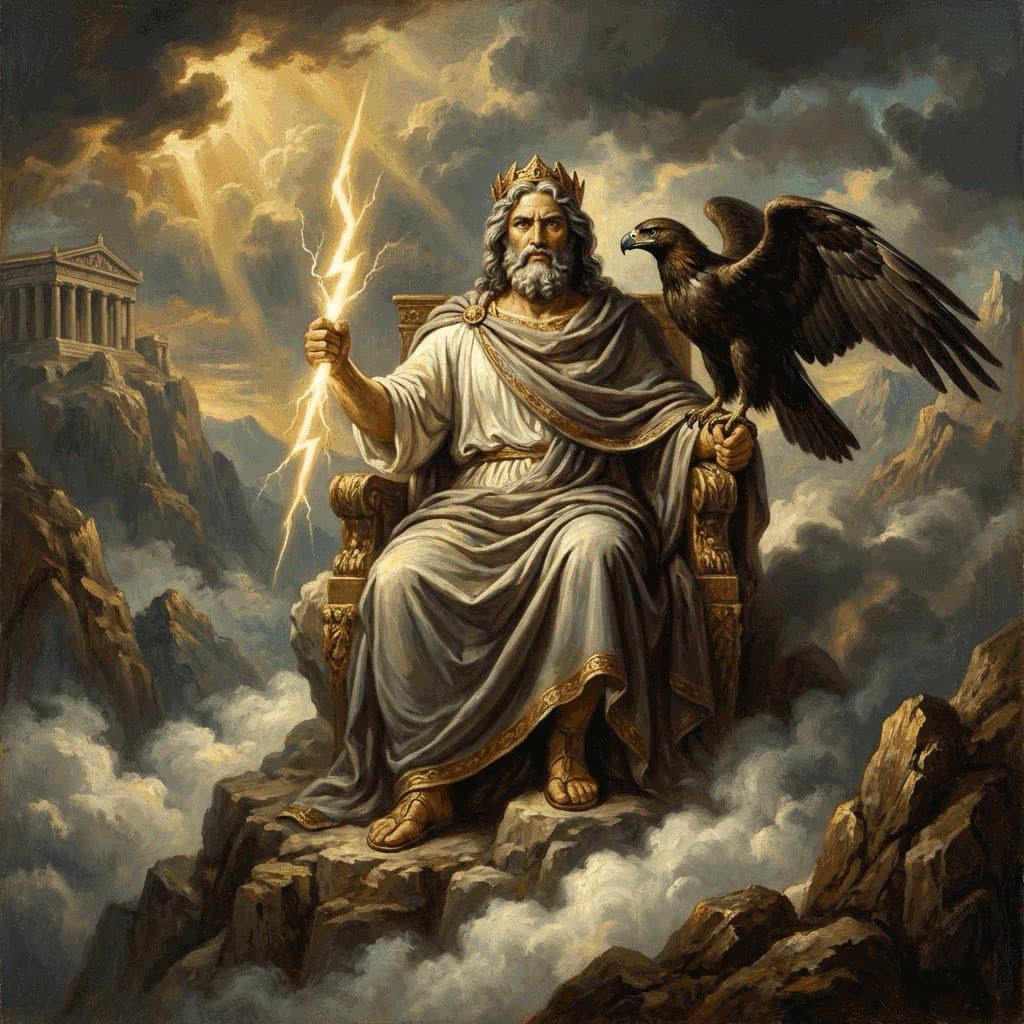
Zeus
ZeusGreek

Greek visitors to Egypt identified Amun (as 'Zeus Ammon') with Zeus, both being supreme sky-associated kings of their pantheons.

At a glance

Amun and Zeus compared
AmunZeus
TraditionEgyptian PantheonGreek Pantheon
Domainshidden power, creation, kingship, the air (Ogdoad origin)sky, thunder, lightning, law, order
Symbolsram, goose, double-plumed crown, solar disc (as Amun-Ra)thunderbolt, eagle, oak tree, bull
Also calledAmon, Amen, Amun-Ra (syncretic form)Jupiter, Jove

Where they meet

The atlas records no domain or symbol that Amun and Zeus share.

They are compared for the part each plays in their own tradition rather than for any attribute in common.

Where they part

Only Amun

Associated with hidden power, creation, kingship, and the air (ogdoad origin).

Only Zeus

Associated with sky, thunder, lightning, law, and order.

How each was worshipped

Amun

Cult sites
Karnak Temple complex at Thebes, the largest religious building complex of the ancient world; Luxor Temple; Oracle of Amun at Siwa Oasis
Festivals
Opet Festival, an annual procession between Karnak and Luxor renewing royal and divine power

Amun's Theban priesthood became immensely wealthy and politically powerful, at times rivaling the pharaoh's own authority. The oracle of Amun at Siwa Oasis, later visited by Alexander the Great, carried enough prestige to confirm or question the legitimacy of rulers.

Zeus

Cult sites
Temple of Zeus at Olympia; Oracle of Zeus at Dodona; Nemean sanctuary
Festivals
Olympic Games; Diasia; Dipolieia

White bulls and the thunderbolt belong to him. Olympic contest was a sacrifice as much as a race. Dodona spoke through oak and doves. Civic oaths called Zeus Horkios; a perjurer feared the sky more than the court.

The two figures

Egyptian Pantheon

Amun

Originally a primordial member of the Hermopolitan Ogdoad, Amun rose to become the state god of Thebes and, fused with the sun god Ra as Amun-Ra, the supreme deity of Egypt's New Kingdom empire, worshipped at the vast Karnak temple complex.

Amun began as one of the eight primordial deities of the Hermopolitan Ogdoad, paired with Amaunet and representing hidden, invisible power within creation. As Thebes rose to political prominence, Amun became the city's patron god and, fused with Ra as Amun-Ra, the supreme state god of the New Kingdom empire.

Amun's name means "the hidden one" or "the invisible one," reflecting his character as a god whose true nature and full power lay beyond ordinary comprehension. In the cosmology of Hermopolis, he was one of the eight primordial deities of the Ogdoad, paired with the goddess Amaunet, representing the hidden, invisible force within creation.

Read the full Amun entry

Greek Pantheon

Zeus

King of the gods and ruler of Mount Olympus. God of the sky, thunder, and justice. Zeus overthrew his father Cronus to become the supreme deity of the Greek pantheon.

Zeus was the youngest son of the Titans Cronus and Rhea. Cronus, fearing a prophecy that he would be overthrown by his children, swallowed each child at birth. Rhea hid Zeus and gave Cronus a stone wrapped in swaddling clothes instead. Zeus was raised in secret and later forced Cronus to regurgitate his siblings, leading the rebellion against the Titans.

Zeus is the supreme ruler of the gods, the lord of the sky, and the wielder of the thunderbolt. His power is greater than that of all the other gods combined. He presides over the oaths of men and the laws of the universe, ensuring justice and order.

Read the full Zeus entry
About this comparison

Comparisons pair figures that play a similar role across traditions, or that the myths connect within one. A shared role does not, by itself, establish a shared origin.