Side by sideParallel across traditions

Fujin vs Tawhirimatea

Fujin
FujinJapanese
Tawhirimatea
TawhirimateaPolynesian

Both are storm-and-wind gods who unleash tempests, distinct from their pantheon's thunder deity.

At a glance

Fujin and Tawhirimatea compared
FujinTawhirimatea
TraditionJapanese PantheonPolynesian Pantheon
Domainswind, air, stormsweather, wind, storms, thunder
Symbolswind bag, leopard skinstorm clouds, wind, hurricane, lightning
Also calledFutenTawhiri

Where they meet

Both are associated with wind and storms.

Where they part

Only Fujin

Associated with air.

Only Tawhirimatea

Associated with weather and thunder.

How each was worshipped

Fujin

Cult sites
Paired with Raijin at temple gates; No major independent shrine network

The wind bag on the other pillar. Same story as Raijin: a pair of threshold demons who became Buddhist-Shinto guardians.

Tawhirimatea

Cult sites
No attested temple in the surviving record

Wind and storm after the parents are torn apart. You do not house the gale. Acknowledge him in weather tapu.

The two figures

Japanese Pantheon

Fujin

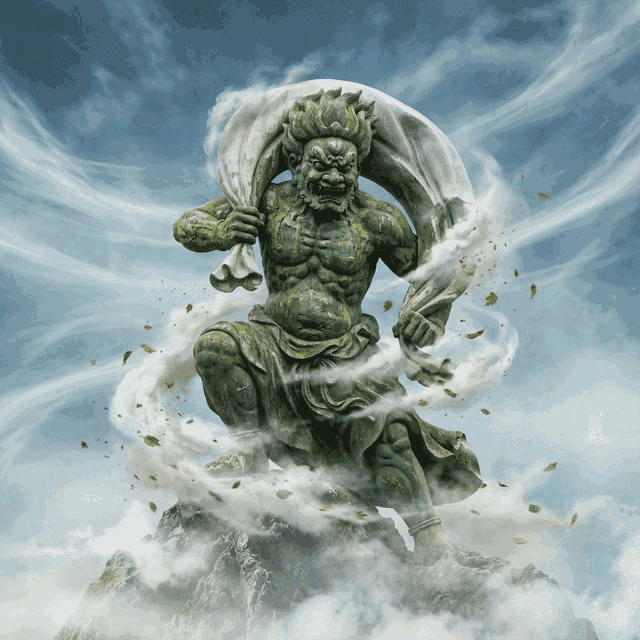
God of wind and air. Depicted as a demon carrying a large bag of winds. Twin to Raijin. Controls gentle breezes and destructive typhoons.

Fujin is among the oldest gods in the Shinto tradition, present at the creation of the world. According to legend, after the primordial chaos was separated into heaven and earth, Fujin released the first winds from his great bag, clearing the morning mists and allowing the sun to shine upon the newly formed land. His origins may trace back even further to ancient Greek-influenced Silk Road mythology.

**Fujin** (also known as Futen) commands the winds of Japan, from the gentlest spring breezes to the devastating typhoons that sweep the island nation. He is one of the oldest elemental kami and serves as the eternal companion to his brother Raijin, the thunder god.

Read the full Fujin entry

Polynesian Pantheon

Tawhirimatea

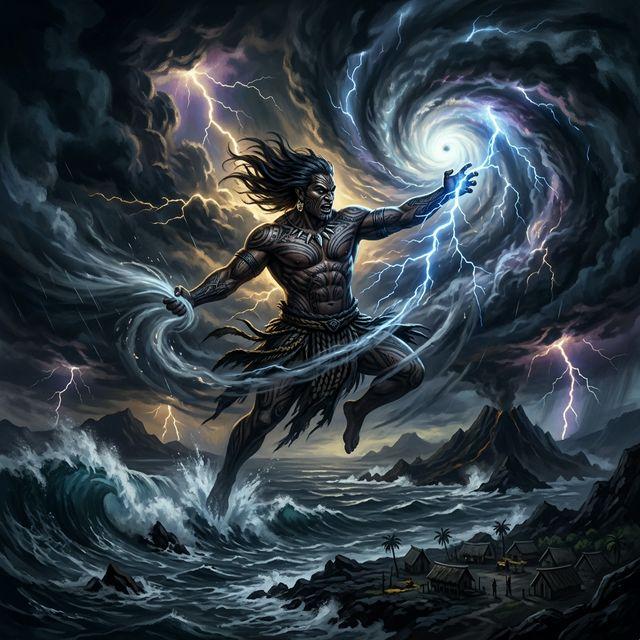
The Maori god of weather, winds, and storms. Tawhirimatea was the only one of Rangi and Papa's children to oppose their separation, and he still attacks his brothers with storms in revenge.

Tawhirimatea was born between Rangi and Papa like his brothers, but he alone remained loyal to his parents when the others chose to separate them. His grief and anger at their separation fuel the storms he sends against the earth to this day.

Tawhirimatea is the god of weather and storms in Maori mythology, one of the sons of Rangi and Papa. Unlike his brothers, he did not support the separation of their parents and has waged war against them ever since, his fury manifesting in the storms that batter the earth.

Read the full Tawhirimatea entry
About this comparison

Comparisons pair figures that play a similar role across traditions, or that the myths connect within one. A shared role does not, by itself, establish a shared origin.