Side by sideParallel across traditions

Enlil vs Fujin

Enlil
EnlilMesopotamian
Fujin
FujinJapanese

Both are gods of wind and storm associated with the destructive and life-giving power of moving air.

At a glance

Enlil and Fujin compared
EnlilFujin
TraditionMesopotamian PantheonJapanese Pantheon
Domainswind, storms, earth, agriculture, destinywind, air, storms
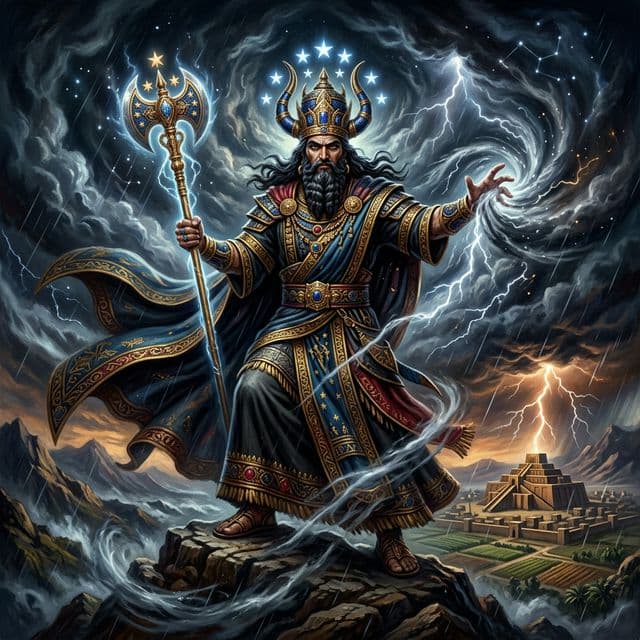
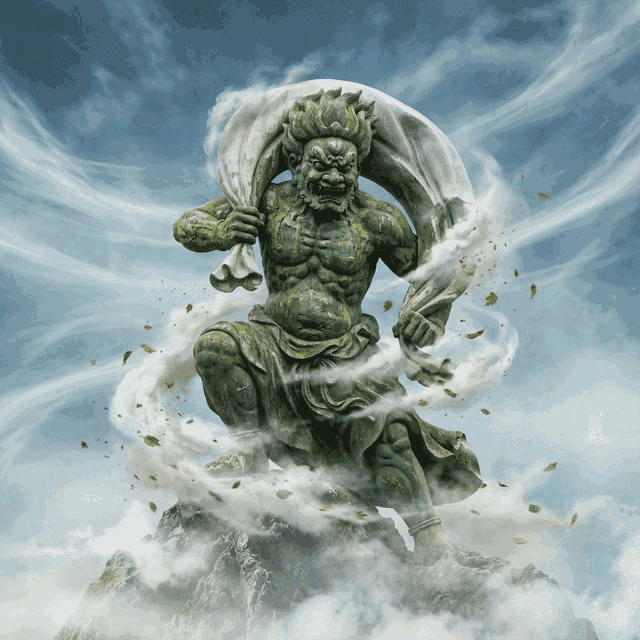
Symbolsseven stars, horned crown, royal scepterwind bag, leopard skin
Also calledEllil, NunamnirFuten

Where they meet

Both are associated with wind and storms.

Where they part

Only Enlil

Associated with earth, agriculture, and destiny.

Only Fujin

Associated with air.

How each was worshipped

Enlil

Cult sites
Ekur at Nippur
Festivals
Nippur's temple year; kingship confirmed there

Lord Wind, tablet of destinies. Nippur was the religious capital even when kings lived elsewhere. The cult is the mountain-house and the decree.

Fujin

Cult sites
Paired with Raijin at temple gates; No major independent shrine network

The wind bag on the other pillar. Same story as Raijin: a pair of threshold demons who became Buddhist-Shinto guardians.

The two figures

Mesopotamian Pantheon

Enlil

Lord of wind, storms, and the breath of life. Enlil is the executive authority of the gods, wielding the Tablet of Destinies and determining the fates of gods and mortals.

When heaven and earth were separated, Enlil was born between them as the atmosphere itself. He carved out space for life to exist and received the Tablet of Destinies from Anu, becoming the active ruler of the cosmos. He established Nippur as the holy city and built the Ekur as his eternal temple.

Enlil is the most powerful of the active gods, second only to Anu in the cosmic hierarchy but first in practical authority. His name means 'Lord Wind' or 'Lord of the Command,' and he embodies both the life-giving breeze and the destructive storm. Where Anu reigns in distant majesty, Enlil governs the cosmos with an iron will.

Read the full Enlil entry

Japanese Pantheon

Fujin

God of wind and air. Depicted as a demon carrying a large bag of winds. Twin to Raijin. Controls gentle breezes and destructive typhoons.

Fujin is among the oldest gods in the Shinto tradition, present at the creation of the world. According to legend, after the primordial chaos was separated into heaven and earth, Fujin released the first winds from his great bag, clearing the morning mists and allowing the sun to shine upon the newly formed land. His origins may trace back even further to ancient Greek-influenced Silk Road mythology.

**Fujin** (also known as Futen) commands the winds of Japan, from the gentlest spring breezes to the devastating typhoons that sweep the island nation. He is one of the oldest elemental kami and serves as the eternal companion to his brother Raijin, the thunder god.

Read the full Fujin entry
About this comparison

Comparisons pair figures that play a similar role across traditions, or that the myths connect within one. A shared role does not, by itself, establish a shared origin.