Side by sideParallel across traditions

Enlil vs Odin

Enlil
EnlilMesopotamian
Odin
OdinNorse

Both hold tablets or runes of destiny and determine the fates of mortals.

At a glance

Enlil and Odin compared
EnlilOdin
TraditionMesopotamian PantheonNorse Pantheon
Domainswind, storms, earth, agriculture, destinywisdom, war, death, poetry, magic, knowledge
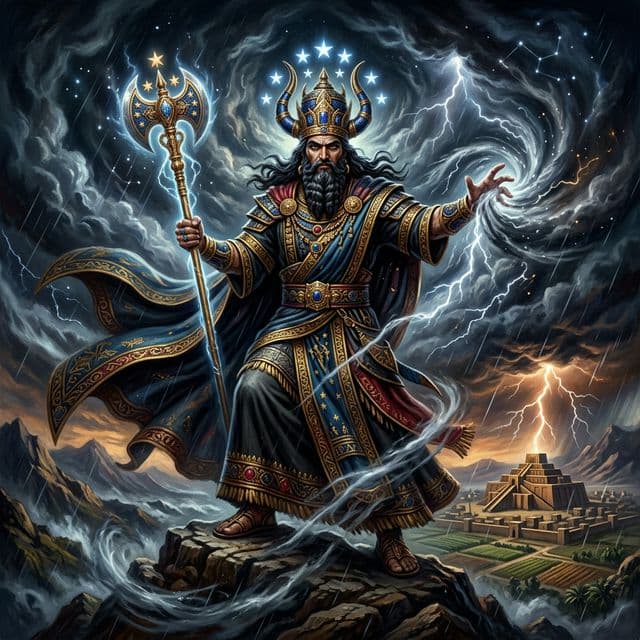
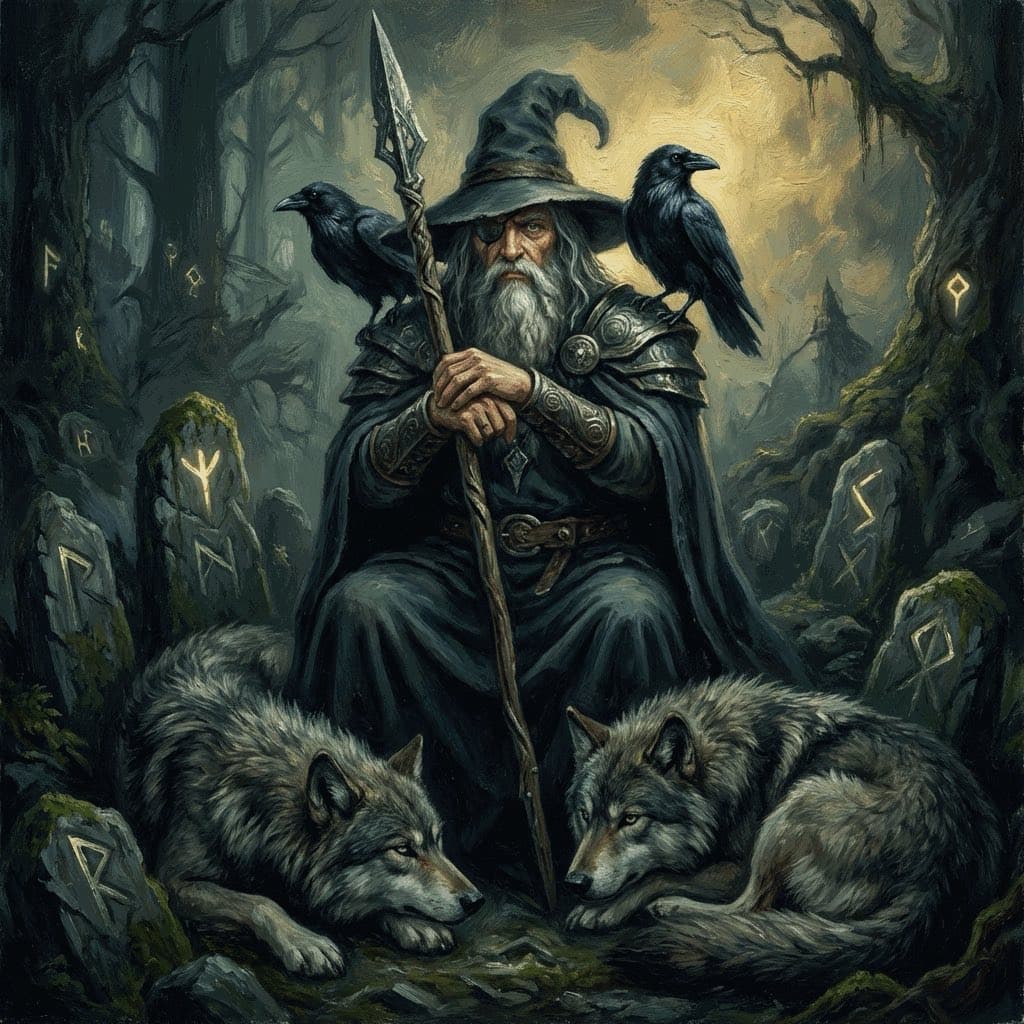
Symbolsseven stars, horned crown, royal scepterspear Gungnir, ravens Huginn and Muninn, eight-legged horse Sleipnir, wolves Geri and Freki, one eye
Also calledEllil, NunamnirAllfather, Woden, Wotan, The Wanderer

Where they meet

The atlas records no domain or symbol that Enlil and Odin share.

They are compared for the part each plays in their own tradition rather than for any attribute in common.

Where they part

Only Enlil

Associated with wind, storms, earth, agriculture, and destiny.

Only Odin

Associated with wisdom, war, death, poetry, magic, and knowledge.

How each was worshipped

Enlil

Cult sites
Ekur at Nippur
Festivals
Nippur's temple year; kingship confirmed there

Lord Wind, tablet of destinies. Nippur was the religious capital even when kings lived elsewhere. The cult is the mountain-house and the decree.

Odin

Cult sites
Temple at Uppsala (Adam of Bremen), with Thor and Freyr; No surviving named stave-church equivalent; mounds, trees, and halls
Festivals
Yule; Sacrifices for victory (sigurblót)

Hanged god, poetry, and the war-dead. Wednesday keeps his name. Uppsala tradition put him with Thor and Freyr. Spear, ravens, and the high seat are the cult signs; evidence is later and Christian-filtered, and should be read that way.

The two figures

Mesopotamian Pantheon

Enlil

Lord of wind, storms, and the breath of life. Enlil is the executive authority of the gods, wielding the Tablet of Destinies and determining the fates of gods and mortals.

When heaven and earth were separated, Enlil was born between them as the atmosphere itself. He carved out space for life to exist and received the Tablet of Destinies from Anu, becoming the active ruler of the cosmos. He established Nippur as the holy city and built the Ekur as his eternal temple.

Enlil is the most powerful of the active gods, second only to Anu in the cosmic hierarchy but first in practical authority. His name means 'Lord Wind' or 'Lord of the Command,' and he embodies both the life-giving breeze and the destructive storm. Where Anu reigns in distant majesty, Enlil governs the cosmos with an iron will.

Read the full Enlil entry

Norse Pantheon

Odin

King of the Aesir and god of wisdom, war, and death. Odin sacrificed his eye at Mimir's well for wisdom and hung himself on Yggdrasil for nine days to learn the runes.

Odin is the son of the primordial beings Borr and Bestla. Along with his brothers Vili and Ve, he slew the giant Ymir and created the world from his body.

Odin is the chief of the Aesir, a relentless seeker of wisdom. He sacrificed his eye to Mimir's Well for knowledge and hung himself from Yggdrasil for nine nights to discover the runes.

Read the full Odin entry
About this comparison

Comparisons pair figures that play a similar role across traditions, or that the myths connect within one. A shared role does not, by itself, establish a shared origin.