Side by sideSiblings

Fujin vs Raijin

Fujin
FujinJapanese
Raijin
RaijinJapanese

Fujin and Raijin are recorded as siblings in the Japanese Pantheon.

At a glance

Fujin and Raijin compared
FujinRaijin
TraditionJapanese PantheonJapanese Pantheon
Domainswind, air, stormsthunder, lightning, storms
Symbolswind bag, leopard skindrums, lightning, tomoe
Also calledFutenRaiden

Where they meet

Both are associated with storms.

Where they part

Only Fujin

Associated with wind and air.

Only Raijin

Associated with thunder and lightning.

How each was worshipped

Fujin

Cult sites
Paired with Raijin at temple gates; No major independent shrine network

The wind bag on the other pillar. Same story as Raijin: a pair of threshold demons who became Buddhist-Shinto guardians.

Raijin

Cult sites
Temple gate statues with Fujin; Local thunder shrines; no single national parish

Drums at the gate. Farmers feared him; temples put him at the threshold as a guardian, not as a god you visit for counsel. Cult is apotropaic.

The two figures

Japanese Pantheon

Fujin

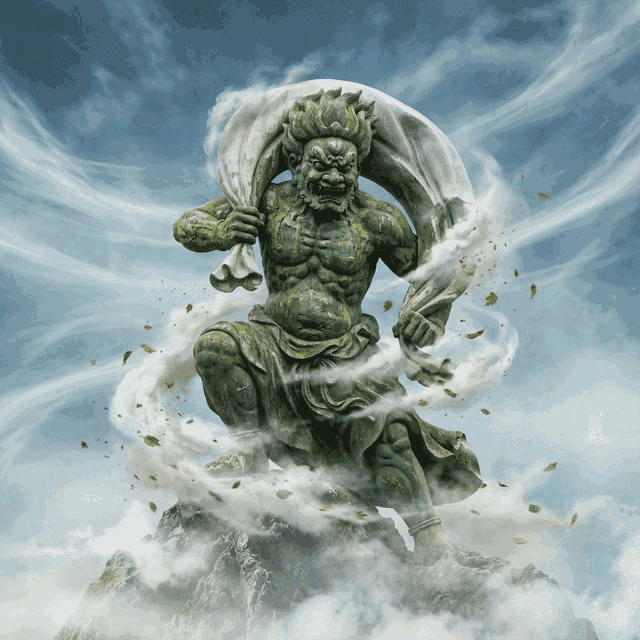
God of wind and air. Depicted as a demon carrying a large bag of winds. Twin to Raijin. Controls gentle breezes and destructive typhoons.

Fujin is among the oldest gods in the Shinto tradition, present at the creation of the world. According to legend, after the primordial chaos was separated into heaven and earth, Fujin released the first winds from his great bag, clearing the morning mists and allowing the sun to shine upon the newly formed land. His origins may trace back even further to ancient Greek-influenced Silk Road mythology.

**Fujin** (also known as Futen) commands the winds of Japan, from the gentlest spring breezes to the devastating typhoons that sweep the island nation. He is one of the oldest elemental kami and serves as the eternal companion to his brother Raijin, the thunder god.

Read the full Fujin entry

Japanese Pantheon

Raijin

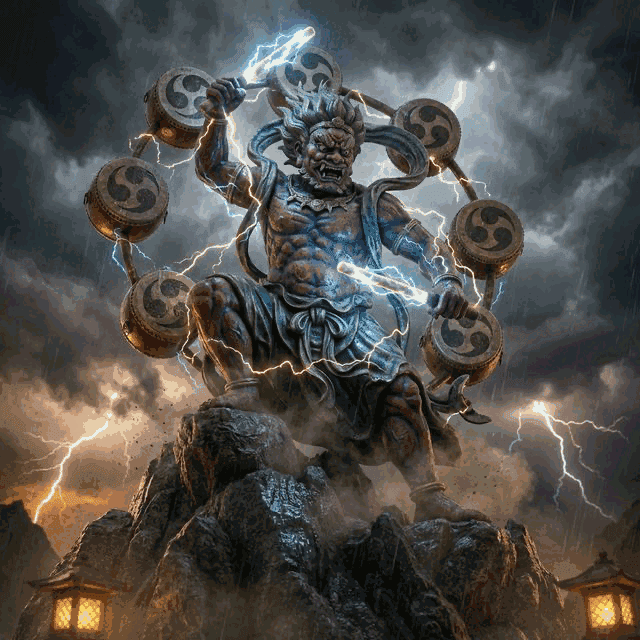
God of thunder, lightning, and storms. Depicted as a demon beating drums to create thunder. Works with Fujin (wind god).

According to myth, Raijin was born during the primordial creation period, emerging alongside the forces of nature themselves. Some traditions connect him to the thunder kami born from Izanami's decaying body in Yomi, the land of the dead. Over time, Buddhist influences shaped his iconic demonic appearance, transforming him into the fierce drum-beating figure known today.

**Raijin** (also called Raiden) is the fearsome god of thunder and lightning, one of the most visually striking figures in Japanese mythology. He is typically depicted as a muscular demon with wild hair, surrounded by a ring of drums that he beats with ferocious energy to create the rumbling of thunder.

Read the full Raijin entry
About this comparison

Comparisons pair figures that play a similar role across traditions, or that the myths connect within one. A shared role does not, by itself, establish a shared origin.