Side by sideParallel across traditions

Ganesha vs Janus

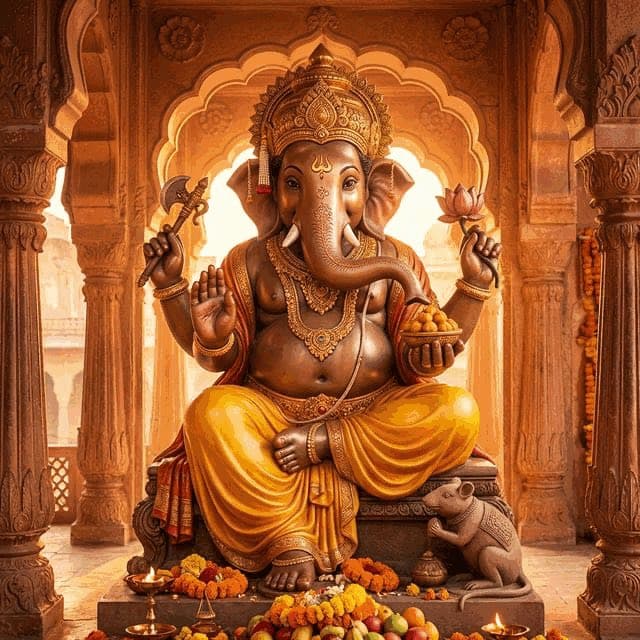
Ganesha
GaneshaHindu
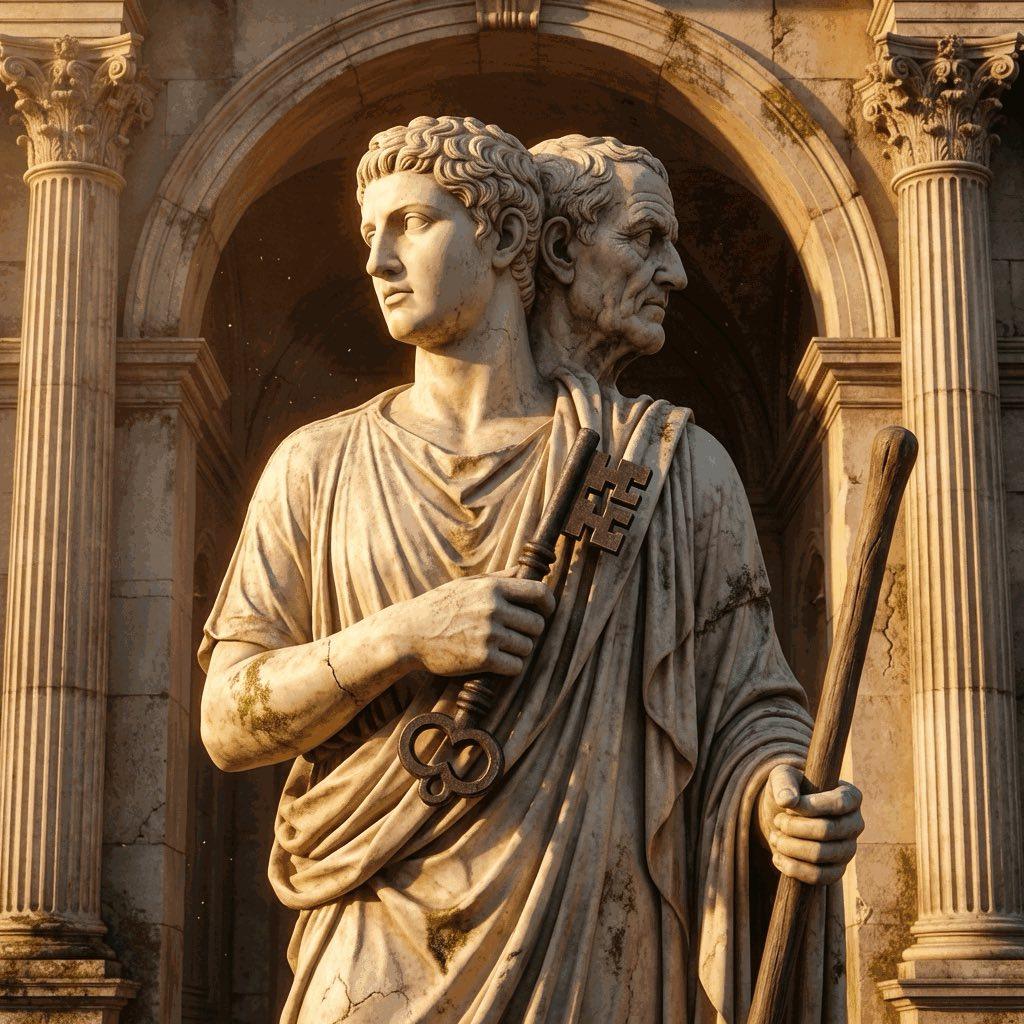
Janus
JanusRoman

Both are the deity invoked first, at the very start of any undertaking or ceremony, before any other god.

At a glance

Ganesha and Janus compared
GaneshaJanus
TraditionHindu PantheonRoman Pantheon
Domainswisdom, beginnings, obstacles, intellect, artsbeginnings, gates, transitions, time, doorways, endings
Symbolselephant head, mouse, modak, axe, lotustwo faces, key, staff, gate
Also calledGanapati, Vinayaka, VighnahartaIanus

Where they meet

Both are associated with beginnings.

Where they part

Only Ganesha

Associated with wisdom, obstacles, intellect, and arts.

Only Janus

Associated with gates, transitions, time, doorways, and endings.

Why they are compared

Both are invoked at the very beginning of any endeavor or ceremony, before any other deity.

How each was worshipped

Ganesha

Cult sites
Siddhivinayak in Mumbai; Ashtavinayak circuit in Maharashtra; Doorway shrines at the start of any rite
Festivals
Ganesh Chaturthi; Vinayaka Chaturthi

First god named. A modak, a mouse, and in Mumbai a clay image that is drowned after ten days. Beginnings, ledgers, and the removal of obstacles: the cult is practical.

Janus

Cult sites
Janus Geminus in the Forum, a double gate rather than a house with a statue; Temple of Janus at the Forum Holitorium, vowed in the First Punic War
Festivals
Agonalia (9 January); Kalends of January

Every proper prayer named Janus first. The Forum gates stood open in war and shut in peace. He is a hinge, not a personality cult: oil, wine, and incense at thresholds, and the first month of the year.

The two figures

Hindu Pantheon

Ganesha

Elephant-headed god of wisdom, new beginnings, and remover of obstacles. Son of Shiva and Parvati. Worshipped before any new venture. Patron of arts and sciences.

Parvati created Ganesha from sandalwood paste to guard her. When Shiva tried to enter, he beheaded the boy. To console Parvati, Shiva replaced Ganesha's head with that of an elephant.

Ganesha is the beloved elephant-headed god of **wisdom**, new beginnings, and the remover of obstacles. Son of **Shiva** and **Parvati**, he is worshipped before any new venture, journey, or undertaking. He is also the patron of arts, sciences, and learning.

Read the full Ganesha entry

Roman Pantheon

Janus

God of beginnings, gates, transitions, time, duality, doorways, passages, and endings. Uniquely Roman deity with no Greek equivalent. Depicted with two faces looking to past and future.

Janus is one of the oldest Roman gods, said to have no Greek counterpart. He presided over the beginning and end of conflicts, and hence war and peace. All ceremonies and rituals began with an invocation to Janus.

Janus has no Greek twin, and Romans knew it. He is the god of going in and going out: doors, gates, the first of the year, the first word of a prayer. He is shown with two faces, one toward what has happened and one toward what has not. January bears his name. The gates of his shrine in the Forum, the **Janus Geminus**, stood open in war and closed in peace, which happened rarely enough to be worth recording.

Read the full Janus entry
About this comparison

Comparisons pair figures that play a similar role across traditions, or that the myths connect within one. A shared role does not, by itself, establish a shared origin.