Side by sideParallel across traditions

Heimdall vs Janus

Heimdall
HeimdallNorse
Janus
JanusRoman

Both are vigilant guardians of a boundary or threshold (the Bifrost bridge vs. doorways and transitions).

At a glance

Heimdall and Janus compared
HeimdallJanus
TraditionNorse PantheonRoman Pantheon
Domainsvigilance, light, foreknowledge, class structurebeginnings, gates, transitions, time, doorways, endings
Symbolshorn Gjallarhorn, sword Hofud, Bifrost bridge, gold teethtwo faces, key, staff, gate
Also calledHeimdallr, The White God, RigIanus

Where they meet

The atlas records no domain or symbol that Heimdall and Janus share.

They are compared for the part each plays in their own tradition rather than for any attribute in common.

Where they part

Only Heimdall

Associated with vigilance, light, foreknowledge, and class structure.

Only Janus

Associated with beginnings, gates, transitions, time, doorways, and endings.

Why they are compared

Both are guardians of a boundary or threshold (doorways/transitions vs. the Bifrost bridge between worlds).

How each was worshipped

Heimdall

Cult sites
No securely identified temple; Bifröst and Himinbjörg are mythic

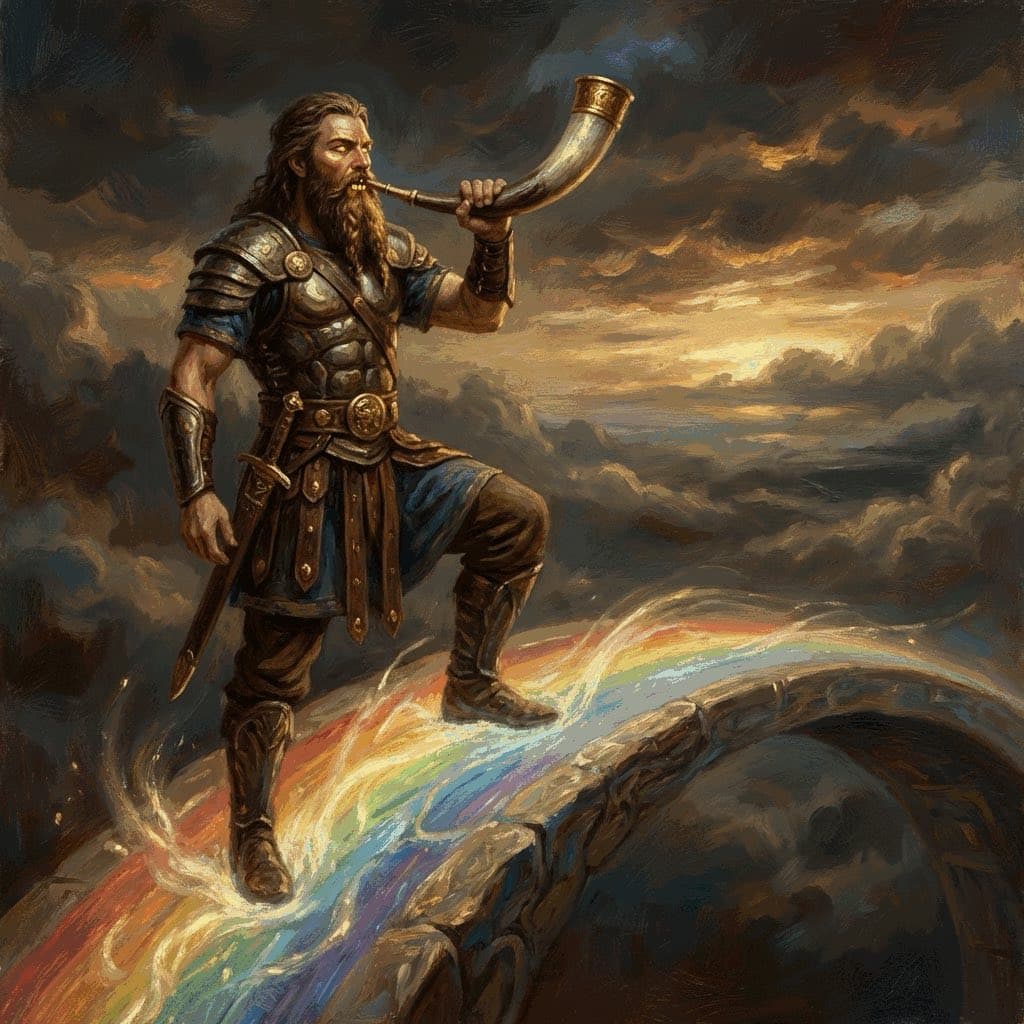
Watchman, horn, gold teeth. Almost no cult footprint. He is a poem's sentinel. Do not give him a festival list the sources do not.

Janus

Cult sites
Janus Geminus in the Forum, a double gate rather than a house with a statue; Temple of Janus at the Forum Holitorium, vowed in the First Punic War
Festivals
Agonalia (9 January); Kalends of January

Every proper prayer named Janus first. The Forum gates stood open in war and shut in peace. He is a hinge, not a personality cult: oil, wine, and incense at thresholds, and the first month of the year.

The two figures

Norse Pantheon

Heimdall

Watchman of the gods who guards the rainbow bridge Bifrost connecting Asgard and Midgard. Possesses incredible hearing and eyesight, and will blow his horn Gjallarhorn to signal the onset of Ragnarok.

Heimdall's birth is one of the most mysterious in Norse mythology. According to the Eddas, he was born of nine mothers simultaneously - the nine daughters of the sea giant Aegir, who are the waves of the ocean. These nine giantesses nourished the infant god with the strength of the earth, the moisture of the sea, and the heat of the sun. This unique origin gave Heimdall his extraordinary senses and his connection to all the realms. He is sometimes called the White God due to his shining appearance. Under the name Rig, he is credited with creating the three classes of Norse society - thralls, karls, and jarls - during a journey through Midgard.

Heimdall is the ever-vigilant guardian of the **Bifrost**, the rainbow bridge. He requires less sleep than a bird and can hear the grass growing.

Read the full Heimdall entry

Roman Pantheon

Janus

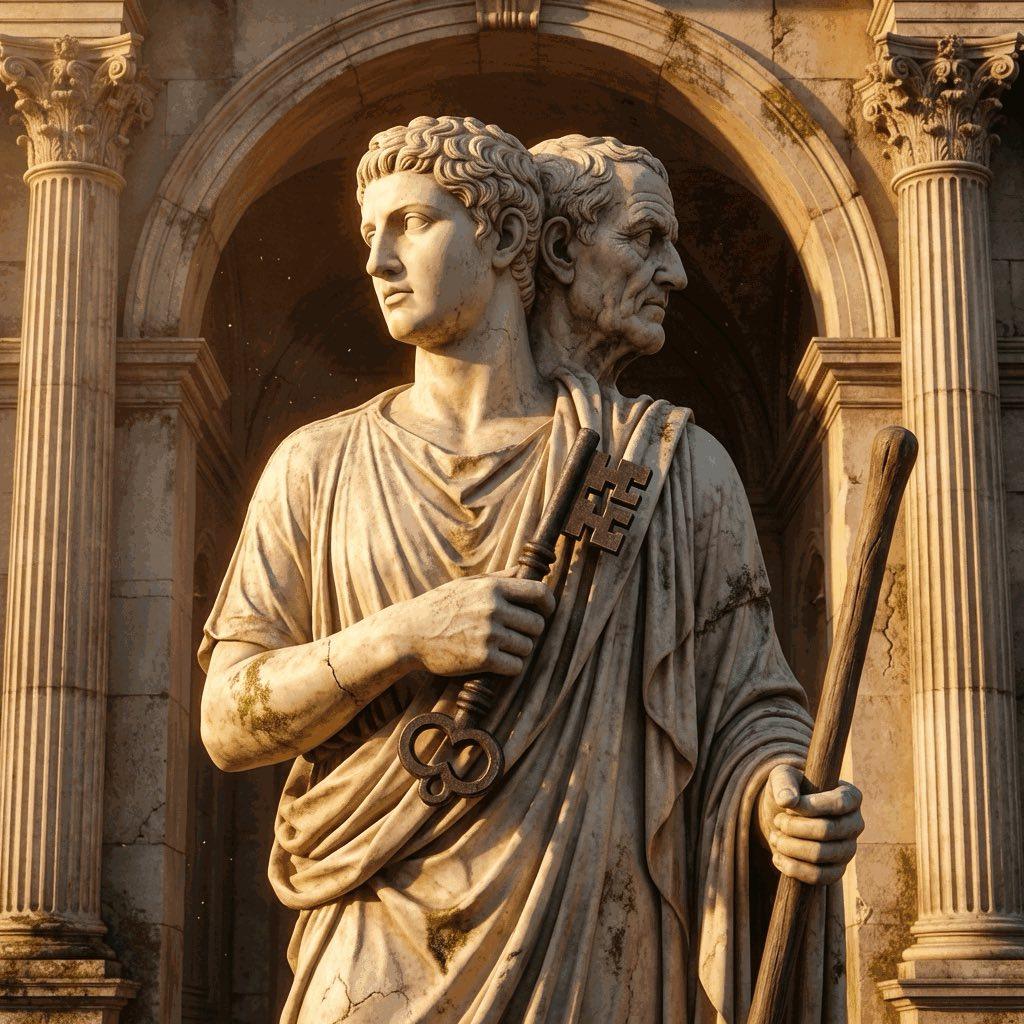
God of beginnings, gates, transitions, time, duality, doorways, passages, and endings. Uniquely Roman deity with no Greek equivalent. Depicted with two faces looking to past and future.

Janus is one of the oldest Roman gods, said to have no Greek counterpart. He presided over the beginning and end of conflicts, and hence war and peace. All ceremonies and rituals began with an invocation to Janus.

Janus has no Greek twin, and Romans knew it. He is the god of going in and going out: doors, gates, the first of the year, the first word of a prayer. He is shown with two faces, one toward what has happened and one toward what has not. January bears his name. The gates of his shrine in the Forum, the **Janus Geminus**, stood open in war and closed in peace, which happened rarely enough to be worth recording.

Read the full Janus entry
About this comparison

Comparisons pair figures that play a similar role across traditions, or that the myths connect within one. A shared role does not, by itself, establish a shared origin.