Side by sideRivals

Heimdall vs Loki

Heimdall
HeimdallNorse
Loki
LokiNorse

Heimdall and Loki are recorded as rivals in the Norse Pantheon.

At a glance

Heimdall and Loki compared
HeimdallLoki
TraditionNorse PantheonNorse Pantheon
Domainsvigilance, light, foreknowledge, class structuremischief, trickery, chaos, fire, transformation
Symbolshorn Gjallarhorn, sword Hofud, Bifrost bridge, gold teethflames, serpent, salmon, fly
Also calledHeimdallr, The White God, RigLopt, Trickster, Shape-Shifter

Where they meet

The atlas records no domain or symbol that Heimdall and Loki share.

They are compared because of how the myths connect them, not because of what they rule.

Where they part

Only Heimdall

Associated with vigilance, light, foreknowledge, and class structure.

Only Loki

Associated with mischief, trickery, chaos, fire, and transformation.

How each was worshipped

Heimdall

Cult sites
No securely identified temple; Bifröst and Himinbjörg are mythic

Watchman, horn, gold teeth. Almost no cult footprint. He is a poem's sentinel. Do not give him a festival list the sources do not.

Loki

Cult sites
No attested temple; place-names are scarce and disputed

There is no working Loki cult in the sources. He is bound, blamed, and needed in the stories. The honest note is absence: a mythic catalyst without a priesthood.

The two figures

Norse Pantheon

Heimdall

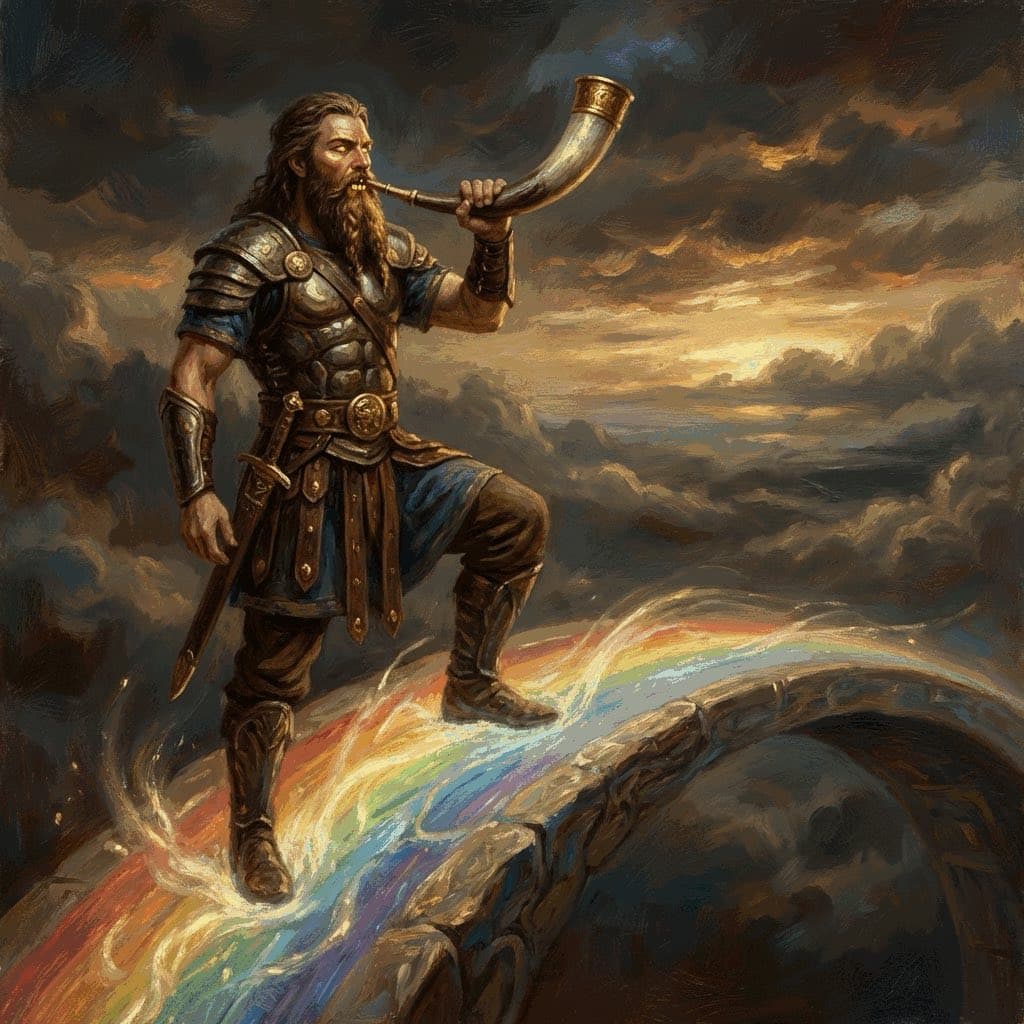
Watchman of the gods who guards the rainbow bridge Bifrost connecting Asgard and Midgard. Possesses incredible hearing and eyesight, and will blow his horn Gjallarhorn to signal the onset of Ragnarok.

Heimdall's birth is one of the most mysterious in Norse mythology. According to the Eddas, he was born of nine mothers simultaneously - the nine daughters of the sea giant Aegir, who are the waves of the ocean. These nine giantesses nourished the infant god with the strength of the earth, the moisture of the sea, and the heat of the sun. This unique origin gave Heimdall his extraordinary senses and his connection to all the realms. He is sometimes called the White God due to his shining appearance. Under the name Rig, he is credited with creating the three classes of Norse society - thralls, karls, and jarls - during a journey through Midgard.

Heimdall is the ever-vigilant guardian of the **Bifrost**, the rainbow bridge. He requires less sleep than a bird and can hear the grass growing.

Read the full Heimdall entry

Norse Pantheon

Loki

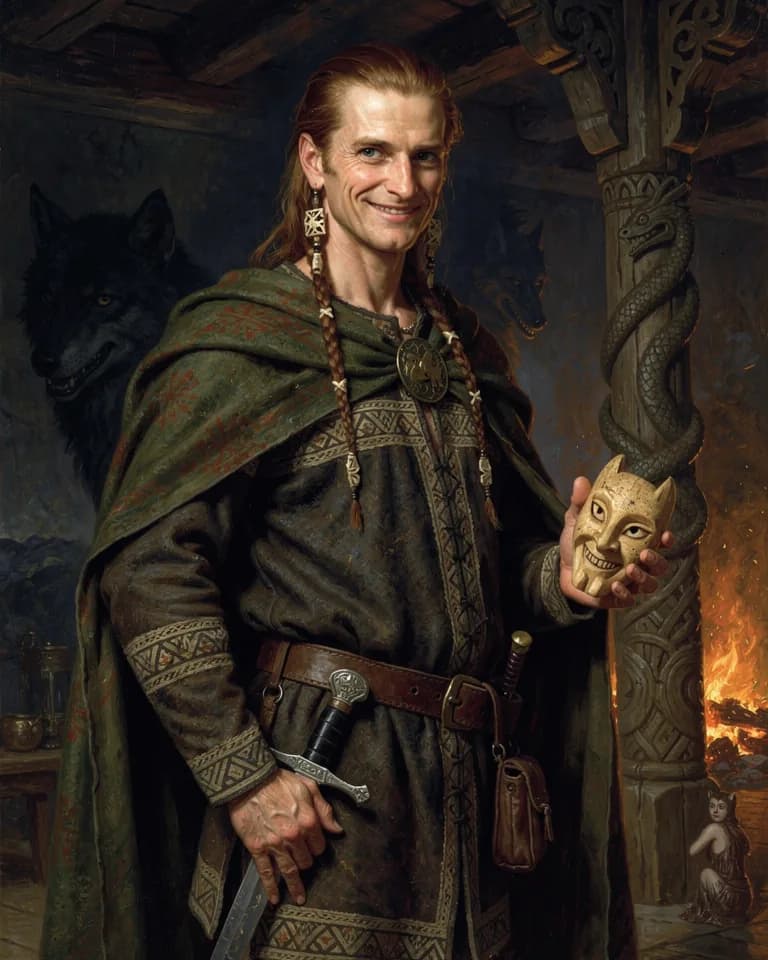
A complex figure, blood brother to Odin but frequently causing trouble for the gods. A shape-shifter and trickster who fathers monstrous children including Fenrir, Jormungandr, and Hel.

Loki is not one of the Aesir by birth but a giant, the son of the giant Farbauti and the giantess Laufey (or Nal). Despite his giant heritage, he was accepted among the Aesir after becoming blood brothers with Odin in ancient times. The details of this pact are lost, but it bound Odin to never drink unless Loki was also offered a cup. Loki married the goddess Sigyn, who bore him sons Narfi and Vali. With the giantess Angrboda, he fathered three monstrous children: Fenrir the wolf, Jormungandr the World Serpent, and Hel, ruler of the dead.

Loki is a shape-shifter and the catalyst for most Norse myths. Sometimes a helpful ally, often a malicious nuisance, his actions drive the plot of the gods' lives.

Read the full Loki entry
About this comparison

Comparisons pair figures that play a similar role across traditions, or that the myths connect within one. A shared role does not, by itself, establish a shared origin.