Mythos Atlas

Side by sideParallel across traditions

Coyote (Máʼii) vs Loki

Coyote (Máʼii)
Coyote (Máʼii)Diné (Navajo)
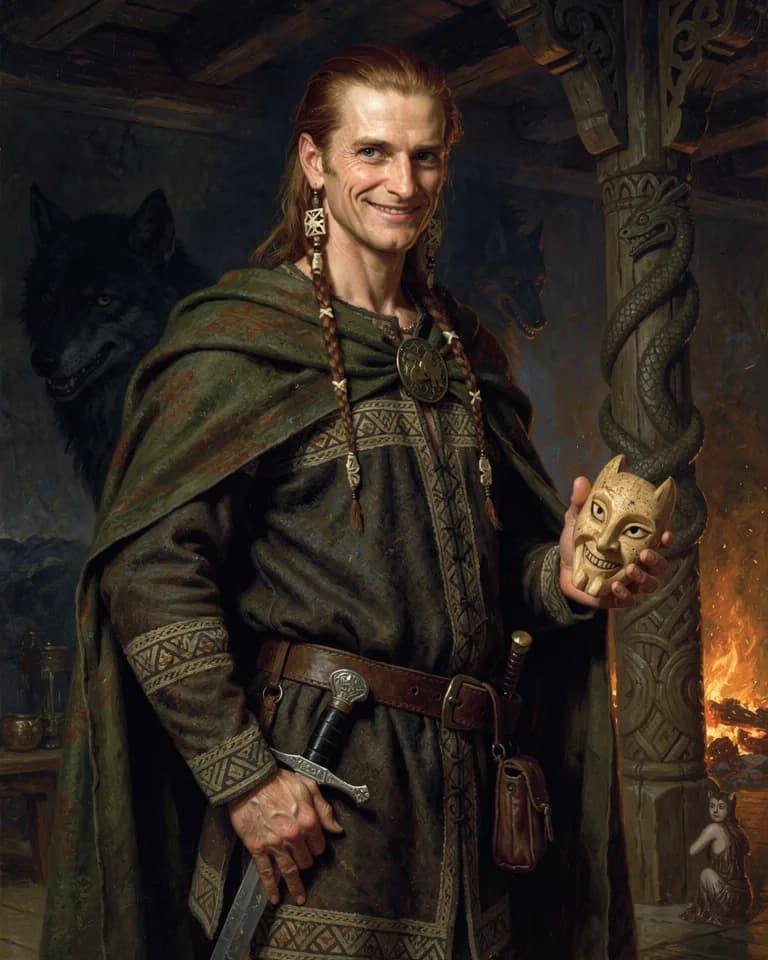
Loki
LokiNorse

Both are boundary-crossing tricksters whose mischief changes the world for good and ill; the comparison is typological only.

At a glance

Coyote (Máʼii) and Loki compared
Coyote (Máʼii)Loki
TraditionDiné (Navajo) TraditionNorse Pantheon
Domainsdisorder and change, the scattering of the stars, death (in some tellings)mischief, trickery, chaos, fire, transformation
Symbolsthe scattered stars, the coyoteflames, serpent, salmon, fly
Also calledMáʼii, First Scolder (Áłtsé Hashkéé), First AngryLopt, Trickster, Shape-Shifter

Where they meet

The atlas records no domain or symbol that Coyote (Máʼii) and Loki share.

They are compared for the part each plays in their own tradition rather than for any attribute in common.

Where they part

Only Coyote (Máʼii)

Associated with disorder and change, the scattering of the stars, and death (in some tellings).

Only Loki

Associated with mischief, trickery, chaos, fire, and transformation.

How each was worshipped

Coyote (Máʼii)

Many Diné families and teachers tell this story, like other Coyote and origin stories, only in the winter months, after the first frost and before the first thunder of spring. Readers who wish to follow that practice may prefer to return to this page in winter.

Loki

Cult sites
No attested temple; place-names are scarce and disputed

There is no working Loki cult in the sources. He is bound, blamed, and needed in the stories. The honest note is absence: a mythic catalyst without a priesthood.

The two figures

Diné (Navajo) Tradition

Coyote (Máʼii)

The disruptive Holy Person of the Diné origin story, whose theft of the Water Monster's child brings the flood of the lower world and whose impatience scatters the stars; Coyote stories are traditionally told only in winter.

Coyote stories hold a special place in Diné tradition, and many Diné people teach that they should be told only in winter. This entry summarises Coyote's role in published accounts of the origin story; readers who follow the seasonal practice may prefer to read it in winter.

Read the full Coyote (Máʼii) entry

Norse Pantheon

Loki

A complex figure, blood brother to Odin but frequently causing trouble for the gods. A shape-shifter and trickster who fathers monstrous children including Fenrir, Jormungandr, and Hel.

Loki is not one of the Aesir by birth but a giant, the son of the giant Farbauti and the giantess Laufey (or Nal). Despite his giant heritage, he was accepted among the Aesir after becoming blood brothers with Odin in ancient times. The details of this pact are lost, but it bound Odin to never drink unless Loki was also offered a cup. Loki married the goddess Sigyn, who bore him sons Narfi and Vali. With the giantess Angrboda, he fathered three monstrous children: Fenrir the wolf, Jormungandr the World Serpent, and Hel, ruler of the dead.

Loki is a shape-shifter and the catalyst for most Norse myths. Sometimes a helpful ally, often a malicious nuisance, his actions drive the plot of the gods' lives.

Read the full Loki entry
About this comparison

Comparisons pair figures that play a similar role across traditions, or that the myths connect within one. A shared role does not, by itself, establish a shared origin.