Diné (Navajo) TraditionHoly Person
Coyote (Máʼii)
Máʼii(Máʼii)
Also known as Máʼii, First Scolder (Áłtsé Hashkéé), First Angry
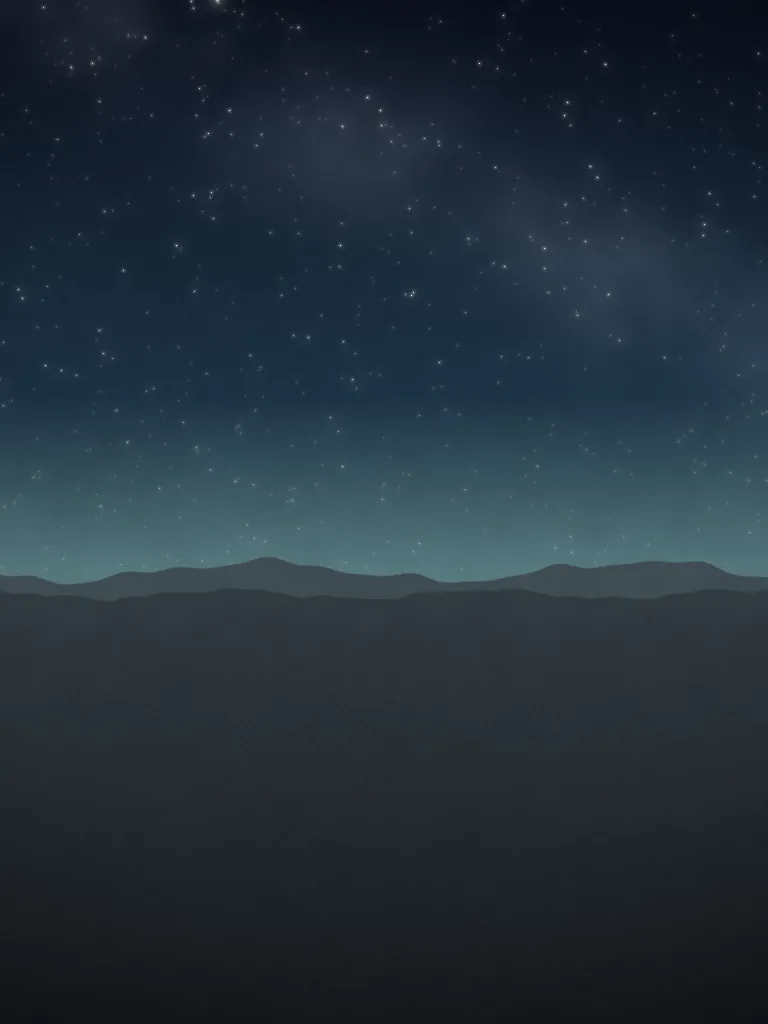
- disorder and change
- the scattering of the stars
- death (in some tellings)
The disruptive Holy Person of the Diné origin story, whose theft of the Water Monster's child brings the flood of the lower world and whose impatience scatters the stars; Coyote stories are traditionally told only in winter.
About Coyote (Máʼii)
Told in winter
Coyote stories hold a special place in Diné tradition, and many Diné people teach that they should be told only in winter. This entry summarises Coyote's role in published accounts of the origin story; readers who follow the seasonal practice may prefer to read it in winter.
Troublemaker in the lower worlds
In Matthews's and later tellings, Coyote is present from the lower worlds onward, curious, impatient, and unable to leave things alone. His most serious act is stealing the child of Tééhooltsódii, the Water Monster; in response the Water Monster floods the world, and the people must climb upward to escape. The theft is eventually discovered and the child returned.
The scattered stars
In widely published tellings, when the stars are being carefully placed in the sky to make patterns that would teach the people, Coyote grows impatient, seizes what remains, and flings it across the sky, which is why so many stars lie scattered without order. Zolbrod calls Coyote "First Scolder".
Death
In some tellings Coyote decides that death should be permanent, throwing a stone (or hide) into the water with the reasoning that if people did not die, the world would be too crowded. Tellings differ, and this site does not present one as definitive.
Neither good nor evil
Coyote is a Holy Person, and his actions have consequences that shape the world. Diné tradition treats him as a figure to learn from, including by his mistakes, and Coyote stories carry lessons about conduct.
Across traditions
Parallel figures
Figures who play a role like Coyote (Máʼii)'s in other traditions.
 Tlingit HaidaRaven
Both are world-changing tricksters among Indigenous peoples of North America, whose disruptions shape how the world is; the Diné and Northwest Coast traditions are distinct.
Compare Coyote (Máʼii) and Raven side by side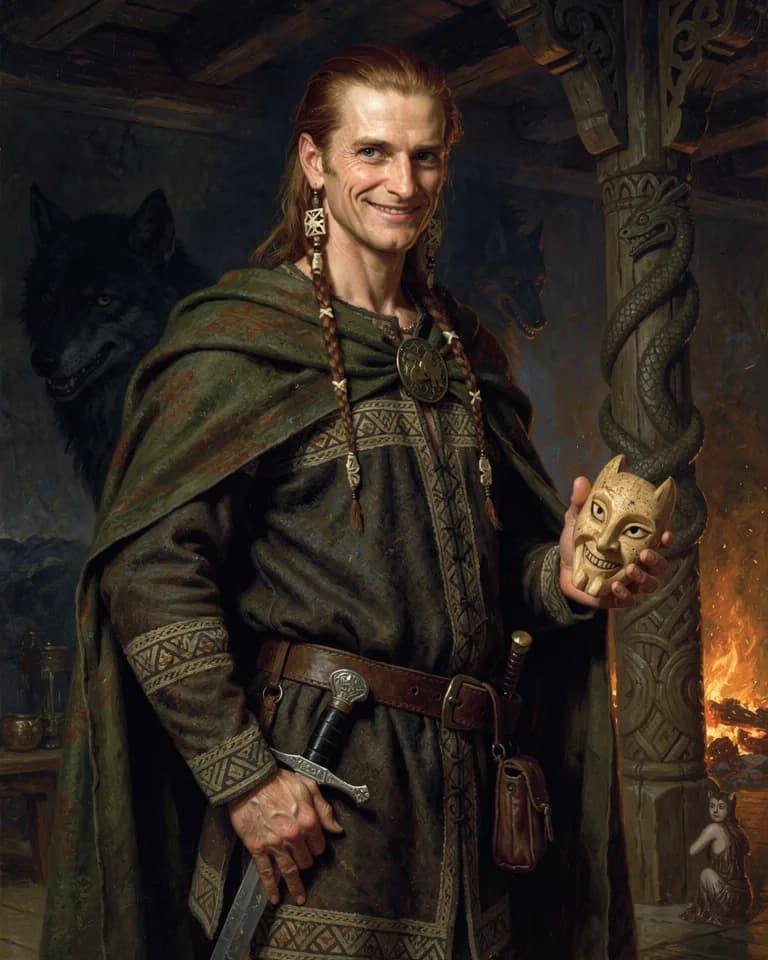 NorseLoki
Both are boundary-crossing tricksters whose mischief changes the world for good and ill; the comparison is typological only.
Compare Coyote (Máʼii) and Loki side by side
Worship and cult
Temples, festivals, and practices recorded for Coyote (Máʼii)
Many Diné families and teachers tell this story, like other Coyote and origin stories, only in the winter months, after the first frost and before the first thunder of spring. Readers who wish to follow that practice may prefer to return to this page in winter.
In the atlas
Where Coyote (Máʼii) appears
Sources and further reading
Source notes
These references are recorded in the catalog. Their passage wording and translation have not been checked, so quotations are not displayed here.
- Washington Matthews, Navaho Legends
- Paul G. Zolbrod, Diné bahaneʼ
Appears in
Ancient and classical works featuring this figure.
troublemaker in the lower worlds (origin legend)
Diné bahane': The Navajo Creation Story
First Scolder, who scatters the stars (Part Two)
Further reading
Diné bahane': The Navajo Creation Story
Coyote as First Scolder
About this entry
By Elizabeth Stein for Mythos Atlas. About the author. Editorial notes are grounded in the site's cited sources and can be challenged through the contact page.
Parallels are editorial comparisons across traditions: a shared role does not, by itself, establish a shared origin.