Side by sideParallel across traditions

Hera vs Iðunn

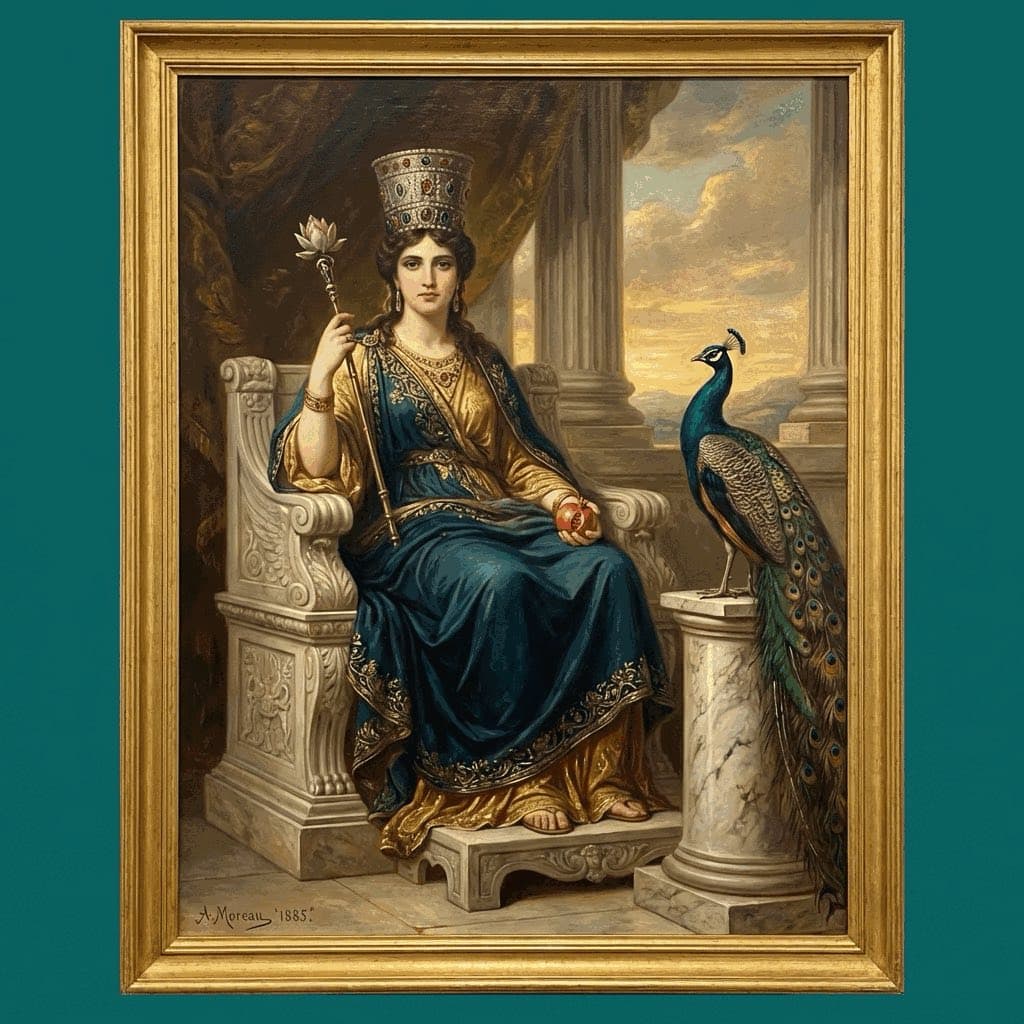
Hera
HeraGreek
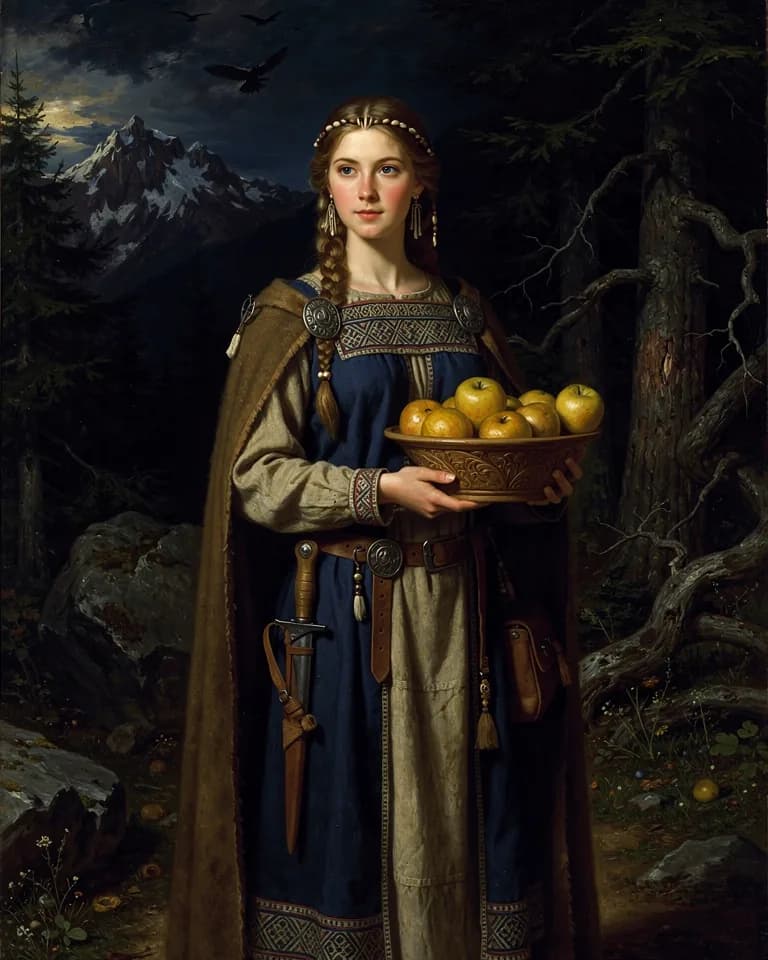
Iðunn
IðunnNorse

Both are goddesses associated with divine golden apples of extraordinary power, though the Greek Hesperides' apples grant a different kind of favor than Idun's rejuvenation.

At a glance

Hera and Iðunn compared
HeraIðunn
TraditionGreek PantheonNorse Pantheon
Domainsmarriage, women, family, childbirthyouth, renewal, the apples that keep the gods young
Symbolspeacock, cow, pomegranate, diademgolden apples, a box or basket of apples
Also calledJunoIdun, Idunn

Where they meet

The atlas records no domain or symbol that Hera and Iðunn share.

They are compared for the part each plays in their own tradition rather than for any attribute in common.

Where they part

Only Hera

Associated with marriage, women, family, and childbirth.

Only Iðunn

Associated with youth, renewal, and the apples that keep the gods young.

How each was worshipped

Hera

Cult sites
Heraion of Argos; Heraion of Samos; Temple of Hera at Olympia
Festivals
Heraia; Daedala (Boeotia)

Argos and Samos kept her oldest houses. The Heraia were women's games at Argos and a foot-race at Olympia. Marriage, cattle, and the cuckoo or peacock are hers; the cult is civic and jealous, not only a wedding story.

Iðunn

Cult sites
No attested cult site

No independent cult of Idun is attested in the surviving sources. She belongs to mythic narrative, the near-loss and recovery of the gods' immortality, rather than to documented ritual practice.

The two figures

Greek Pantheon

Hera

Queen of the gods and goddess of marriage and family. Wife and sister of Zeus, known for her jealousy toward Zeus's lovers and illegitimate children.

Hera was the eldest daughter of Cronus and Rhea, swallowed by Cronus at birth and later freed by Zeus. She became Zeus's wife after he courted her in the form of a cuckoo bird.

Hera is the majestic queen of Olympus and the goddess of marriage and childbirth. As the wife of Zeus, she holds immense power, but she is most famously known for her jealousy and vengeance against Zeus's lovers and illegitimate children.

Read the full Hera entry

Norse Pantheon

Iðunn

Keeper of the apples that preserve the gods' youth. Iðunn's abduction by the giant Thjazi, and Loki's mission to rescue her, form one of the pivotal episodes of Norse myth explaining how the gods nearly lost their immortality.

Iðunn was entrusted by the Aesir with the box of apples that preserved their youth. When Loki tricked her into leaving Asgard, the giant Thjazi abducted her in the form of an eagle, and the gods, growing old without her, forced Loki to rescue her and bring her and her apples back.

Iðunn is the Aesir goddess entrusted with a box of apples that the gods eat to remain forever young. According to Snorri Sturluson's *Prose Edda*, without these apples the gods themselves would age and wither like ordinary beings, making Iðunn's custody of them essential to the gods' continued vitality.

Read the full Iðunn entry
About this comparison

Comparisons pair figures that play a similar role across traditions, or that the myths connect within one. A shared role does not, by itself, establish a shared origin.