Mythos Atlas

Side by sideParent and child

Nemesis vs Nyx

Nemesis
NemesisGreek
Nyx
NyxGreek

Nemesis and Nyx are recorded as parent and child in the Greek Pantheon.

At a glance

Nemesis and Nyx compared
NemesisNyx
TraditionGreek PantheonGreek Pantheon
Domainsretribution, due measurenight
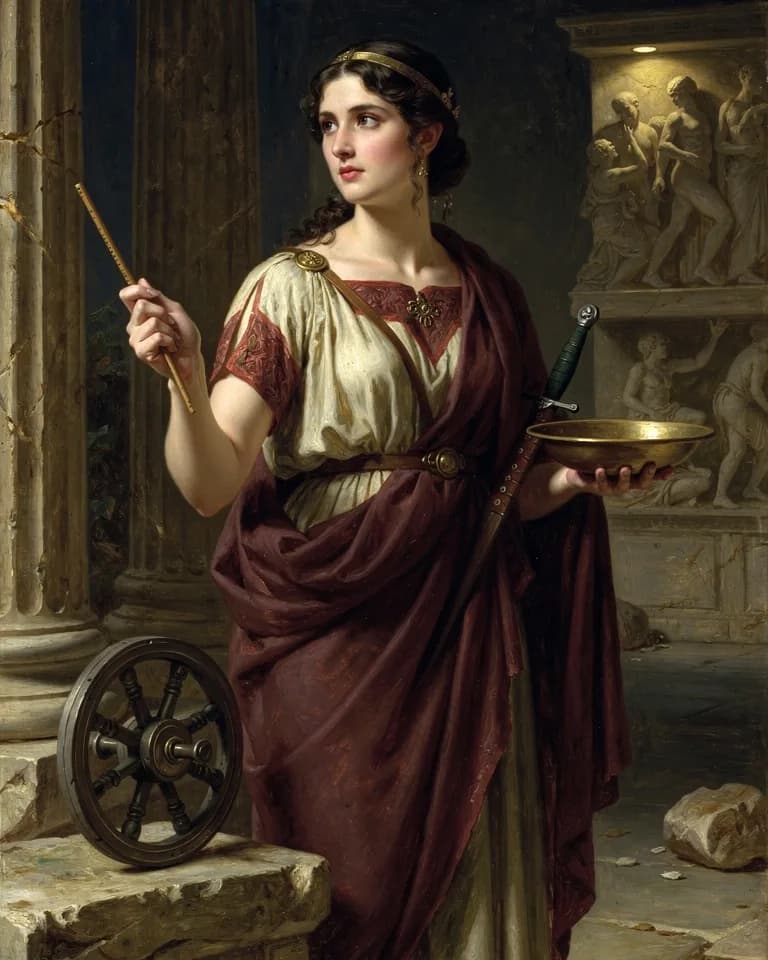
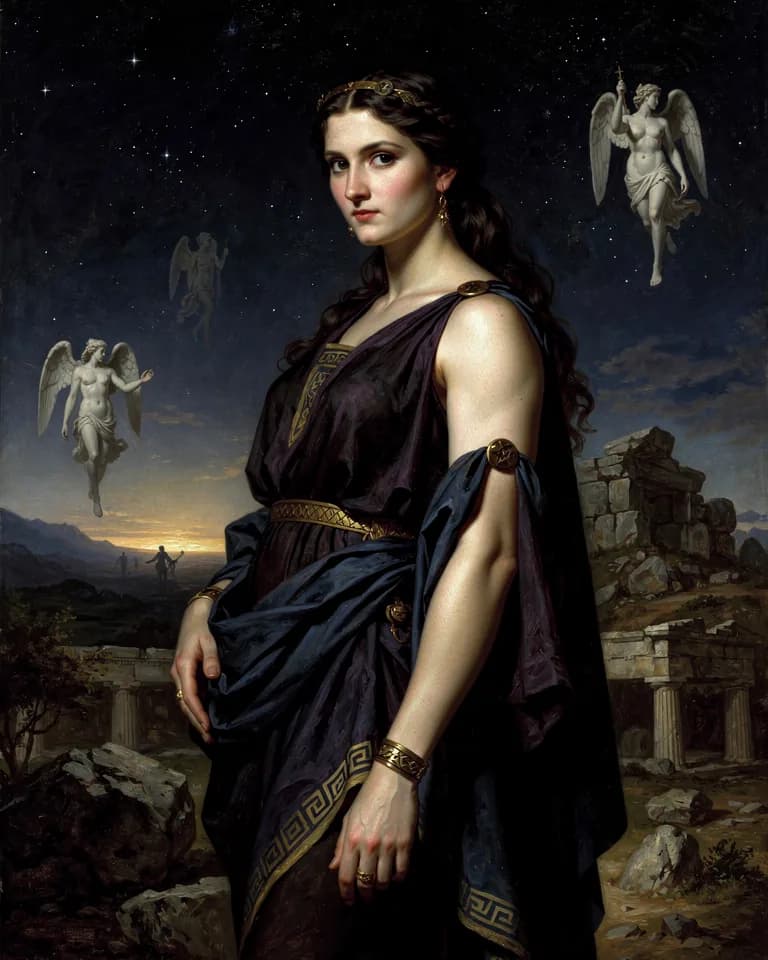
Symbolsmeasuring rod, bridle, wheeldarkness, the house of Night at the edge of Tartarus
Also calledRhamnousiaNight, Nox (Roman)

Where they meet

The atlas records no domain or symbol that Nemesis and Nyx share.

They are compared because of how the myths connect them, not because of what they rule.

Where they part

Only Nemesis

Associated with retribution and due measure.

Only Nyx

Associated with night.

How each was worshipped

Nemesis

Cult sites
Rhamnous in Attica, a Classical temple of Nemesis

Cult is best attested at Rhamnous, where she was honoured as Rhamnousia; elsewhere she was more often invoked than worshipped.

Nyx

No cult sites or festivals are recorded in the atlas.

The two figures

Greek Pantheon

Nemesis

The daughter of Night whom Hesiod calls a bane to mortals: the indignation that answers excess and undeserved good fortune. She had a Classical temple at Rhamnous in Attica, and a lost early epic made her, not Leda, the mother of Helen.

Nemesis is one of the children Night bore without a father, set among Hesiod's list of powers that afflict mortals (Theogony 223-224).

Hesiod lists Nemesis among the children Night bore without a partner, 'a pain to mortal men'. The word means the indignation stirred by something out of proportion, and the power that restores the balance. In *Works and Days*, when the age of iron has fully decayed, Shame (Aidos) and Nemesis wrap themselves in white robes and leave the earth for the gods, abandoning humankind to its miseries.

Read the full Nemesis entry

Greek Pantheon

Nyx

Night, one of the first powers in Hesiod's account of creation: born from Chaos, she bears Day and Aether and, on her own, a long brood of forces that trouble mortals, among them Death, Sleep, Doom and Nemesis. Even Zeus, in the Iliad, hesitates to anger her.

Night is born from Chaos alongside Erebus, at the very beginning of Hesiod's account of the world (Theogony 123). With Erebus she bears Aether and Day; alone, she bears Doom, Death, Sleep, Nemesis, Strife and many other powers (Theogony 211-225).

In the *Theogony* Night comes out of Chaos together with Erebus, the darkness below. Joined with Erebus she bears the bright Aether and Day, and Hesiod then lists the children she bore with no partner at all: Moros (Doom), black Ker, Thanatos (Death), Hypnos (Sleep) and the tribe of Dreams, Blame and Woe, the Hesperides who tend the golden apples beyond the ocean, the Fates, Nemesis, Deceit, Friendship, Old Age and Strife.

Read the full Nyx entry
About this comparison

Comparisons pair figures that play a similar role across traditions, or that the myths connect within one. A shared role does not, by itself, establish a shared origin.