Side by sideParallel across traditions

Olokun vs Poseidon

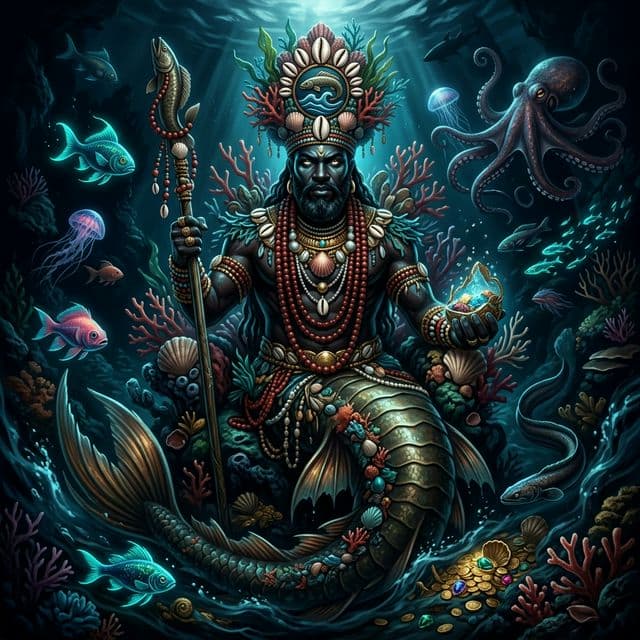
Olokun
OlokunYoruba
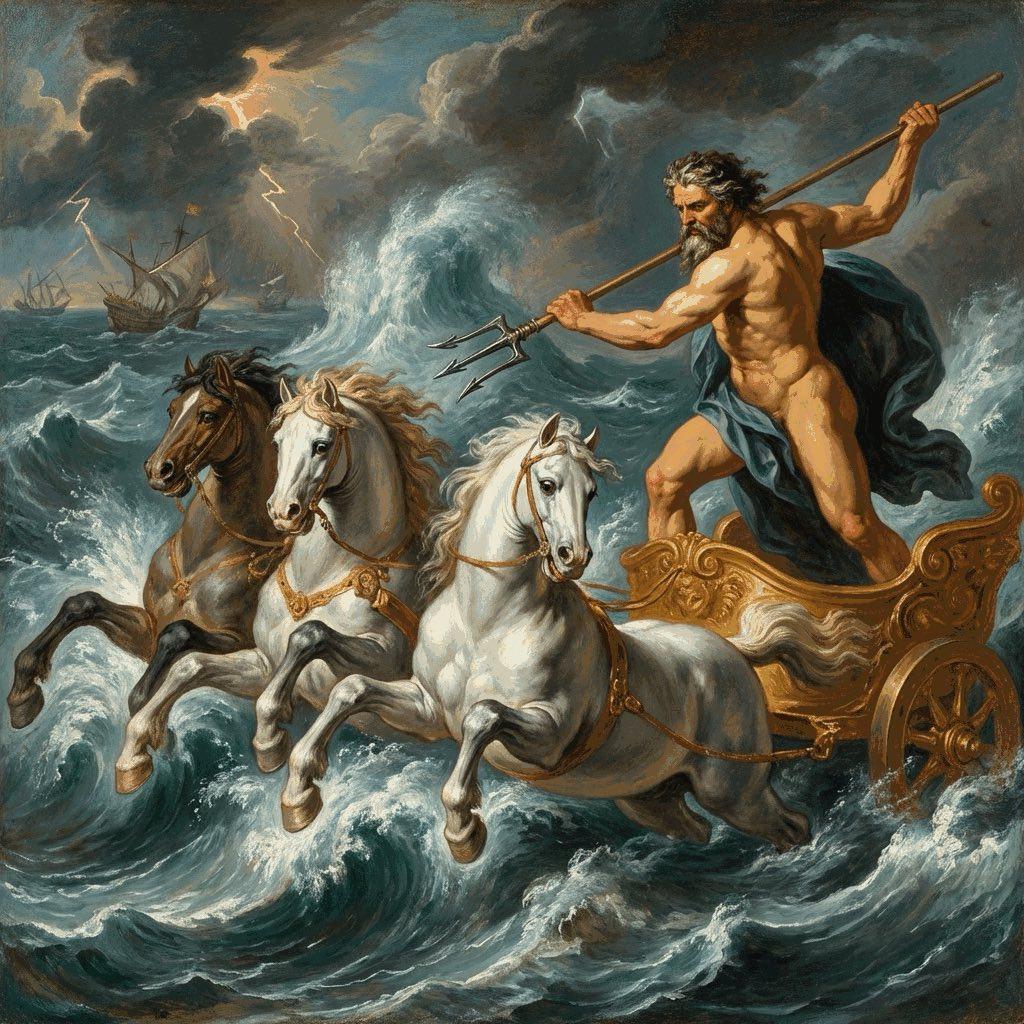
Poseidon
PoseidonGreek

Both are major gods of the sea, its mysterious depths, and the wealth/power associated with it.

At a glance

Olokun and Poseidon compared
OlokunPoseidon
TraditionYoruba TraditionGreek Pantheon
Domainssea, ocean depths, wealth, secrets, mysterysea, earthquakes, horses, storms
Symbolsocean, coral beads, cowrie shells, mudfish, sea creaturestrident, horse, dolphin, bull
Also calledOlokun-su, LokunNeptune

Where they meet

Both are associated with sea.

Where they part

Only Olokun

Associated with ocean depths, wealth, secrets, and mystery.

Only Poseidon

Associated with earthquakes, horses, and storms.

How each was worshipped

Olokun

Cult sites
Benin and Yoruba water-wealth shrines

The deep. Beads, mudfish, and riches that do not come from the farm. Cult is the sea-floor, not the surf of Yemoja's more public beaches.

Poseidon

Cult sites
Sanctuary of Poseidon at Isthmia; Temple of Poseidon at Sounion; Onchestos in Boeotia
Festivals
Isthmian Games; Posideia

Horses, earthquakes, and the drowned coast are his working signs. Isthmia held games under his name. A bull often went to the sea. Inland Boeotia kept him as a horse god, not only a sailor's patron.

The two figures

Yoruba Tradition

Olokun

The Orisha of the deep ocean and unfathomable wealth. Olokun rules the mysterious depths of the sea and guards the treasures hidden beneath the waves.

Olokun was present at the creation of the world, ruling the primordial waters before dry land existed. After Oduduwa created the earth, Olokun remained master of the oceans.

Olokun personifies the vast, unknowable depths of the ocean. Unlike the surface waves ruled by Yemoja, Olokun commands the dark abyss where light never reaches and treasures accumulate undisturbed.

Read the full Olokun entry

Greek Pantheon

Poseidon

God of the sea, earthquakes, and horses. Brother of Zeus and Hades, ruler of the oceans and all waters.

Poseidon rules the vast oceans, earthquakes ("Earth-Shaker"), and horses. He is a moody and tempestuous god, much like the sea itself. Sailors prayed to him for safe passage, often sacrificing horses or bulls to appease his wrath.

Read the full Poseidon entry
About this comparison

Comparisons pair figures that play a similar role across traditions, or that the myths connect within one. A shared role does not, by itself, establish a shared origin.