Side by sideSiblings

Hestia vs Poseidon

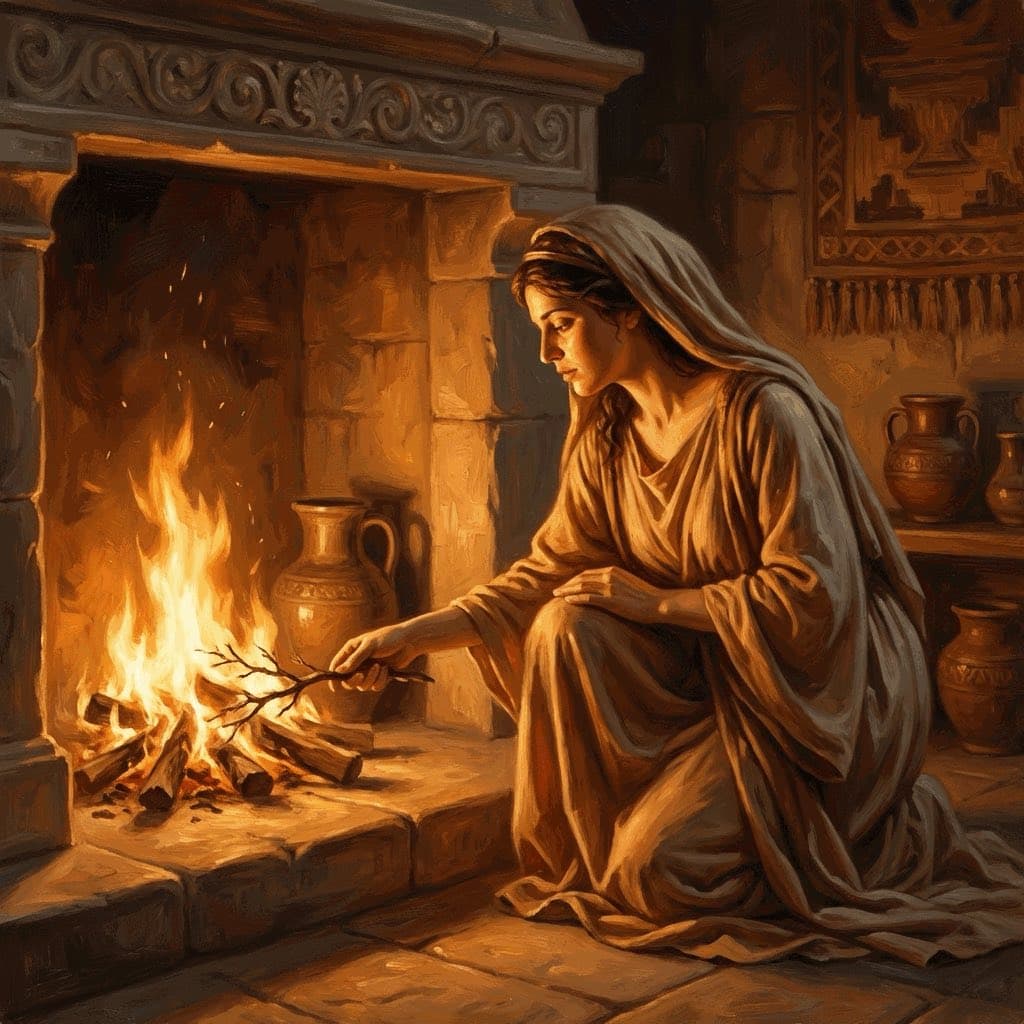
Hestia
HestiaGreek
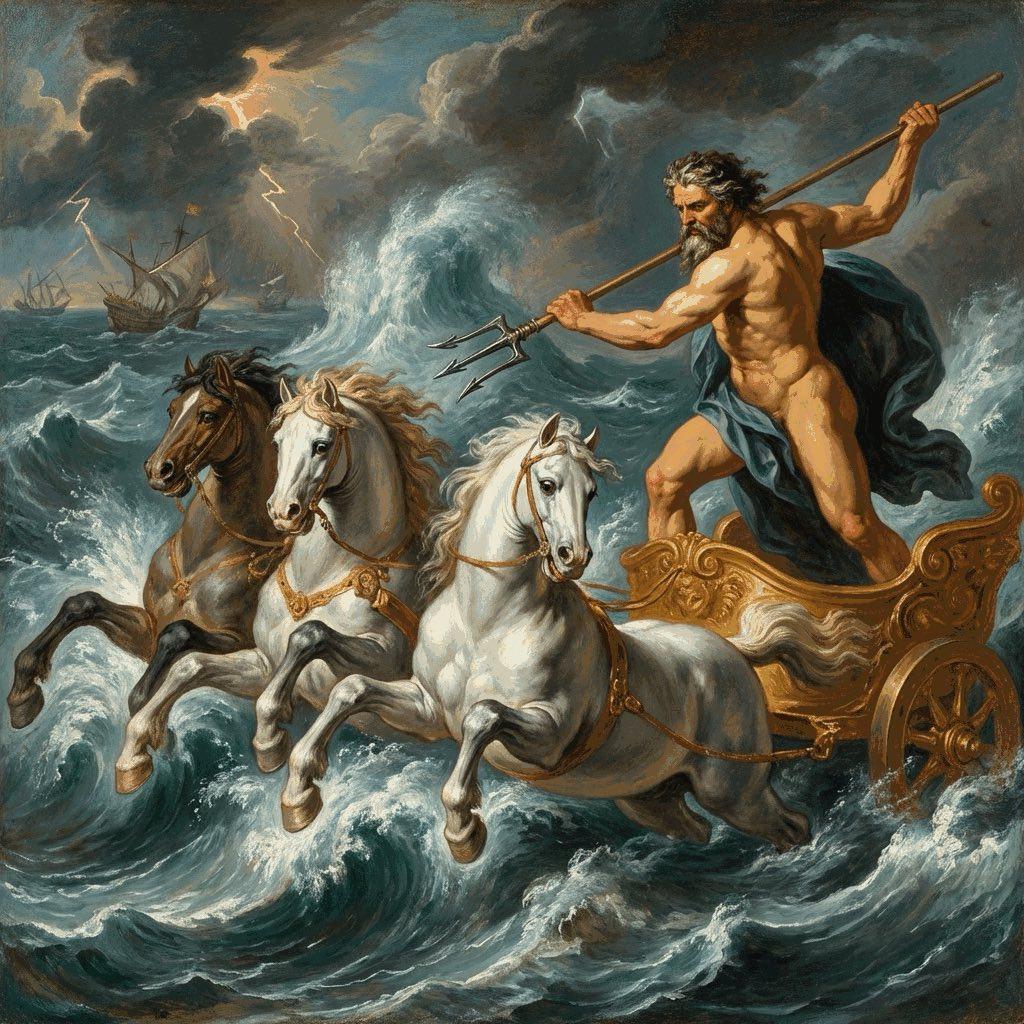
Poseidon
PoseidonGreek

Hestia and Poseidon are recorded as siblings in the Greek Pantheon.

At a glance

Hestia and Poseidon compared
HestiaPoseidon
TraditionGreek PantheonGreek Pantheon
Domainshearth, home, domesticity, familysea, earthquakes, horses, storms
Symbolshearth, fire, kettletrident, horse, dolphin, bull
Also calledVestaNeptune

Where they meet

The atlas records no domain or symbol that Hestia and Poseidon share.

They are compared because of how the myths connect them, not because of what they rule.

Where they part

Only Hestia

Associated with hearth, home, domesticity, and family.

Only Poseidon

Associated with sea, earthquakes, horses, and storms.

How each was worshipped

Hestia

Cult sites
No major independent temple; the hearth of every house; Prytaneion hearths of Greek cities
Festivals
Household offerings at the hearth; Prytaneia

She is the first and last libation, the round hearth, the fire that must not go out. Public Hestia lived in the town hall. There is almost no personality cult because the goddess is the fixture.

Poseidon

Cult sites
Sanctuary of Poseidon at Isthmia; Temple of Poseidon at Sounion; Onchestos in Boeotia
Festivals
Isthmian Games; Posideia

Horses, earthquakes, and the drowned coast are his working signs. Isthmia held games under his name. A bull often went to the sea. Inland Boeotia kept him as a horse god, not only a sailor's patron.

The two figures

Greek Pantheon

Hestia

Goddess of the hearth, home, and family. The firstborn of Cronus and Rhea, she maintained eternal virginity and tended the sacred fire of Olympus.

Hestia is the gentle goddess of the hearth fire (*hestia*), which burned in the center of every Greek home and city. She received the first offering at every sacrifice.

Read the full Hestia entry

Greek Pantheon

Poseidon

God of the sea, earthquakes, and horses. Brother of Zeus and Hades, ruler of the oceans and all waters.

Poseidon rules the vast oceans, earthquakes ("Earth-Shaker"), and horses. He is a moody and tempestuous god, much like the sea itself. Sailors prayed to him for safe passage, often sacrificing horses or bulls to appease his wrath.

Read the full Poseidon entry
About this comparison

Comparisons pair figures that play a similar role across traditions, or that the myths connect within one. A shared role does not, by itself, establish a shared origin.