
Side by sideParallel across traditions

Guanyin vs Hestia

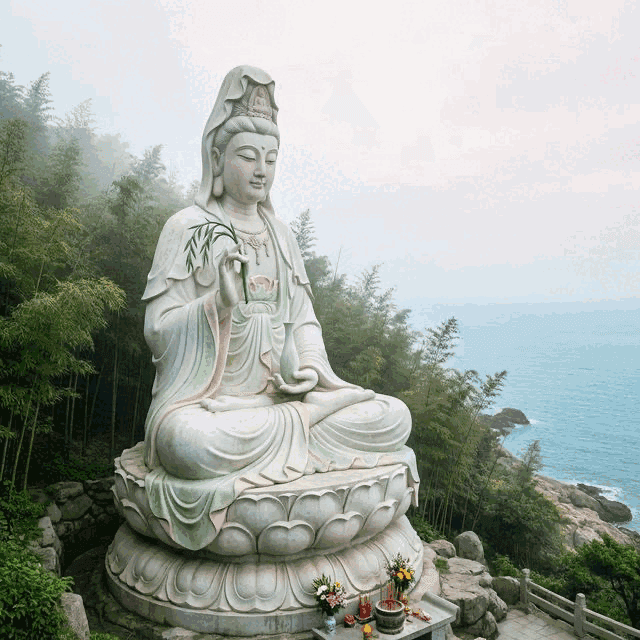
Guanyin
GuanyinChinese
Hestia
HestiaGreek

Both are gentle, compassionate deities who offer protection and are associated with the domestic sphere.

At a glance

Guanyin and Hestia compared
GuanyinHestia
TraditionChinese PantheonGreek Pantheon
Domainsmercy, compassion, healing, children, sailors, protectionhearth, home, domesticity, family
Symbolswillow branch, vase of pure water, lotus, white robes, thousand armshearth, fire, kettle
Also calledAvalokiteshvara, Kannon (Japanese), Quan Am (Vietnamese), Goddess of MercyVesta

Where they meet

The atlas records no domain or symbol that Guanyin and Hestia share.

They are compared for the part each plays in their own tradition rather than for any attribute in common.

Where they part

Only Guanyin

Associated with mercy, compassion, healing, children, sailors, and protection.

Only Hestia

Associated with hearth, home, domesticity, and family.

How each was worshipped

Guanyin

Cult sites
Putuo Shan, her island; Guanyin halls in almost every Chinese Buddhist monastery
Festivals
Guanyin's birthday(s) in the lunar calendar; Ullambana adjacent compassion rites

Hearer of cries. Vegetarian offerings, white robes, and a thousand arms in some images. She is Avalokiteshvara in China, then also a mother. Pilgrimage to Putuo is the sea-road form of the same mercy.

Hestia

Cult sites
No major independent temple; the hearth of every house; Prytaneion hearths of Greek cities
Festivals
Household offerings at the hearth; Prytaneia

She is the first and last libation, the round hearth, the fire that must not go out. Public Hestia lived in the town hall. There is almost no personality cult because the goddess is the fixture.

The two figures

Chinese Pantheon

Guanyin

The Bodhisattva of Compassion who hears the cries of all beings in the world. She is one of the most beloved deities in East Asian Buddhism, embodying unconditional mercy and the motherly aspect of divine love.

The bodhisattva Avalokiteshvara attained enlightenment but postponed entering Nirvana upon hearing the suffering cries of the world. Vowing to save all beings before accepting final liberation, she took the form of Guanyin and remains accessible to all who call upon her name.

Guanyin is the most widely venerated bodhisattva in East Asian Buddhism, worshipped by millions across China, Japan, Korea, and Vietnam. Her name means 'One Who Perceives the Sounds [Cries] of the World,' reflecting her boundless compassion for all suffering beings.

Read the full Guanyin entry

Greek Pantheon

Hestia

Goddess of the hearth, home, and family. The firstborn of Cronus and Rhea, she maintained eternal virginity and tended the sacred fire of Olympus.

Hestia is the gentle goddess of the hearth fire (*hestia*), which burned in the center of every Greek home and city. She received the first offering at every sacrifice.

Read the full Hestia entry
About this comparison

Comparisons pair figures that play a similar role across traditions, or that the myths connect within one. A shared role does not, by itself, establish a shared origin.