Mythos Atlas

Side by sideParent and child

Hestia vs Rhea

Hestia
HestiaGreek
RheaGreek

Hestia and Rhea are recorded as parent and child in the Greek Pantheon.

At a glance

Hestia and Rhea compared
HestiaRhea
TraditionGreek PantheonGreek Pantheon
Domainshearth, home, domesticity, familymotherhood
Symbolshearth, fire, kettleNone recorded
Also calledVestaNone recorded

Where they meet

The atlas records no domain or symbol that Hestia and Rhea share.

They are compared because of how the myths connect them, not because of what they rule.

Where they part

Only Hestia

Associated with hearth, home, domesticity, and family.

Only Rhea

Associated with motherhood.

How each was worshipped

Hestia

Cult sites
No major independent temple; the hearth of every house; Prytaneion hearths of Greek cities
Festivals
Household offerings at the hearth; Prytaneia

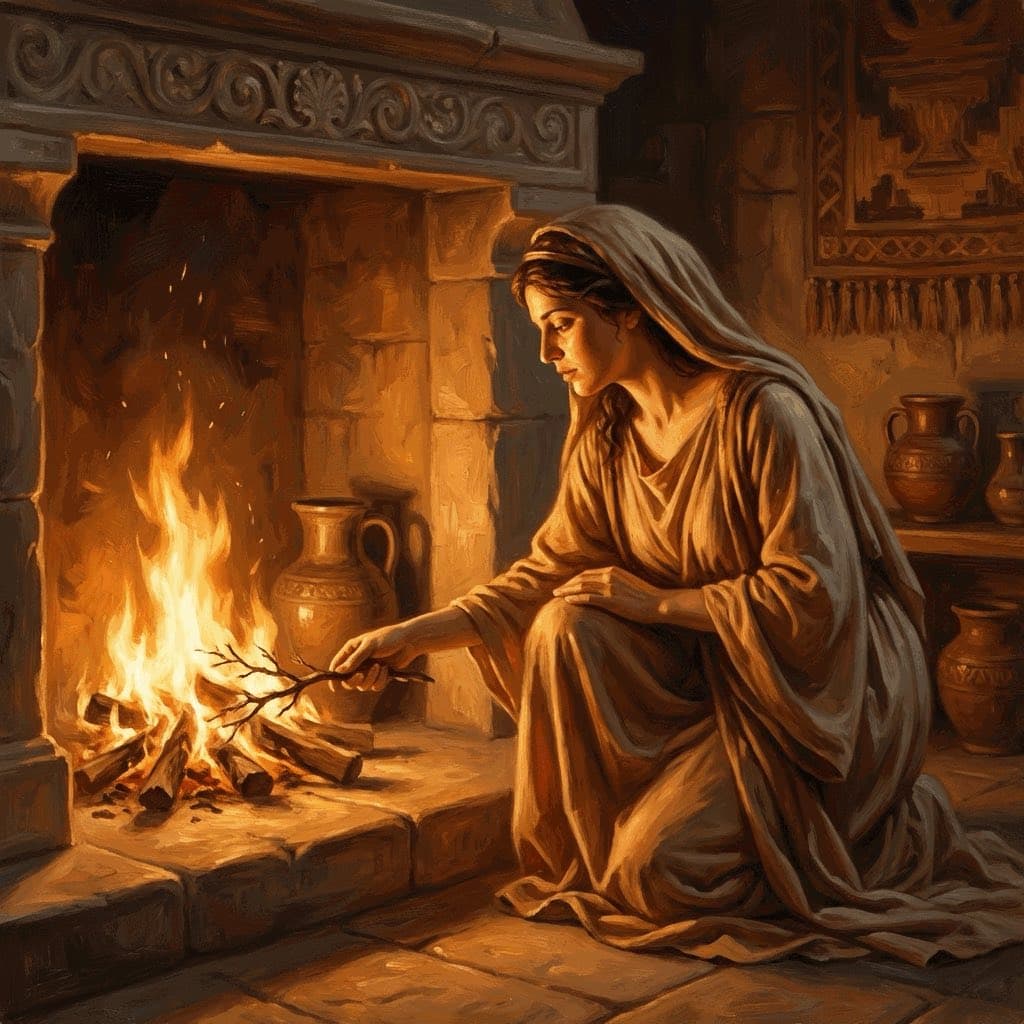
She is the first and last libation, the round hearth, the fire that must not go out. Public Hestia lived in the town hall. There is almost no personality cult because the goddess is the fixture.

Rhea

No cult sites or festivals are recorded in the atlas.

The two figures

Greek Pantheon

Hestia

Goddess of the hearth, home, and family. The firstborn of Cronus and Rhea, she maintained eternal virginity and tended the sacred fire of Olympus.

Hestia is the gentle goddess of the hearth fire (*hestia*), which burned in the center of every Greek home and city. She received the first offering at every sacrifice.

Read the full Hestia entry

Greek Pantheon

Rhea

Titan daughter of Gaia and Uranus. With Cronus, she is the mother of Hestia, Demeter, Hera, Hades, Poseidon, and Zeus in Hesiod’s Theogony.

Hesiod’s Theogony names Rhea as a daughter of Gaia and Uranus. With Cronus she bears Hestia, Demeter, Hera, Hades, Poseidon, and Zeus. Cronus swallows the children to prevent a son from replacing him. Before Zeus is born, Rhea asks her parents to help conceal his birth. They send her to Crete, where Gaia receives Zeus to raise him. A stone wrapped in swaddling clothes is given to Cronus in the child’s place (Theogony 132–138; 453–491).

Read the full Rhea entry
About this comparison

Comparisons pair figures that play a similar role across traditions, or that the myths connect within one. A shared role does not, by itself, establish a shared origin.