Side by sideSiblings

Tane vs Tu

Tane
TanePolynesian
Tu
TuPolynesian

Tane and Tu are recorded as siblings in the Polynesian Pantheon.

At a glance

Tane and Tu compared
TaneTu
TraditionPolynesian PantheonPolynesian Pantheon
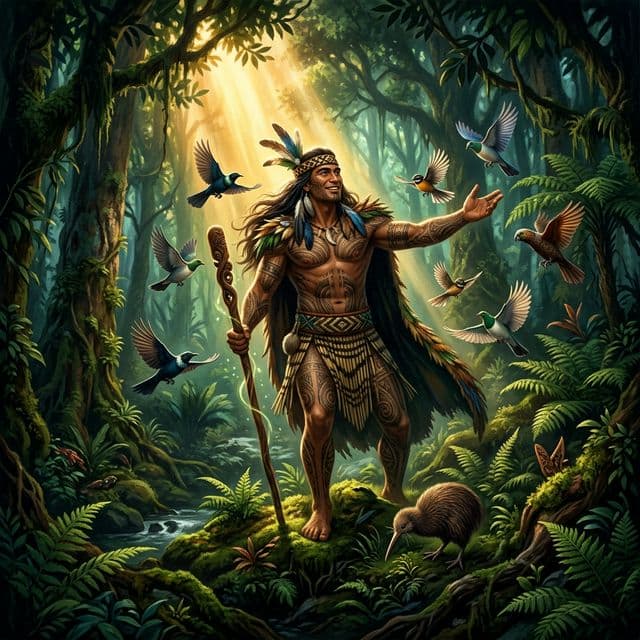
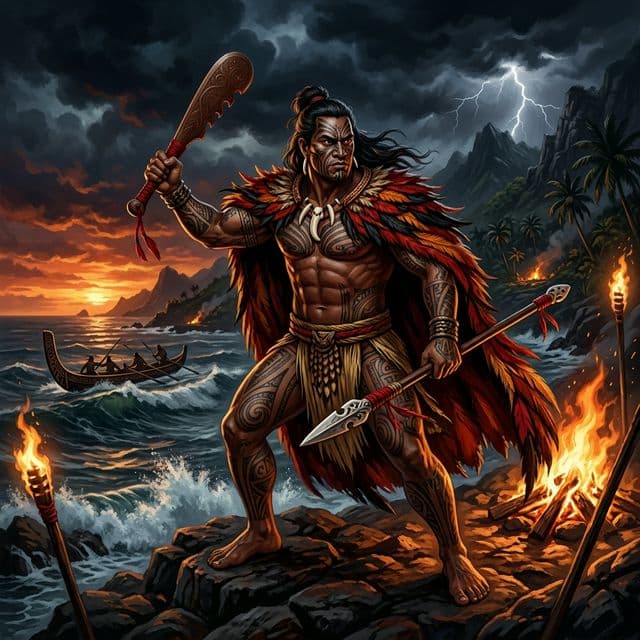
Domainsforests, birds, light, life, beautywar, hunting, fishing, agriculture, masculinity
Symbolstrees, birds, sunlight through leaves, kiwi birdspear, war club, feather cloak, red color
Also calledKane (Hawaiian), Tane Mahuta (Maori), Tane-nui-a-RangiKu (Hawaiian), Tu-matauenga (Maori), Tu-of-the-angry-face

Where they meet

The atlas records no domain or symbol that Tane and Tu share.

They are compared because of how the myths connect them, not because of what they rule.

Where they part

Only Tane

Associated with forests, birds, light, life, and beauty.

Only Tu

Associated with war, hunting, fishing, agriculture, and masculinity.

How each was worshipped

Tane

Cult sites
Forest tapu; Tane Mahuta as a living kauri of the name

Trees, birds, and the separating of earth and sky in Maori telling. Carvers and forest work sit under his restriction. The cult is the bush.

Tu

Cult sites
War tapu; niu and related rites in Maori tradition

Tu-mata-uenga, man as warrior. Not a peaceable harvest god. Cult is restriction around fighting and the oven of war.

The two figures

Polynesian Pantheon

Tane

The god of forests, birds, and light. Tane is credited with separating his parents Rangi and Papa, bringing light into the world, and creating the first woman, Hineahuone, from the earth.

Tane was born in darkness, trapped between the bodies of his parents Rangi and Papa. He conceived the plan to separate them, and with his great strength pushed the sky from the earth, bringing light into the world. He then adorned his father with stars and his mother with trees and plants.

Tane is one of the most important gods in Polynesian mythology, particularly in Maori tradition. As the god of forests and birds, he represents the living green world that provides food, shelter, and the materials for canoes and tools. His is the realm of light and life, standing in contrast to the dark ocean of his brother Tangaroa.

Read the full Tane entry

Polynesian Pantheon

Tu

The fierce god of war and human endeavor. Tu represents the aggressive, active principle necessary for survival, from warfare to hunting to the cultivation of crops.

Tu was born in darkness between Rangi and Papa. When the gods debated their fate, he advocated killing their parents but accepted the decision to separate them. After Tawhirimatea attacked, Tu alone stood firm and then conquered his brothers' children to be food for humanity, establishing himself as the ancestor and protector of humans.

Tu-matauenga, whose name means 'Tu of the Angry Face,' is the god of war and all human activities that require conflict and struggle. Unlike war gods in some other traditions, Tu represents not just battle but all forms of human striving against nature, including hunting, fishing, and agriculture.

Read the full Tu entry
About this comparison

Comparisons pair figures that play a similar role across traditions, or that the myths connect within one. A shared role does not, by itself, establish a shared origin.