
Side by sideParallel across traditions

Vesta vs Zao Jun

Vesta
VestaRoman
Zao Jun
Zao JunChinese

Both protect the household and are associated with the hearth fire.

At a glance

Vesta and Zao Jun compared
VestaZao Jun
TraditionRoman PantheonChinese Pantheon
Domainshearth, home, family, statekitchen, hearth, family, domestic harmony
Symbolssacred fire, donkey, kettlestove, paper image, sweet offerings, honey
Also calledNone recordedKitchen God, Zao Shen, Stove Master

Where they meet

Both are associated with hearth and family.

Where they part

Only Vesta

Associated with home and state.

Only Zao Jun

Associated with kitchen and domestic harmony.

How each was worshipped

Vesta

Cult sites
Aedes Vestae in the Forum, a round shrine with no cult statue in early form; House of the Vestals beside the temple
Festivals
Vestalia (7–15 June)

Six Vestal Virgins kept the fire and the store of sacred objects, including the Palladium in later telling. Blood sacrifice did not belong inside her round temple. In June the inner store was opened to matrons, who walked barefoot. If the fire went out, it was a public emergency.

Zao Jun

Cult sites
The kitchen stove in every house
Festivals
Little New Year, when the Kitchen God is sent up

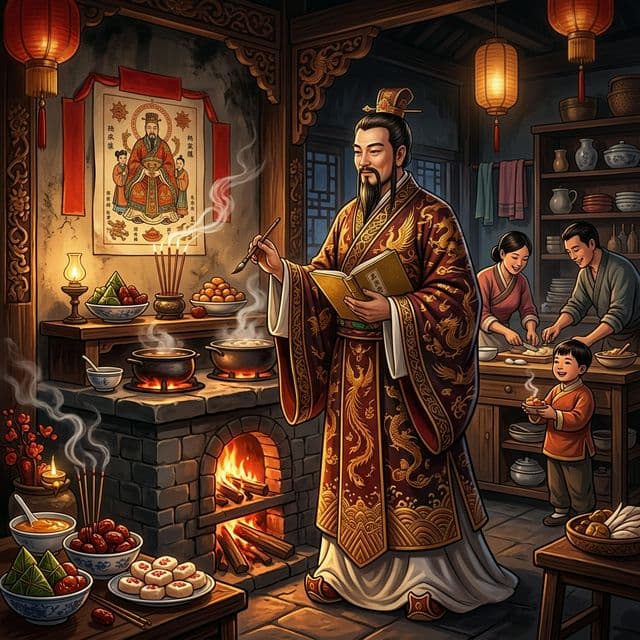
Paper horse, sweet glue on the lips, and a report to heaven. The cult is domestic surveillance with candy. No cathedral required.

The two figures

Roman Pantheon

Vesta

Goddess of the hearth, home, and family. Her sacred fire in the Forum Romanum symbolized Rome's eternal life. Served by the Vestal Virgins, priestesses who tended her sacred flame.

Vesta corresponds to Greek Hestia. Her worship was fundamental to Roman identity - the sacred fire in her temple represented Rome itself and could never be allowed to go out.

Vesta is the hearth, and in Rome the hearth that matters most burns in the Forum. The circular temple of Vesta held a fire that was not supposed to go out. The **Vestal Virgins** tended it, kept wills and treaties, and guarded sacred objects including, in legend, the Palladium. Their legal standing was unique: they could own property, make a will, and free a condemned prisoner by meeting him on the street.

Read the full Vesta entry

Chinese Pantheon

Zao Jun

The domestic deity who resides in the kitchen and reports on each household's conduct to the Jade Emperor at the end of each year. Families make sweet offerings to ensure his favorable report.

Zhang Lang, having abandoned his virtuous wife, fell into ruin and became a blind beggar. When his first wife showed him kindness, he was so ashamed he threw himself into the cooking fire. The Jade Emperor, moved by the story, appointed him guardian of all kitchens.

Zao Jun, the Kitchen God, is perhaps the most intimate deity in Chinese folk religion. He resides in every kitchen, observing the daily life of the family and keeping record of their deeds. His annual report to the Jade Emperor determines the household's fortune for the coming year.

Read the full Zao Jun entry
About this comparison

Comparisons pair figures that play a similar role across traditions, or that the myths connect within one. A shared role does not, by itself, establish a shared origin.