
Side by sideParallel across traditions

Hestia vs Vesta

Hestia
HestiaGreek
Vesta
VestaRoman

Vesta is the direct Roman equivalent, goddess of the hearth and sacred household fire.

At a glance

Hestia and Vesta compared
HestiaVesta
TraditionGreek PantheonRoman Pantheon
Domainshearth, home, domesticity, familyhearth, home, family, state
Symbolshearth, fire, kettlesacred fire, donkey, kettle
Also calledVestaNone recorded

Where they meet

Both are associated with hearth, home, and family.

They share a symbol: kettle.

  • kettle

Where they part

Only Hestia

Associated with domesticity.

Only Vesta

Associated with state.

Why they are compared

Hestia is the direct Greek equivalent, goddess of the hearth and household fire.

How each was worshipped

Hestia

Cult sites
No major independent temple; the hearth of every house; Prytaneion hearths of Greek cities
Festivals
Household offerings at the hearth; Prytaneia

She is the first and last libation, the round hearth, the fire that must not go out. Public Hestia lived in the town hall. There is almost no personality cult because the goddess is the fixture.

Vesta

Cult sites
Aedes Vestae in the Forum, a round shrine with no cult statue in early form; House of the Vestals beside the temple
Festivals
Vestalia (7–15 June)

Six Vestal Virgins kept the fire and the store of sacred objects, including the Palladium in later telling. Blood sacrifice did not belong inside her round temple. In June the inner store was opened to matrons, who walked barefoot. If the fire went out, it was a public emergency.

The two figures

Greek Pantheon

Hestia

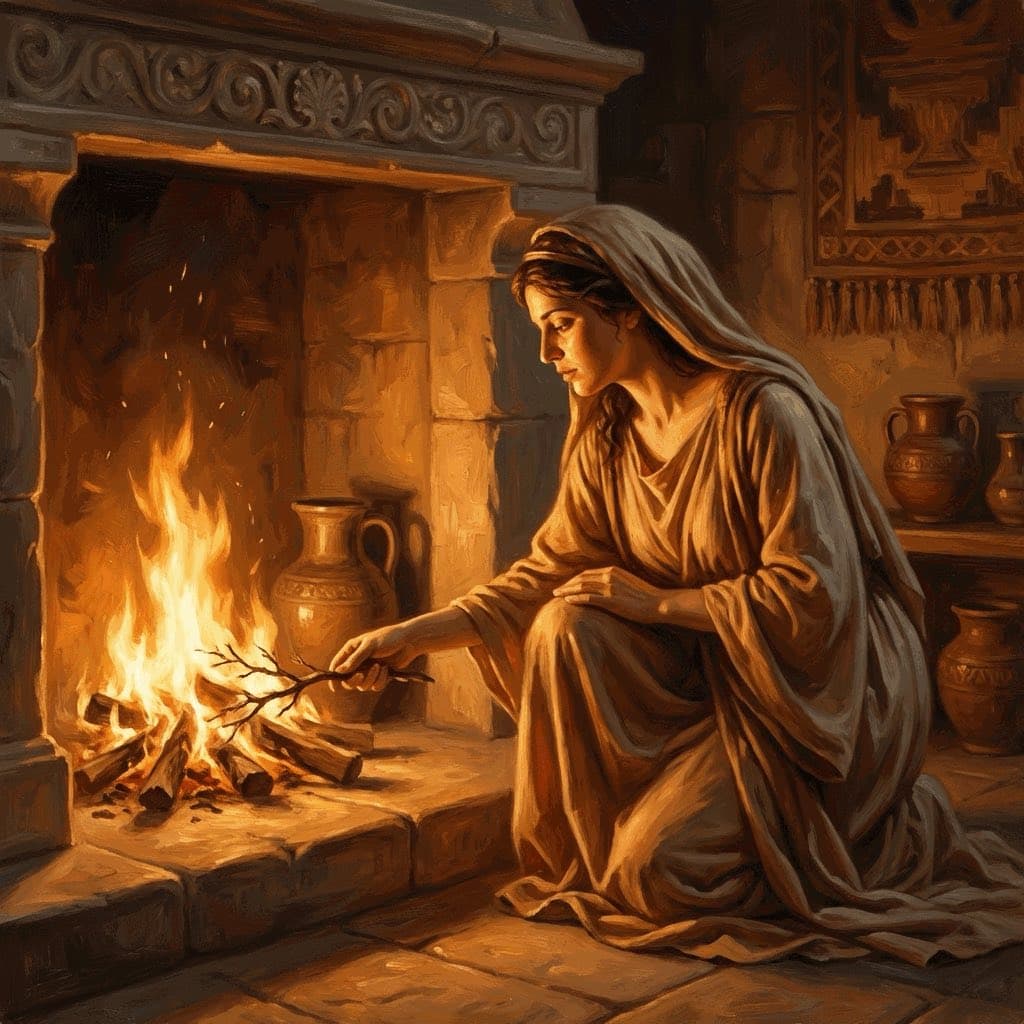
Goddess of the hearth, home, and family. The firstborn of Cronus and Rhea, she maintained eternal virginity and tended the sacred fire of Olympus.

Hestia is the gentle goddess of the hearth fire (*hestia*), which burned in the center of every Greek home and city. She received the first offering at every sacrifice.

Read the full Hestia entry

Roman Pantheon

Vesta

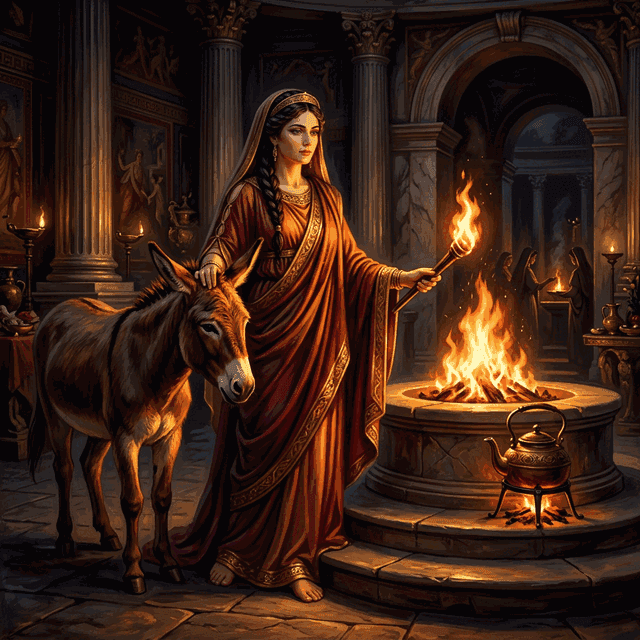
Goddess of the hearth, home, and family. Her sacred fire in the Forum Romanum symbolized Rome's eternal life. Served by the Vestal Virgins, priestesses who tended her sacred flame.

Vesta corresponds to Greek Hestia. Her worship was fundamental to Roman identity - the sacred fire in her temple represented Rome itself and could never be allowed to go out.

Vesta is the hearth, and in Rome the hearth that matters most burns in the Forum. The circular temple of Vesta held a fire that was not supposed to go out. The **Vestal Virgins** tended it, kept wills and treaties, and guarded sacred objects including, in legend, the Palladium. Their legal standing was unique: they could own property, make a will, and free a condemned prisoner by meeting him on the street.
Read the full Vesta entry
About this comparison

Comparisons pair figures that play a similar role across traditions, or that the myths connect within one. A shared role does not, by itself, establish a shared origin.