Hindu Pantheon
Hanuman
Also known as Anjaneya, Maruti, Bajrangbali
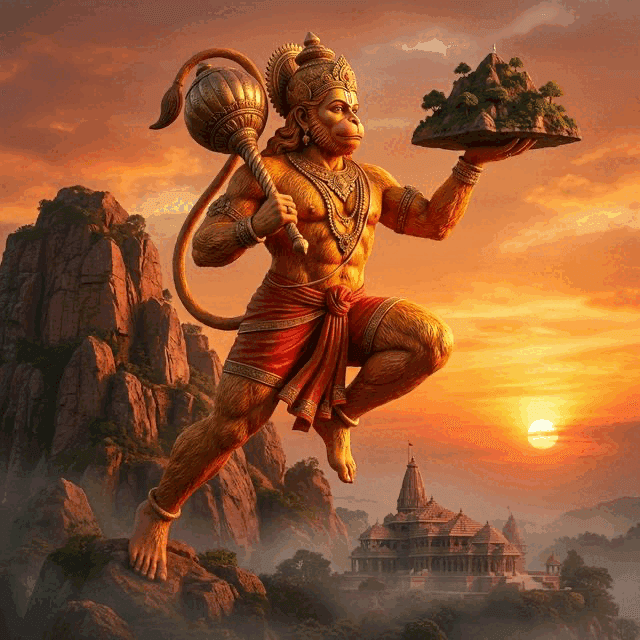
- strength
- devotion
- service
- courage
- learning
Monkey deity symbolizing strength, devotion, and selfless service. Greatest devotee of Rama and central figure in the Ramayana. Son of the wind god Vayu.
About Hanuman
The Devotee Supreme
Hanuman is the monkey deity who embodies strength, devotion, courage, and selfless service. He is the greatest devotee of Rama and a central hero of the Ramayana epic. Son of the wind god Vayu, he possesses supernatural powers and unwavering loyalty.
The Child Who Ate the Sun
As an infant, Hanuman saw the rising sun and, mistaking it for a ripe fruit, leaped into the sky to eat it. Indra struck him with his thunderbolt, injuring his jaw (hence Hanuman, "one with a disfigured jaw"). The gods revived him and granted him extraordinary boons.
Service to Rama
During Rama's quest to rescue Sita from the demon king Ravana, Hanuman became his most devoted ally. He leaped across the ocean to Lanka to find Sita, carried an entire mountain of healing herbs to save Lakshmana, and burned Lanka with his flaming tail.
Immortal Protector
Hanuman was granted immortality (chiranjeevi) to serve Rama throughout the ages. He is worshipped for protection, strength, and success. The Hanuman Chalisa, a 40-verse hymn, is one of Hinduism's most popular prayers. His mantra "Om Han Hanumate Namah" grants courage and removes fear.
Origin story
Son of Anjana and the wind god Vayu. As a child, he tried to eat the sun. Indra struck him with thunderbolt, but he was revived and blessed by the gods with immortality and great powers.
Across traditions
Parallel figures
Figures who play a role like Hanuman's in other traditions.
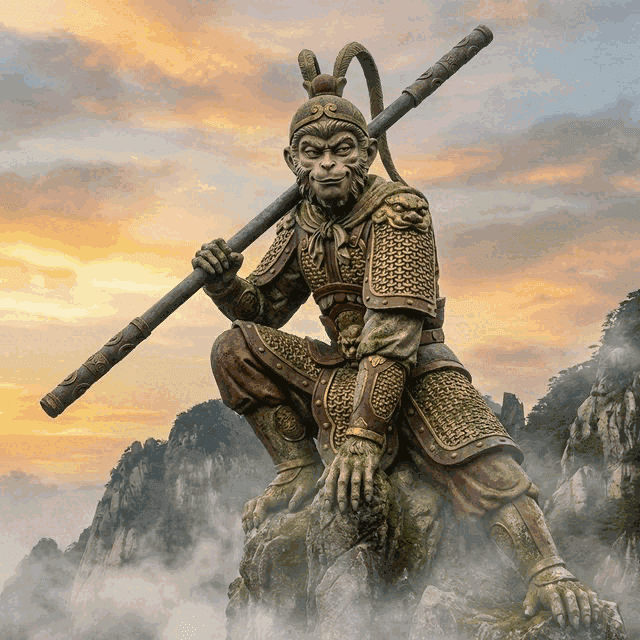 ChineseSun WukongIllustration
Both are super-strong monkey heroes with shape-shifting and flight powers devoted to a higher cause
Compare Hanuman and Sun Wukong side by side
Worship and cult
Temples, festivals, and practices recorded for Hanuman
The Chalisa is the liturgy. Wrestlers oil up in his name; travellers keep a small image in the cab. Strength as service, not as throne.
Sacred sites
- Hanuman Garhi at Ayodhya
- Salasar and Jakhu temples
- Akharas and wayside orange shrines
Festivals
- Hanuman Jayanti
- Tuesdays and Saturdays
In the atlas
Where Hanuman appears
Stories
In the museums
Hanuman in art
Real objects in public collections, released into the public domain by the museums that hold them. Dates refer to when each object was made. Objects made within the tradition come first, later depictions after.
 (opens the museum record)
Ancient object
Hanuman Conversing (opens the museum record)
A Chola-period bronze the museum titles Hanuman Conversing, showing the monkey god in a gesture of speech. Hanuman's devotion to Rama made him one of the most widely worshipped figures from the Ramayana.
Sources and further reading
Source notes
These references are recorded in the catalog. Their passage wording and translation have not been checked, so quotations are not displayed here.
- Ramayana of Valmiki, Book V, Sundara Kanda (trans. Griffith)
Appears in
Ancient and classical works featuring this figure.
devoted companion who leaps to Lanka to find Sita (Book 5 (Sundara Kanda))
About this entry
By Elizabeth Stein for Mythos Atlas. About the author. Editorial notes are grounded in the site's cited sources and can be challenged through the contact page.
Parallels are editorial comparisons across traditions: a shared role does not, by itself, establish a shared origin.
Keep exploring
One myth a week, with its sources in a short email. The sign-up form is just below.
Genealogy
Family tree
Hanuman's parents, consorts, children and rivals, as recorded in the atlas.